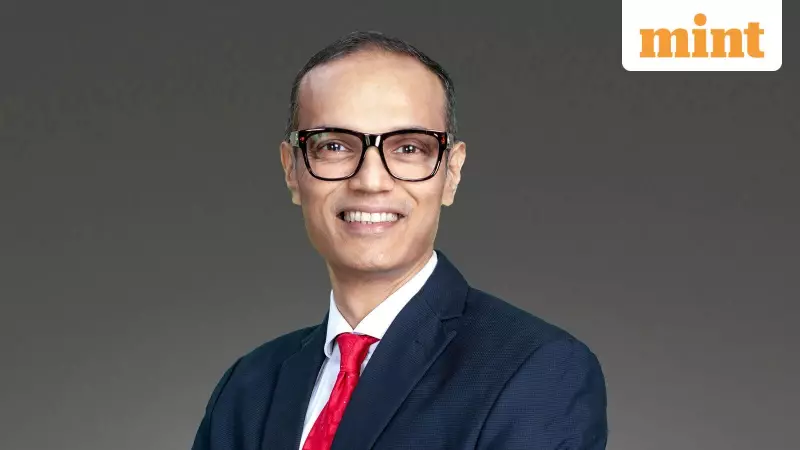
According to a leading market strategist, the year 2026 is poised to be a potentially stellar period for India's equity markets, fueled by a powerful combination of macroeconomic strength, robust corporate earnings, and attractive valuations.
Turning the Corner: From Underperformance to Leadership
Ridham Desai, Managing Director at Morgan Stanley India, shared this optimistic outlook during his interaction at the 23rd Hindustan Times Leadership Summit. He acknowledged that the past year has been challenging for Indian stocks, even as global markets experienced a significant bull run.
Desai attributed India's recent underperformance to three primary factors: a mid-cycle growth slowdown that began in September last year, high valuations compared to other emerging markets, and the massive global capital flow into artificial intelligence (AI) themed trades.

"All this is turning now," Desai noted. He explained that growth has already started to rebound, and Indian market valuations have undergone a meaningful correction. Furthermore, he believes much of the global AI trade is now priced in, which should result in less capital being diverted away from India, thereby reducing a major headwind.
Double-Digit Growth and the AI 'Bubble' Question
A critical driver for the anticipated market surge is earnings. Desai expects nominal growth, a key determinant of corporate profit expansion, to enter double digits in 2026. This sets the stage for a powerful earnings recovery. "India may well become the world’s fastest-growing earnings market," he stated.
Addressing the widespread debate on whether AI stocks are in a bubble, Desai offered a nuanced perspective. While clarifying he is not an AI expert, he said he does not yet see a classic bubble forming. "Just going by my experience with markets spanning 35 years, when everybody's calling it a bubble, it usually has more legs to go than we all think," he remarked.
However, he issued a caveat: if an AI bubble does form and subsequently bursts, it would drag down stock prices worldwide. In such a scenario, while India might outperform due to its lower beta nature, it would not be immune. The Nifty 50 index would likely trend towards a bear case rather than a base case scenario.
Global Risks and the Impact of US Tariffs
Desai identified a slowdown in global growth as the single biggest risk for equity markets, including India's. He noted that major economies like the US, Europe, Japan, and China have deployed substantial stimulus to counter trade tensions, which currently limits the downside. The risk would materialize if this policy support fails or an unforeseen global shock, such as a war, occurs.
On the specific issue of US tariffs on Indian goods, Desai provided a measured assessment. The affected goods constitute roughly 1.2% of India's GDP. A full impact would create a drag of 30–40 basis points, which he described as not catastrophic. Nevertheless, resolving this overhang would positively influence market sentiment.
In summary, Desai's analysis paints a picture of a market that has weathered a corrective phase and is now aligning for a period of strong, fundamentals-driven performance, with 2026 highlighted as a potential landmark year for Indian investors.