Indian Stock Markets Open Lower in Rare Sunday Trading Session Ahead of Union Budget 2026
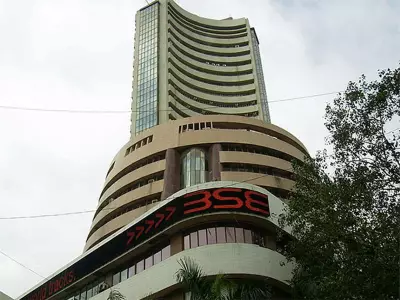
Indian stock market indices opened with notable declines during a special Sunday trading session on February 1, 2026, as investors adopted a cautious stance ahead of Finance Minister Nirmala Sitharaman's presentation of the Union Budget. This rare weekend trading activity reflected the heightened anticipation surrounding the government's fiscal plans for the upcoming financial year.
Market Performance at Opening
The benchmark indices showed significant downward movement at the opening bell. The Nifty 50 index fell by 131.25 points, representing a decline of 0.52 percent, to settle at 25,287.65. Meanwhile, the BSE Sensex dropped by 332.12 points, equivalent to 0.40 percent, reaching 82,234.24. This opening performance set the tone for what market analysts predicted would be a volatile trading day influenced by budget announcements.
Special Sunday Trading Arrangements
The Bombay Stock Exchange (BSE) and National Stock Exchange (NSE) had confirmed through separate circulars that trading would proceed normally on Budget Day despite it falling on a Sunday. Both exchanges maintained their standard trading schedule, with the pre-open session running from 9:00 AM to 9:08 AM, followed by normal equity market trading from 9:15 AM to 3:30 PM.

However, certain specialized trading sessions were suspended for the day. The BSE specifically noted that trading in the T+0 Settlement Session and Auction Session for settlement default would not be conducted on Sunday, February 1, 2026. This adjustment maintained focus on regular equity, futures and options, and commodity derivatives trading while streamlining operations for the unusual weekend session.
Investor Expectations and Expert Analysis
Dr. VK Vijayakumar, Chief Investment Strategist at Geojit Investments Limited, provided insights into market expectations ahead of the budget presentation. "Investors don't have expectations of any major tax reliefs in this Budget since the 2025 Budget delivered huge income tax reliefs," he noted, suggesting that only minor tax adjustments were anticipated.
The investment strategist highlighted several potential positive developments that could influence market sentiment. "If there is an increase in exemption for long-term capital gains tax from Rs 1.25 lakhs presently to a higher limit that would be a positive," he stated. "From the market perspective, a fiscally prudent, growth-oriented Budget is desirable. There are rumours of exemption from long-term capital gains tax for certain categories of FIIs. If this happens, it can trigger a rally in the market."
Sectors in Focus
Dr. Vijayakumar identified several sectors likely to receive attention during the budget announcements and subsequent market reactions:
- Defense: Higher allocation for defense is expected, keeping defense stocks in focus
- Exports: Manufacturing exports highlighted in the Economic Survey could become a thrust area
- PSU Banks: Announcements relating to PSU bank mergers and disinvestment in PSUs will be keenly watched
"Aside from the Budget, the crash in precious metal prices may bring investors back into equity," he added, noting additional factors influencing investment decisions.
Historical Budget Day Market Performance
An analysis of market trends over the past decade reveals varied responses to budget presentations:

- Positive Reactions: Markets have responded well when budgets emphasized growth, infrastructure spending, and tax stability. In 2017, then Finance Minister Arun Jaitley avoided major tax hikes and offered middle-class relief, resulting in the Sensex rising about 1.7 percent and Nifty gaining nearly 1.8 percent.
- Strong Rally in 2021: Following the Covid-19 shock, Nirmala Sitharaman's budget with its focus on economic recovery, higher capital expenditure, healthcare, and infrastructure triggered sharp rallies. The Sensex jumped over 2 percent and Nifty climbed almost 2.7 percent.
- Negative Responses: Not every budget has cheered investors. In 2016, higher dividend taxation dampened sentiment, while 2018 saw the introduction of long-term capital gains tax on listed equities and equity mutual funds, causing indices to fall around 6.8 percent over subsequent sessions.
- Muted Reactions: The 2023 Budget triggered a largely flat reaction due to its focus on fiscal discipline without big-bang reforms, while the July 2024 Budget drew cautious responses to capital gains taxation changes.
Current Market Context and Outlook
As the nation approaches Union Budget 2026, market conditions remain unsettled. Equity indices have pulled back from recent highs, foreign portfolio investors have been net sellers, and global factors including interest rates, geopolitical tensions, and trade policies continue to influence sentiment. Historically, volatility after budget presentations has been common, with one-month returns often showing mixed results.
Given this backdrop, sharp moves on Budget Day appear almost inevitable as investors react to fiscal measures, tax policies, and growth initiatives announced by the Finance Minister during her record ninth consecutive budget presentation.