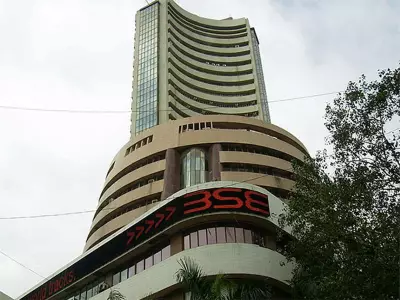
Indian equity markets witnessed a significant downturn on Sunday during a special trading session dedicated to the Union Budget 2026-27. Investors reacted negatively to Finance Minister Nirmala Sitharaman's announcement proposing an increase in the Securities Transaction Tax (STT) on derivatives, leading to a sharp sell-off across major indices.
Market Performance and Key Figures
The benchmark indices ended the session with substantial losses, erasing early gains as budget details emerged. The BSE Sensex settled at 80,722.94, plummeting by 1,843 points or 2.23 per cent. Similarly, the NSE Nifty50 closed at 24,825.45, declining by 593 points or 2.33 per cent. Both indices slipped deep into negative territory, reflecting widespread investor concern over the proposed tax changes.
Top Losers and Gainers in the Market
Among Sensex stocks, State Bank of India emerged as the biggest loser, sliding 5.48 per cent, followed closely by Adani Ports, which fell 5.28 per cent. In the Nifty50 index, Hindalco Industries witnessed a massive decline of 5.66 per cent, highlighting the broad-based nature of the sell-off.

Notable gainers included Max Healthcare, which rose 2.08 per cent, Wipro with a 2.07 per cent increase, and TCS gaining 2.02 per cent. However, these gains were overshadowed by the overall market sentiment, which remained decidedly negative throughout the trading session.
Expert Analysis on Market Reaction
Pranav Haridasan, Managing Director and CEO of Axis Securities, explained the sharp market reaction, stating that the hike in transaction costs has unsettled market participants. "Market unease is centred on the increase in STT on futures and options, particularly the sharper hike on futures. This comes after higher capital gains taxes were implemented last year, raising overall transaction costs for market participants," he said.
Haridasan further elaborated that futures trading is already a regulated and risk-managed segment. "Futures are margined, risk-managed products and not typically the primary source of retail excess. This raises questions about whether higher STT will achieve the desired outcome or instead negatively impact liquidity, participation, and India's market cost competitiveness," he added, highlighting potential long-term consequences of the tax hike.
Global Market Context
While Indian markets experienced volatility, Asian and European markets remained closed on Sunday due to holidays. US markets had ended lower on Friday, creating a cautious global backdrop for the special trading session in India.
Budget 2026-27 Highlights
The Union Budget 2026-27 presented several key proposals beyond the STT hike. The government set the capital expenditure target for FY27 at Rs 12.2 lakh crore, indicating continued focus on infrastructure development. The budget also outlined changes in taxation structures, with revised income tax slabs for FY 2026-27 under both new and old tax regimes, affecting what gets cheaper and what becomes costlier for consumers and businesses alike.
The market's reaction underscores the sensitivity of investors to changes in transaction costs and taxation policies, particularly in the derivatives segment which has seen significant growth in recent years. As India positions itself as a global economic powerhouse, such policy decisions will continue to be closely watched by domestic and international market participants.