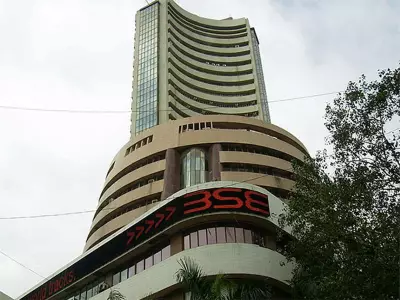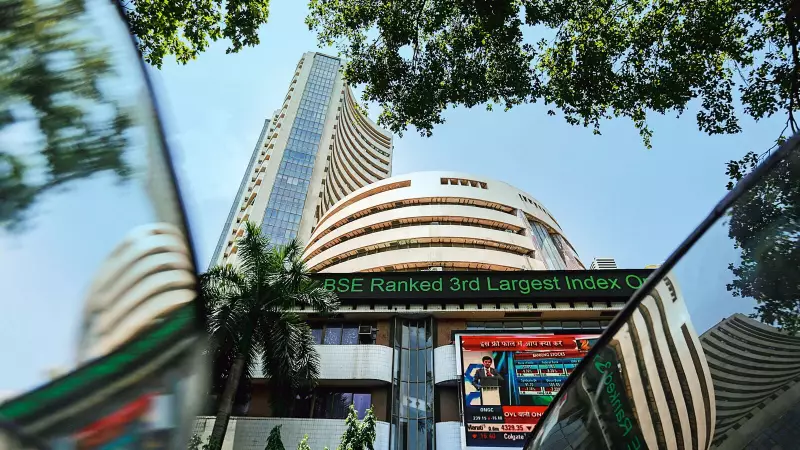
The Indian stock market is poised for a potential rebound in the holiday-shortened trading week, with benchmark indices Sensex and Nifty 50 expected to find support from two major international developments. Market sentiment, which took a severe beating last week, could improve following signals of possible relief from US tariff measures and anticipated progress on the long-pending India-European Union trade agreement.
Republic Day Holiday and Market Closure
Indian financial markets remain closed today, January 26, 2026, in observance of Republic Day celebrations across the nation. Trading activities on both the Bombay Stock Exchange (BSE) and National Stock Exchange (NSE) are scheduled to resume on Tuesday, January 27, 2026, with investors keenly watching for directional cues.
Last Week's Sharp Sell-Off
Friday's trading session witnessed a dramatic downturn for Indian equities, with both major indices experiencing significant declines. The sell-off was driven by multiple negative factors including persistent outflows from foreign institutional investors, escalating geopolitical tensions, pre-budget caution ahead of the Union Budget 2026, and mixed corporate earnings reports for the December quarter.

Trump Administration Tariff Relief Signals
A potential catalyst for market recovery emerged over the weekend when US Treasury Secretary Scott Bessent indicated the possibility of rolling back the additional 25% tariffs imposed on India by the Donald Trump administration. Bessent suggested that "there could be a path" to removing these levies, noting that India's purchases of Russian oil have declined substantially following the implementation of tariff measures.
This development could provide significant relief to Indian exporters and companies with substantial US exposure, potentially reversing some of the negative sentiment that has weighed on market performance in recent weeks.
India-EU Trade Agreement Progress
Simultaneously, European leaders have arrived in India for the 16th India-EU Summit, where discussions will focus on advancing a comprehensive Free Trade Agreement aimed at strengthening bilateral economic ties. Progress on this long-negotiated trade deal could serve as a counter-cyclical buffer for the Indian economy by enhancing export participation in global value chains, expanding market access to European markets, and supporting supply-chain diversification efforts.
Madhavi Arora, Lead Economist at Emkay Global Financial Services Ltd., highlighted the significance of EU-India trade relations, noting that as of FY25, the European Union accounts for 17.3% of India's total exports and 8.4% of imports. She estimates that a successful bilateral alignment could boost India's exports to the EU by approximately $50 billion by 2031, with medium-tech manufacturing leading this expansion.
"Improved import efficiency and higher foreign direct investments would further support productivity gains and technology transfers, while greater regulatory certainty could aid IT services exports, where the EU already accounts for approximately one-third of demand," Arora explained.
Sectoral and Stock-Specific Impact
According to Arora's analysis, certain sectors stand to benefit disproportionately from a potential India-EU trade agreement. The textiles industry along with select pharmaceutical and chemical companies are identified as major beneficiaries. Specific stocks that could see positive impact include Dr. Reddy's Laboratories, Lupin, and Sun Pharmaceutical Industries in the pharmaceutical sector, and SRF, Navin Fluorine, Gujarat Fluorochemicals, and Aarti Industries in the chemicals sector.
Arora emphasized that while the India-EU deal would likely be received positively by markets, a fruitful US-India trade agreement, stability in the rupee exchange rate, and reduced global geopolitical noise remain crucial for sustained equity market recovery.

RBI's Liquidity Injection Measures
Adding to potential market support, the Reserve Bank of India announced on Friday a substantial liquidity injection exceeding ₹2 lakh crore through multiple channels. These measures include a 90-day Variable Rate Repo operation worth ₹25,000 crore scheduled for January 30, 2026, and a USD/INR buy-sell swap auction of $10 billion (approximately ₹91,000 crore) with a three-year tenor to be conducted on February 4, 2026.
The central bank will also undertake government bond purchases under open market operations totaling ₹1 lakh crore, with ₹50,000 crore each scheduled for February 5 and February 12, 2026. These liquidity-enhancing measures are designed to support financial system stability and could provide underlying support to equity markets.
Technical Analysis and Market Outlook
From a technical perspective, Nifty 50 experienced a significant decline of 2.51% last week amid broad-based selling pressure across all sectors, which weakened the overall market structure. The benchmark index decisively broke below its critical 200-day exponential moving average and closed beneath this key technical level, signaling a negative trend shift.
Dr. Ravi Singh, Chief Research Officer at Master Capital Services Ltd., noted that "adding to the weakness, the 21-day EMA has crossed below the 55-day EMA, confirming bearish momentum. The weekly chart and candlestick pattern suggest further downside in the near term."
He identified immediate support for Nifty 50 near the 24,850 level, warning that a break below this threshold could drag the index toward 24,600. On the upside, resistance is seen at 25,250, with sustained strength above this level potentially leading to recovery toward 25,500. "Until then, a sell-on-rise strategy remains preferable," Singh concluded.
Market participants will closely monitor developments on both international trade fronts while assessing domestic factors including corporate earnings, pre-budget expectations, and foreign institutional investor activity as trading resumes in this shortened week.