

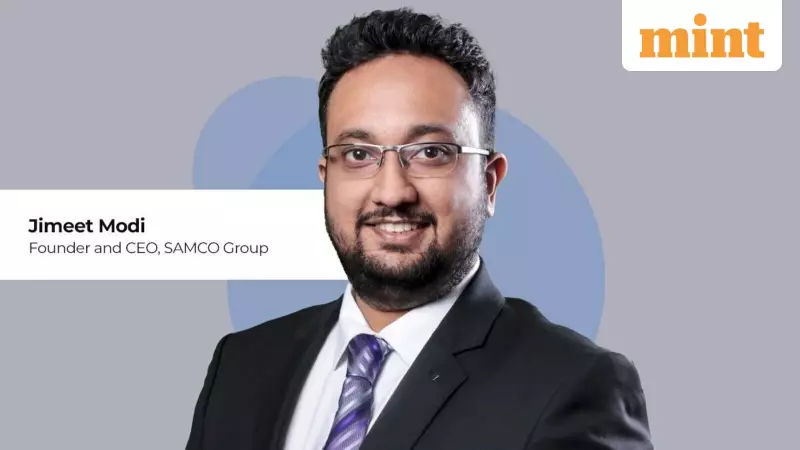
India's impressive 8% GDP growth figure for the latest quarter is overshadowed by a critical economic challenge, according to Jimeet Modi, Founder & CEO of SAMCO Group. In an exclusive interview with LiveMint, Modi warns that excessively tight monetary policy is stifling the economy's nominal momentum and calls for immediate action from the Reserve Bank of India (RBI).
The Case for an Urgent Rate Cut
Modi asserts that India needs a rate cut now. He points out that the real interest rate, currently at a decade-high of 5.25%, has become restrictively tight. While real GDP growth is robust, nominal growth is barely keeping pace. This disparity negatively impacts tax revenues, corporate profits, and the sustainability of debt.
With inflation largely under control, maintaining high interest rates risks triggering deflationary fears and slowing down capital expenditure (capex). This is particularly concerning when the government's fiscal capacity for aggressive spending is limited. Modi suggests that a rate cut, even with the rupee trading nervously in the 90s against the US dollar, is a necessary trade-off for the RBI. He believes lower inflation will cushion the impact of the cut and could benefit exporters, ultimately restoring nominal economic firepower and safeguarding India's growth path.

Market Outlook: Cautious Optimism and Sector Shifts
Addressing seasonal trends, Modi notes that December has historically been a positive month for Indian equities, ending higher 14 out of the last 20 years with an average gain of 2%. However, he highlights a stark divergence: while large-cap stocks have held up well, mid and small-cap segments have been significantly beaten down. Nearly two-thirds of the top 750 stocks are still trading below their September 2024 peaks.
He expects the large-cap rally to sustain in December but will watch to see if broader market participation emerges. For benchmarks, he forecasts the Nifty to trade in a range of +/- 500 points from 26,200 by December-end, expanding to +/- 1000 points until March 2026. Markets are likely to remain range-bound until a major catalyst, like broad-based sales and earnings growth, emerges.
On sectors, Modi identifies a clear sequence in the ongoing commodity bull cycle. Leadership, which began with precious metals, is now shifting to base metals and their miners, likely to be followed by oil & gas and finally agricultural commodities. He recommends metals and energy stocks for strong investment potential. The pharmaceutical sector is another pick due to improving sales and earnings growth.
Advice for Investors and Budget Expectations
Modi advises new investors to manage expectations and cultivate patience, reminding them that markets are cyclical. On the upcoming Union Budget, his primary expectation is the maintenance of status quo with no negative surprises. He urges the Finance Ministry to focus on enhancing capital expenditure while maintaining fiscal discipline. Stability or reduction in capital market taxes would be a significant booster, he adds. To revive consumption, he seeks considerable tax relief for the middle class and a stronger push for the manufacturing sector through expanded Production-Linked Incentive (PLI) schemes.
Regarding foreign investment, Modi presents a cautious picture for 2025. Despite a recent easing, Foreign Institutional Investor (FII) activity has been volatile with heavy net outflows in Q1 and Q3. Turning net buyers for the full calendar year remains a challenge, dependent on global risk sentiment, US rates, and currency movements.
Finally, he sounds a note of caution on the active IPO market, warning investors to be valuation-conscious and avoid subscribing based solely on reputation or Grey Market Premium (GMP), as this can lead to immediate value erosion post-listing.






