Budget 2026 Delivers Major Blow to F&O Traders with Massive STT Increases
In a significant development that has sent shockwaves through the Indian financial markets, Finance Minister Nirmala Sitharaman announced substantial hikes in Securities Transaction Tax (STT) on futures and options (F&O) transactions during her Budget 2026 speech on Sunday. The proposed increases represent one of the most substantial tax adjustments for derivative traders in recent years.
Steep STT Increases Proposed for Derivative Transactions
The Finance Minister revealed that STT on futures transactions would see a dramatic 150% increase, rising from the current rate of 0.02% to 0.05%. Simultaneously, STT on options transactions would be raised by 50%, moving to 0.15% from the previous rates of 0.1% for options premium and 0.125% for exercise of options.
"To provide reasonable course correction in the F&O segment of the capital market and generate additional revenues for the Government, it is proposed to raise the STT on Futures to 0.05% from the present 0.02%," stated Sitharaman during her budget presentation. "STT on options premium and exercise of options is proposed to be raised to 0.15% from the present rates."

Immediate Market Reaction and Volatility
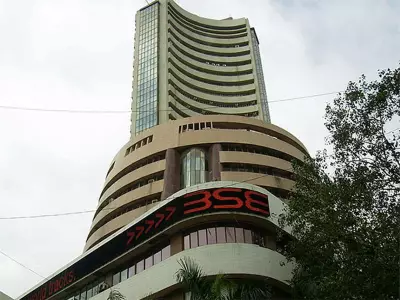
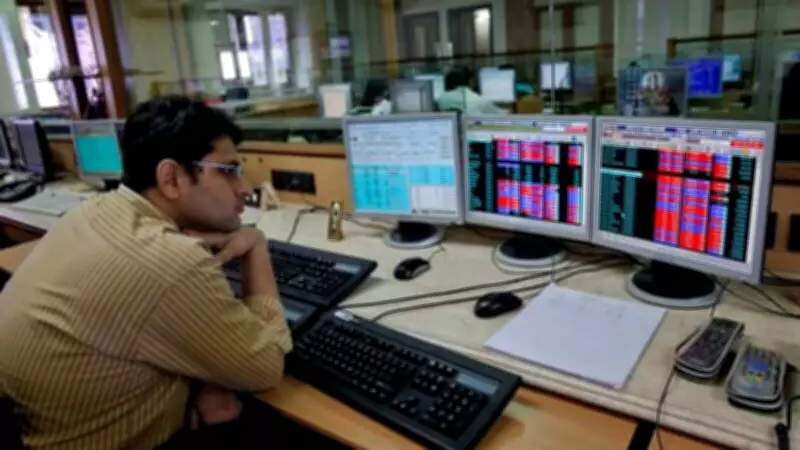
The announcement triggered immediate turmoil on Dalal Street, with the benchmark Sensex plunging more than 2,000 points during the trading session. The Nifty 50 index also experienced significant pressure, slipping below the 24,600 level as investors reacted to the unexpected tax increases.
Understanding Securities Transaction Tax (STT)
Securities Transaction Tax is a direct tax levied by the government on every purchase and sale of securities traded on recognized stock exchanges. This includes:
- Equity shares
- Futures contracts
- Options contracts
Originally introduced on October 1, 2004, STT serves multiple purposes:
- Reducing speculative trading activities
- Generating government revenue
- Tracking transactions for capital gains taxation purposes
The tax is deducted upfront at the time of trades, regardless of whether investors make profits or incur losses. While Long-Term Capital Gains (LTCG) tax was reintroduced on listed equities in the Union Budget 2018, STT has remained in place as a separate transaction cost.
Direct Impact on F&O Traders and Market Participants
Futures and options traders face the most significant impact from these tax increases due to their typically high trading volumes and thin profit margins. The STT hike substantially raises transaction costs—for example, adding approximately ₹10,000 extra cost on ₹1 crore futures turnover—which can significantly erode profits.
Industry experts anticipate several consequences:
- Reduced profitability for active traders
- Potential curbing of high-frequency trading activities
- Forced reduction in leverage usage
- Decreased trading frequency among retail participants
"The steep increase in STT on futures and options, coming on top of last year's hike, is likely to raise impact costs for traders, hedgers, and arbitrageurs," explained Shripal Shah, MD & CEO of Kotak Securities. "This could cool derivative activity and lead to a reduction in volumes. The intent appears to be volume moderation rather than revenue maximization, as any potential revenue gain could be offset by lower derivative volumes."
Potential Implications for Foreign Portfolio Investors
Market analysts express concern that the STT increases could negatively affect foreign portfolio investor (FPI) flows into Indian markets. FPIs have already been net sellers in the Indian stock market, with equity outflows exceeding ₹41,000 crore in January 2026 alone, driven by global risk-off sentiment, elevated US bond yields, and currency pressures.

"In this context, a higher STT further reduces post-tax returns, making India relatively less competitive for short-term and derivative-oriented foreign flows," noted Aakash Shah, Technical Research Analyst at Choice Equity Broking. "However, for long-only, fundamentally driven FPIs, the STT hike is unlikely to be a deal-breaker. Their investment decisions are more influenced by earnings visibility, currency stability, and policy predictability."
Shah added that higher transaction costs could potentially tilt some global allocators toward other Asian markets, particularly at a time when India faces competitive pressure from AI-led capital shifts to the United States, Taiwan, and South Korea.
Broader Market Implications and Future Outlook
While the STT increases may boost government tax collections in the short term, they risk dampening overall trading volumes and could slow tactical FPI participation. Market participants will be closely monitoring several factors moving forward:
- Macroeconomic stability indicators
- Rupee movement and currency stability
- Consistency in tax policy implementation
- Overall market liquidity conditions
"Overall, while the STT hike may help boost tax collections, it risks dampening trading volumes and could slow tactical FPI participation," concluded Shah. "To meaningfully revive sustained FPI inflows, investors will be looking more closely at macro stability, rupee movement, and consistency in tax policy rather than just growth optics."
The Budget 2026 proposals mark a significant shift in India's approach to derivative market taxation, with potential long-term implications for trading patterns, market participation, and India's competitive positioning among global emerging markets.