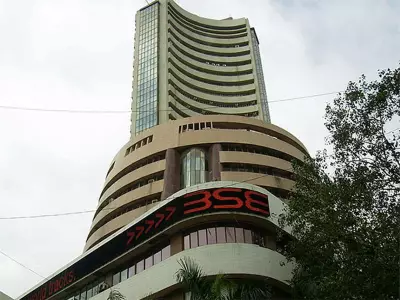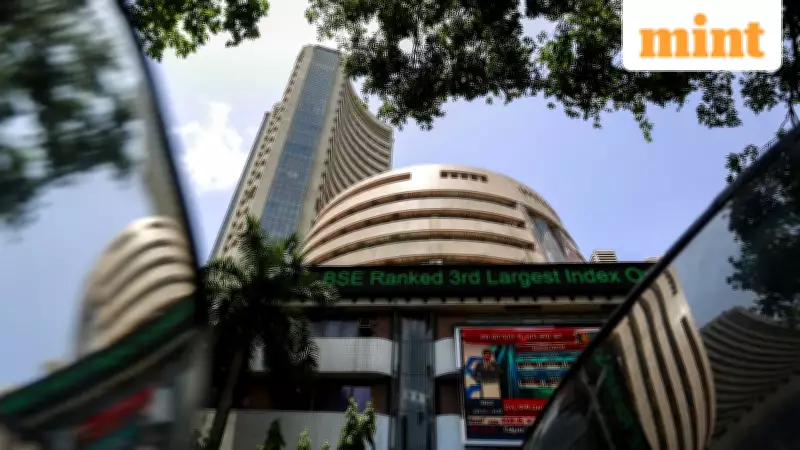
In an unusual move for the Indian financial calendar, the country's stock markets will remain fully operational on Sunday, February 1, 2026, as Union Finance Minister Nirmala Sitharaman prepares to present the crucial Union Budget for the financial year 2026-27 in Parliament. This marks a rare instance of live trading activity occurring on a non-working day, reflecting the significant economic importance attached to the annual budget presentation that outlines the government's fiscal strategy and economic direction.
Special Trading Session on Budget Day
Both the National Stock Exchange (NSE) and Bombay Stock Exchange (BSE) will conduct complete trading sessions following their standard weekday schedules, despite Sunday typically being a market holiday. This decision ensures that investors can react in real-time to budget announcements and policy measures that could significantly impact various sectors and the broader economy. The trading continuity maintains market efficiency during this critical economic event.
Detailed Market Timings and Procedures
The Indian equity markets will operate according to their regular timetable on this special Budget Sunday. The pre-open session, designed to facilitate price discovery before the main trading begins, will run from 9:00 am to 9:08 am. Regular trading activities will commence at 9:15 am and continue until 3:30 pm, followed by a trade modification window that remains accessible until 4:15 pm. This comprehensive schedule allows for complete market participation throughout the budget presentation period.

Finance Minister Nirmala Sitharaman is scheduled to begin her budget speech at 11:00 am, marking her ninth consecutive Union Budget presentation and the third full budget of the Modi 3.0 government. Investors across the country will be closely monitoring her announcements for cues about taxation policies, infrastructure spending, fiscal deficit targets, and sector-specific initiatives that could influence market sentiment and investment decisions.
Commodity Market Operations
The Multi Commodity Exchange of India (MCX) will also remain open for a special trading session on Sunday, February 1, aligning with the equity markets' unusual schedule. MCX will follow its regular trading timetable, with the pre-open session occurring from 8:45 am to 8:59 am, followed by normal trading hours extending from 9 am to 5 pm. Client code modifications will be permitted until 5:15 pm, providing additional flexibility for market participants.
However, MCX has issued a circular informing investors that there will be no pay-in or pay-out transactions processed on February 1. Instead, the funds settlement for trades executed on January 30 and February 1 will be completed on Monday, February 2, ensuring proper financial reconciliation despite the unusual trading day.
Market Context and Recent Performance
The Indian stock market approaches Budget Day against a backdrop of recent volatility and cautious investor sentiment. The Nifty index has declined over 2% during January 2026 and fallen approximately 1.5% in the two weeks preceding the budget presentation. Despite this weakness, benchmark indices demonstrated resilience in the final trading session before the budget, with the Nifty 50 gaining nearly 1% or 272 points to settle at 25,320.65 on Friday, while the BSE Sensex advanced 0.90% to close at 82,269.
Market analysts have identified key technical levels that could influence trading behavior during the budget session. Ravi Singh, Chief Research Officer at Master Capital Services Ltd, noted: "Nifty ended the week on a strong note, gaining 1.09% after the previous week's decline, as the index found support near its 55-day EMA. The 24,900–24,300 zone has emerged as a crucial support area, where the market is currently consolidating and has shown a bounce, indicating underlying buying interest."
Singh further emphasized that volatility in the Indian stock market is expected to remain elevated in anticipation of the Union Budget announcements, as investors assess the implications of fiscal policies on corporate earnings, economic growth projections, and sectoral allocations. This pattern continues from the previous year when Finance Minister Sitharaman presented the budget on a Saturday, another instance of weekend trading activity for budget-related market operations.

Disclaimer: This market analysis is for educational purposes only. Investors are advised to consult with qualified investment advisors before making any financial decisions based on budget announcements or market movements.