

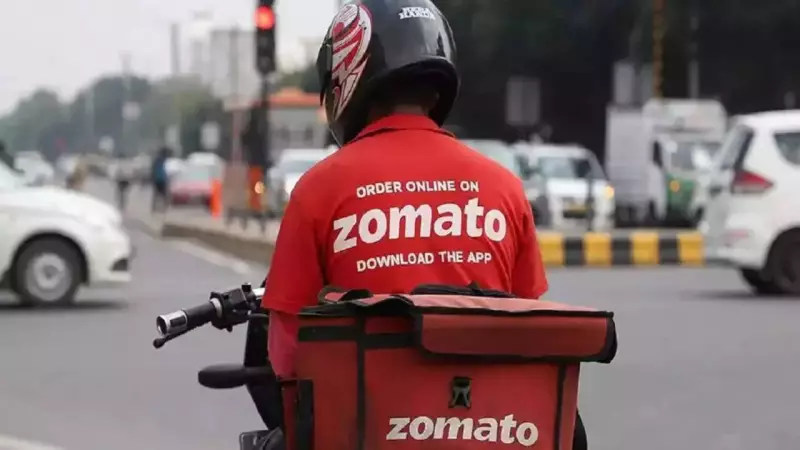
Zomato founder and CEO Deepinder Goyal has issued a detailed rebuttal following calls for a strike by some gig workers, bringing the contentious gig economy model back into sharp focus. Goyal presented data showing an increase in earnings and defended the platform's operational structure, emphasizing its inherent flexibility over traditional employment.
Earnings Growth and Financial Structure of Gig Work
According to figures shared by Goyal, the average hourly earnings for Zomato's delivery partners saw a significant rise in 2025. The data indicates earnings reached Rs 102 per hour, marking an approximate 10.9% year-on-year increase from the Rs 92 recorded in 2024. These numbers specifically exclude any tips received by the workers.
Goyal elaborated on the financial model on social media platform X. He outlined that a partner working for 10 hours daily over 26 days a month could achieve gross earnings near Rs 26,500. After deducting an estimated 20% for fuel and vehicle maintenance, the net monthly income would stand at around Rs 21,000. The company clarified that these calculations are based on total logged-in hours, which includes waiting periods between orders.

Flexibility as a Core Principle, Not an Incident
The Zomato founder strongly argued against demands for full-time employee benefits like Provident Fund (PF) or guaranteed salaries within the gig framework. He stated that such demands "don't align with what the model is built for." Instead, Goyal characterized the platform as providing a "flexible, stop-gap earning option" without long-term commitments.
Supporting this claim, he shared that the average delivery partner on Zomato worked for 38 days throughout 2025, averaging about seven hours on each working day. A very small fraction, only 2.3% of partners, worked more than 250 days in the year. Goyal emphasized that partners have complete freedom to choose their work zones and login times, with no assigned shifts or forced geographies. "Flexibility isn't incidental to the gig model, it is the whole point," he asserted.
Addressing Safety and Worker Welfare Initiatives
Responding to safety concerns often linked to quick-commerce and promises of ultra-fast delivery, Goyal offered clarifications. He stated that delivery partners for Blinkit, Zomato's quick-commerce arm, are not shown customer-facing countdown timers or delivery promises that could pressure them to drive unsafely. The speed of service, he explained, is achieved through dense store networks and proximity to customers, not by demanding faster road speeds.
Revealing operational metrics, Goyal noted that the average distance for a Blinkit order in 2025 was 2.03 km, with partners driving at an average speed of 16 km/h. For Zomato's food delivery, the average driving speed was 21 km/h.
On welfare measures, Goyal disclosed that Zomato and Blinkit together spent over Rs 100 crore on insurance premiums for their partners in 2025. This comprehensive cover includes:
- Accident insurance coverage up to Rs 10 lakh.
- Medical coverage of Rs 1 lakh.
- Loss of pay insurance.
Additional support includes two paid period rest days per month for women partners, income tax filing assistance extended to 95,000 partners, and enrollment into the National Pension Scheme for 54,000 workers.
The Broader Debate and Political Reactions
Goyal's defense comes against the backdrop of a one-day strike call by certain gig worker groups and criticism from political figures. Aam Aadmi Party's Rajya Sabha MP Raghav Chadha has publicly called for a ban on 10-minute delivery apps, accusing companies of oppressing gig workers and building valuations on their backs.
Earlier, Goyal had framed the gig economy as a system that shattered centuries of labor invisibility, allowing workers to interact directly with consumers. He suggested this personal exposure of inequality is what sparks much of the discomfort and debate around the model.

Prominent investor and Info Edge (Naukri.com) founder Sanjeev Bikhchandani entered the fray in support of Goyal. In a post on X, Bikhchandani praised Goyal's comments and took an indirect jab at critics, notably Chadha, by referring to a "Champagne Socialist" with a designer wedding, questioning their standing to talk about worker exploitation.
Concluding his argument, Goyal posed a direct question to the public, framing the gig role as an unskilled, largely part-time job with zero entry barriers: "Now tell me, is this unfair?" The debate continues to highlight the ongoing tension between the flexibility of gig work and the demand for greater security and benefits for those who power India's platform economy.





