

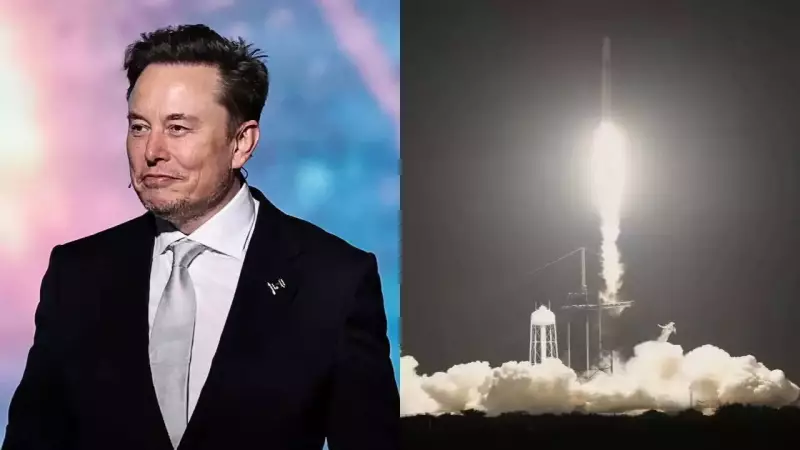
Speculation is mounting about a potential initial public offering (IPO) for SpaceX in 2026, even though its founder, Elon Musk, has not officially confirmed any such plans. This buzz comes as Musk, already the world's richest person, recently achieved a staggering personal milestone.
Musk's Historic Wealth and the IPO Valuation Buzz
Elon Musk has become the first individual ever to amass a net worth of $600 billion, according to Forbes. This monumental surge in wealth is largely attributed to reports suggesting that his aerospace venture, SpaceX, is contemplating going public. The potential IPO could value the company at an astronomical $800 billion.
However, such a move would mark a significant shift in strategy for the Tesla CEO, who has historically favoured keeping his companies under private ownership. An IPO would inevitably bring intense regulatory scrutiny and pressure from public shareholders, forces that run contrary to Musk's well-documented preference for autonomy.

The Private Empire vs. The Public Scrutiny of Tesla
Musk's portfolio includes several high-profile private companies, such as Neuralink, xAI, and The Boring Company. His first action after acquiring the social media platform Twitter was to take it private. This pattern underscores a clear philosophy: private ownership allows Musk to operate with greater freedom and less public oversight.
The exception to this rule is Tesla, his publicly-traded electric vehicle giant. Tesla's experience serves as a cautionary tale. In 2018, Musk's infamous tweet about considering taking Tesla private led to a serious investigation by the U.S. Securities and Exchange Commission (SEC) and litigation with shareholders. The Tesla board has also had to intervene at times, such as urging Musk to reduce his focus on distractions like cryptocurrency Dogecoin.
Hitting the "Private Market Ceiling"
So, what might drive Musk to consider a SpaceX IPO? Analysts point to the limitations of private capital markets. A report by Fortune, citing data from PitchBook, notes that SpaceX has already raised over $10 billion in private funding, securing more private capital than nearly any company in history.
Despite this success, there is a ceiling. PitchBook emerging technology analyst Ali Javaheri explained that while private firms have access to an estimated $2 trillion to $3 trillion in capital, the global public equity markets are vastly larger, holding between $100 trillion and $150 trillion.
"SpaceX has effectively hit the ceiling of what private markets can support. Financing a multi-decade, industrial-scale road map simply doesn't map cleanly onto private fund structures," Javaheri stated. This suggests that to fund its ambitious, long-term goals like Mars colonization, SpaceX may eventually need to tap into the immense reservoir of public market funds, even if it means compromising on Musk's cherished autonomy.
The coming years will be crucial in observing whether Elon Musk decides to navigate SpaceX into the public domain, a move that would redefine the space industry's financial landscape and test his ability to manage a publicly-traded industrial behemoth alongside the relentless scrutiny it brings.






