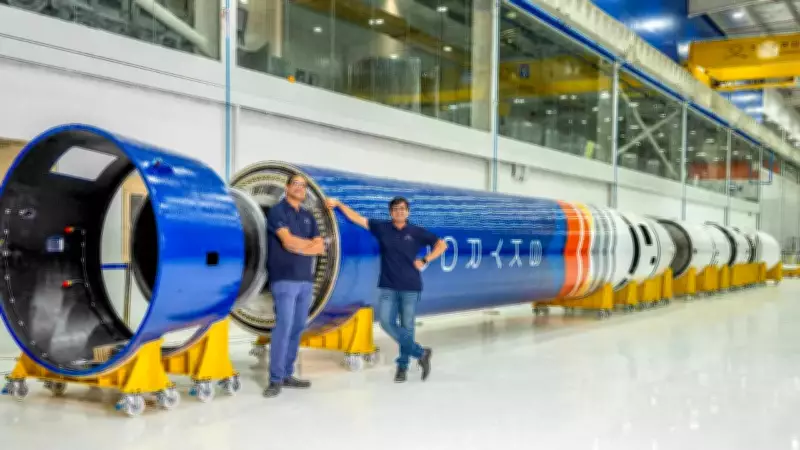
Skyroot Aerospace, which is preparing to launch India's first private orbital rocket, Vikram-1, has achieved a historic milestone by becoming the country's first spacetech unicorn. The company reached a valuation of $1.1 billion following its latest funding round of approximately $60 million (Rs 568 crore).
Skyroot's Unicorn Status
With this second pre-series C funding round, Skyroot also becomes Hyderabad's second true blue unicorn after HR tech startup Darwinbox, which achieved this status in early 2022. The round was led by existing investors Sherpalo Ventures and GIC, with participation from new investors such as Blackrock-managed funds, Playbook Partners, and the Shanghvi family office, along with existing ones like Greenko group founders and Arkam Ventures.
As part of this latest round, Sherpalo founder Ram Shriram, an early investor in Skyroot and a board member of Alphabet Inc, will join the Skyroot board. This brings the total funding raised by Skyroot to $160 million (Rs 1,515 crore). The capital will help Skyroot achieve its target of launching one rocket per month from its new Infinity campus in Hyderabad.

Upcoming Launches
Skyroot is planning two to three rocket test launches before commercial operations begin next year, as stated by founder Pawan Kumar Chandana. "We are excited about the upcoming Vikram-1 launch, India's first private orbital rocket, marking a significant milestone both for India and the global space sector. This investment signals confidence from some of the world's reputed investors," Chandana added.
Chandana also noted that Vikram-1 is just weeks away from its maiden flight, and the raised capital will be used to scale launch cadence for Vikram-1, expand manufacturing, and develop Vikram-2, a one-tonne class vehicle with an advanced cryogenic upper stage.
Historical Context
Skyroot became India's first private company to send a rocket to space when it successfully launched the sub-orbital rocket Vikram-S in November 2022. Ram Shriram commented: "Access to space is one of the key challenges of our time. Skyroot is building the foundational infrastructure for that future with the best cost-to-performance ratio in the orbital-launch industry."
The startup is positioning itself as a cab to space, capable of dropping off satellites in unique orbits with its smaller rockets—something that larger players like Elon Musk's SpaceX cannot do.
Industry Impact
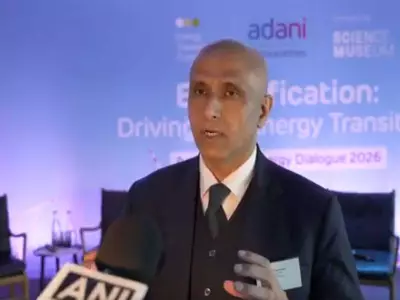
Terming this milestone as a defining moment for India's private space ecosystem, Indian Space Association director general Lt Gen AK Bhatt (retd) said: "This is far more than a financial achievement. It is a symbolic coming-of-age of India's space startup landscape and a powerful validation of the technological ingenuity, entrepreneurial ambition and commercial agility that Indian companies now bring to the global space sector."
Bhatt added: "The achievement also sends a strong signal to global investors that India has built a credible and innovation-driven space ecosystem capable of delivering world-class, cost-competitive, reliable and on-demand space solutions. As the industry looks ahead to the Vikram-1 orbital launch, this achievement will further strengthen investor confidence and accelerate India's collective mission of securing a 10% share of the global space economy by 2033."
Funding History
This latest funding round comes two and a half years after Skyroot raised $27.5 million (approx. Rs 225 crore) in its first pre-Series C funding round led by Singapore-based global investment firm Temasek. In September 2022, it had brought Temasek to its cap table when it raised $51 million (approx. Rs 403 crore).
Skyroot was founded in 2018 by Chandana along with Naga Bharath Daka, both former ISRO scientists who quit their jobs in their late 20s to start the company. The startup has been steadily charting its trajectory toward developing and launching on-demand rockets for small satellites.