

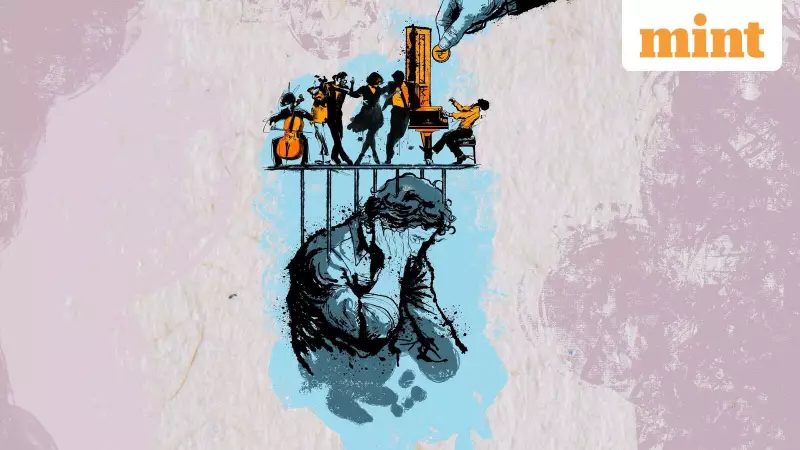
In the heart of India's bustling metropolises, a quiet revolution is unfolding. As loneliness becomes a shared urban condition, a new economic sector is emerging, dedicated to monetizing human connection. This is not about dating or networking; it's about creating intentional, paid safe spaces where strangers can gather to simply talk, listen, and feel less alone.
The Rise of Curated Social Experiences
The story of Trisha Mukherjee, a 40-year-old HR professional, illustrates this shift. After relocating from Delhi to Bengaluru in 2024 with her family, she found herself professionally stable but socially isolated. "My entire ecosystem was back in Delhi," she recalls. Her search for real-world interaction led her to Perspectives, a Bengaluru-based initiative that organizes small, paid meetups for strangers seeking genuine connection.
At a gathering in Yemalur last August, Mukherjee joined 11 others in a private home for structured conversations over a meal. "I didn't feel like an outsider. People listened. There was respect," she says, having since attended three more sessions. This model—capped attendance, paid entry, and curated interaction—is replicating across urban India.

From supper clubs in Gurugram and house parties in Mumbai to game nights in Chennai and themed evenings in Kolkata, entrepreneurs are building ventures on the foundation of urban isolation. These are not hobby classes but social experiments, underlining the viability of India's loneliness economy.
Addressing an Urban Epidemic
The timing of this trend is no accident. India's urban landscape is undergoing a profound social reset. Increased migration, nuclear families, and remote work have fractured traditional community structures. While digital platforms offer abundant connection, it often remains shallow, leaving many feeling socially networked but emotionally adrift.
The scale of the issue is significant. A recent study found that nearly 60% of Indians living in metros report feeling lonely. The World Health Organization has linked loneliness to severe health risks; a June 2025 report connected it to over 871,000 deaths annually between 2014 and 2019. Former US surgeon general Vivek Murthy, in 2023, equated the health impact of chronic loneliness to smoking up to 15 cigarettes a day.
Dr. Himanshu Gupta, a 32-year-old co-founder of Perspectives, observes, "Social isolation is a real problem. It is more acute in Western societies, but India is getting there." His platform, now a referral-only WhatsApp community of over 1,000 members, charges between ₹599 and ₹999 per session, taking a 20% commission.
From Personal Need to Community Solution
A defining feature of this economy is its organic origin. Many founders started by solving their own unmet need for connection.
Krishna Rubiga, who moved to Chennai from Tiruppur, struggled to make friends. With Loshini Gnanasekar, she launched Third Space by Losh and Krish, hosting weekend meetups in a living room over home-cooked food and guided conversation. "Sometimes it can feel like group therapy," says Rubiga, a sustainability consultant. They charge ₹999 per head for these gatherings.
In Kolkata, Adi Roy's Awaara Community evolved from informal hangouts to a calendar of paid events—board game evenings, walk-and-talks, and art sessions—priced between ₹300 and ₹500. For many participants, the appeal is the escape from constant social performance. "Even within our close circles, we are constantly being judged," says 48-year-old Rupesh Rout from Bengaluru, who found profound value in a Goa retreat by The Bonding Boulevard.
Safety, Scale, and the Digital Bridge
Trust and safety are non-negotiable pillars. Platforms like Playace, which enables verified hosts to open their homes for ticketed parties, implement rigorous checks. Founder Shrinivas Shinde explains, "Every host undergoes multiple layers of verification... If people don't feel safe, they won't come back. And this model collapses." Playace has hosted over 6,000 parties across major cities.

For those outside metros or from conservative backgrounds, offline meetings carry risk. This is where platforms like Frnd bridge the gap. This audio-first app allows anonymous, one-on-one conversations in Indic languages, boasting around three million monthly active users. For user Siri Shyam from Hyderabad, the anonymity was crucial during a difficult breakup. "I just wanted someone to listen without judgement," she shares.
Founders across this ecosystem are clear about their intent. "We are not running dating platforms," emphasizes Playace's Shinde. The Bonding Boulevard's Junaid Khateeb states, "People come here to work on themselves... deeper bonds are a byproduct, not the objective."
In an economy obsessed with speed and visibility, these curated communities offer a countercultural proposition: slowing down, charging for time, and insisting on presence. They represent urban India's innovative, and increasingly monetized, search for the most human of needs—authentic connection.





