

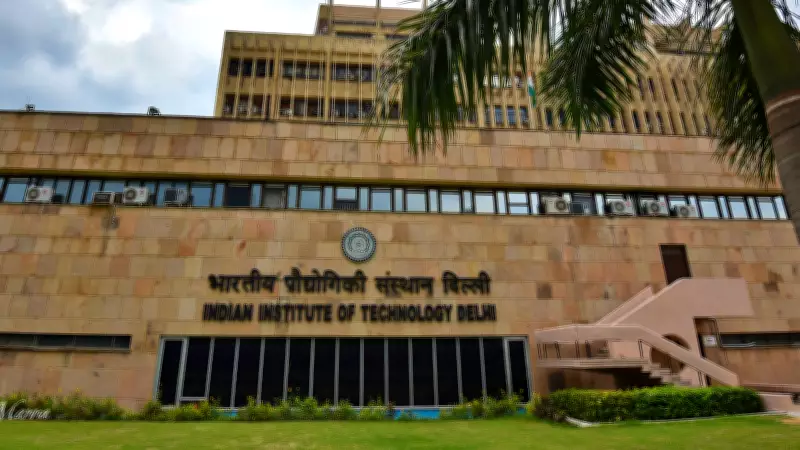
From Campus to Corporate: IIT Delhi's Startup Transformation
For today's emerging workforce, startups represent more than just an alternative career path—they have become the primary launchpad for ambitious professionals. Young graduates are increasingly drawn to the dynamic environment of new ventures, where they can assume significant responsibility and witness tangible results within weeks rather than years. In an era defined by rapid technological advancement, startups offer steep learning curves that prove both challenging and immensely rewarding for those who embrace them.
The Institutional Foundation of Entrepreneurship
This cultural transformation didn't occur spontaneously. It was cultivated by institutions that quietly normalized entrepreneurship long before it became fashionable. Among these influential forces, IIT Delhi stands out prominently. What began decades ago as a handful of alumni testing entrepreneurial waters has evolved into one of India's most significant startup ecosystems associated with any academic institution. This ecosystem has fundamentally reshaped not only how businesses are founded but how young professionals conceptualize their entire career trajectories.
Historical Evolution: From Public Sector to Startup Powerhouse
During its formative years from the 1960s through the late 1970s, IIT Delhi primarily directed graduates toward established industries and public sector positions. Entrepreneurship existed during this period but remained at the periphery of career options. The landscape began shifting in the 1980s and 1990s when alumni-led ventures such as Pine Labs, Mindtree, and Indiabulls demonstrated that focused, small teams could build substantial businesses.

The early 2000s marked a decisive turning point. As information technology services and internet accessibility reshaped economic opportunities, companies like Fractal Analytics proved that data-driven, globally competitive businesses could originate from India. This momentum accelerated rapidly between 2006 and 2010 with the emergence of startups including Flipkart, Zomato, and Policybazaar—ventures designed for scale from inception, supported by improving access to capital and growing risk appetite among investors.
Phases of IIT Delhi's Startup Ecosystem Development
- Institutional Foundation (1965–1980): Public sector orientation with limited entrepreneurial activity
- Early Signals (1981–1999): Emergence of small alumni-led ventures including Pine Labs and Mindtree
- Tech Inflection (2000–2005): IT and internet-driven capability building exemplified by Fractal Analytics
- Acceleration (2006–2010): Scale-ready startups with improved capital access including Flipkart and Zomato
- Startup Boom (2011–2015): Platform expansion and sector diversification featuring Tata 1mg and Delhivery
- Exponential Growth (2016–2025): Policy support and global venture capital fueling leaders like BharatPe and Groww
Startups as Career Classrooms: Beyond Founder Stories
The current scale of IIT Delhi's startup ecosystem has fundamentally redefined startups as mainstream career destinations rather than exclusive founder playgrounds. Alumni have established over 2,600 startups led by more than 2,000 founders operating across 35+ countries. Collectively, these companies boast a valuation exceeding $178 billion and have generated approximately 4.8 lakh employment opportunities.
IIT Delhi Alumni Startup Ecosystem at a Glance (January 2026)
- Total alumni-founded startups: 2,600+
- Alumni founders: 2,000+
- Countries of operation: 35+
- Combined valuation: $178+ billion
- Jobs created: 4.8 lakh
Significantly, the majority of these positions are not founder roles. Alumni-founded startups have evolved into comprehensive training grounds for early-career engineers, product managers, data scientists, and operational professionals who assume responsibility much earlier than they might in larger, established organizations. For young professionals, startups function as intensive career classrooms where practical outcomes and sound judgment matter more than formal titles.

Sector Analysis: Where Opportunities Converge
Financial technology leads this ecosystem, accounting for 15% of alumni startups. Firms such as BharatPe, Groww, and Pine Labs demonstrate how regulatory understanding and platform-based models enable rapid, capital-efficient scaling. Information technology and IT services follow closely at 13%, featuring global-first companies like Rubrik, Glean, and Fractal Analytics that combine lean teams with international market penetration.
Education technology represents 11% of startups, reflecting direct engagement with learning and skill development, while commerce and marketplace ventures—including Flipkart, Zomato, and Udaan—excel in employment generation and create spillover effects across logistics and micro, small, and medium enterprises. Healthcare startups, though comprising a smaller 8% share, endure through longer business lifecycles built on trust, regulatory compliance, and specialized expertise.
These diverse sectors collectively highlight a spectrum of career outcomes—from high-velocity scaling environments to slower-paced, regulation-intensive businesses offering stability and depth.
Geographic Distribution: India-First with Global Impact
While 76.2% of alumni startups maintain operations within India, global-only ventures—though fewer in number—deliver disproportionate impact. These international companies account for 11 unicorns and one decacorn, reinforcing the increasingly geography-agnostic nature of both alumni founders and the teams they assemble.
Geographic Distribution of Alumni Startups
- India-based: 76% (2,014 startups)
- Global-only: 22% (590 startups)
- India + Global operations: 1% (38 startups)
This geographic flexibility proves particularly attractive to young professionals whose careers increasingly unfold across borders, markets, and time zones.
The Institutional Flywheel and Future Trajectories
Behind this remarkable growth operates a self-reinforcing institutional mechanism. Alumni return as mentors, early-stage investors, and strategic advisors, while campus-linked incubators and research ecosystems reduce the distance between innovative ideas and practical execution. The underlying philosophy remains straightforward yet powerful: give back, innovate, build enterprises, and measure success through tangible impact.
Looking forward, the ecosystem's center of gravity will likely shift further toward deep technology, climate solutions, and healthcare—domains where research excellence, patient capital, and interdisciplinary collaboration matter more than speed alone. For upcoming generations, startups will not replace traditional career paths but will continue redefining professional ambition and possibility.
At IIT Delhi, this redefinition has already taken firm root—not as a passing trend but as an enduring mindset that shapes how talent approaches opportunity, innovation, and impact in the modern economy.





