

IIMV FIELD and Andhra Pradesh Government Launch Sampannakari Initiative to Empower Women-Led SHG Enterprises
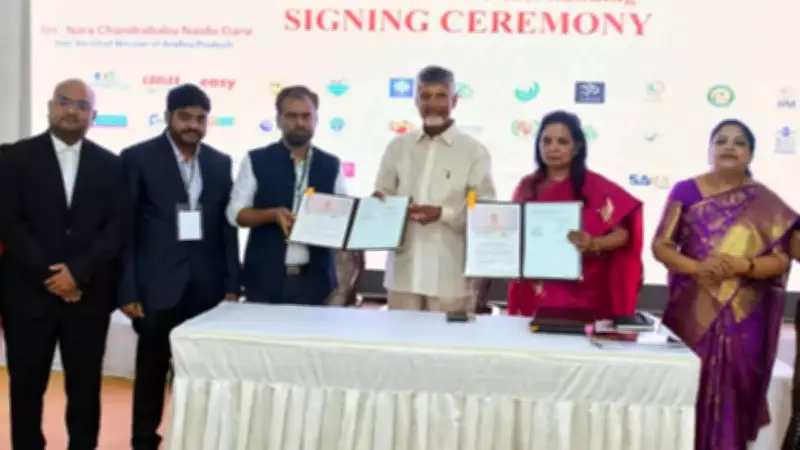
VISAKHAPATNAM: In a significant move to bolster rural economic development, IIMV FIELD, the incubation and startup hub of the Indian Institute of Management Visakhapatnam, has forged a strategic partnership with the Andhra Pradesh government. This collaboration, formalized under the 'Sampannakari' initiative, is designed to strengthen women-led self-help group (SHG) enterprises across the state, with a focus on scaling and sustaining their operations.
Structured Incubation Programme for Rural Enterprises
As part of this ambitious project, 150 women-led SHG enterprises from all 26 districts of Andhra Pradesh will undergo a structured incubation programme over a two-year period. The initiative aims to provide comprehensive support to help these businesses grow sustainably, moving beyond traditional agricultural dependencies. Recently, IIMV FIELD entered into a memorandum of understanding with SERP (Society for Elimination of Rural Poverty), the state-level implementing agency, in the presence of Chief Minister N. Chandrababu Naidu.
The project is being implemented under the Deendayal Antyodaya Yojana – National Rural Livelihoods Mission (DAY-NRLM) of the Ministry of Rural Development. It builds on similar successful initiatives undertaken in states such as Karnataka, Kerala, and West Bengal, with a core objective of promoting non-farm rural enterprise development. This includes sectors like food processing, small-scale manufacturing, and service-based enterprises within rural ecosystems.

Aligning with Vision for Grassroots Entrepreneurship
Speaking about the initiative, IIM Visakhapatnam director Prof M Chandrasekhar emphasized that the Sampannakari programme aligns with Chief Minister N. Chandrababu Naidu's vision of "one family, one entrepreneur." He stated, "The programme focuses on grassroots entrepreneurship, moving beyond urban startup ecosystems to support rural families. It is being undertaken as a pilot initiative to promote entrepreneurship at the grassroots level, generating insights that can inform future policy interventions and enable expansion into larger cohorts in subsequent phases."
Prof Chandrasekhar added that the program aims to build a structured ecosystem for rural enterprise growth by combining financial support, capacity building, and continuous mentorship, ultimately contributing to sustainable livelihoods and rural economic development.
Targeting Operational Enterprises with Growth Potential
IIMV FIELD directors Dr. M. Shameem Jawed and Dr. R. Sai Shiva Jayanth detailed that the programme seeks to identify and support 150 rural enterprises across Andhra Pradesh. These enterprises may operate across a wide range of sectors, including food processing, small manufacturing, and other livelihood-oriented activities. The primary focus is on businesses that are already operational and generating a minimum annual turnover of approximately Rs 12 lakh. A small proportion, around 10%, may also be selected from early-stage or nascent ventures to encourage new entrepreneurial ideas.
Selected enterprises will undergo a structured incubation programme for two years, receiving continuous handholding support. This includes guidance on improving revenue streams, strengthening branding and market positioning, optimising cost structures, and enhancing overall profitability. The programme aims to enable these enterprises to achieve a targeted annual growth rate of around 15%, transforming them into scalable and high-growth ventures.
Financial Support and Outreach Efforts
In addition to capacity building, the programme provides access to financial support mechanisms. These include performance-based 'challenge grants,' awarded based on milestones achieved, as well as linked financing schemes such as subsidised or zero-interest loans to support expansion and working capital needs. Extensive outreach efforts have been undertaken to ensure participation from rural communities, with pamphlets and digital resources distributed across districts to facilitate awareness and engagement.
Eligibility and Application Process
The eligibility, application process, and selection criteria for the Sampannakari programme are as follows:

- Eligibility is closely tied to the self-help group ecosystem, with enterprises must be led by or associated with SHG members, ensuring strong participation of women in ownership or leadership roles.
- The program primarily targets rural-based enterprises, including informal or family-run businesses.
- The application process is currently open, with the deadline set for April 15.
- To improve accessibility, the process is supported by a mobile-based application platform, along with AI-enabled assistance features such as chatbot and voice support to guide applicants in filling out the forms.
- Helpline support is available to address queries.
- Initially, about 500 to 1000 applications will be shortlisted based on eligibility and business potential.
- This will be followed by detailed ground verification to assess the authenticity, scale, and operational status of the enterprises.
- Based on this evaluation, 150 enterprises will be finalised, ensuring a balanced representation across districts and sectors.
This initiative marks a pivotal step towards fostering inclusive economic growth in Andhra Pradesh, leveraging academic expertise and government support to empower women entrepreneurs at the grassroots level.





