

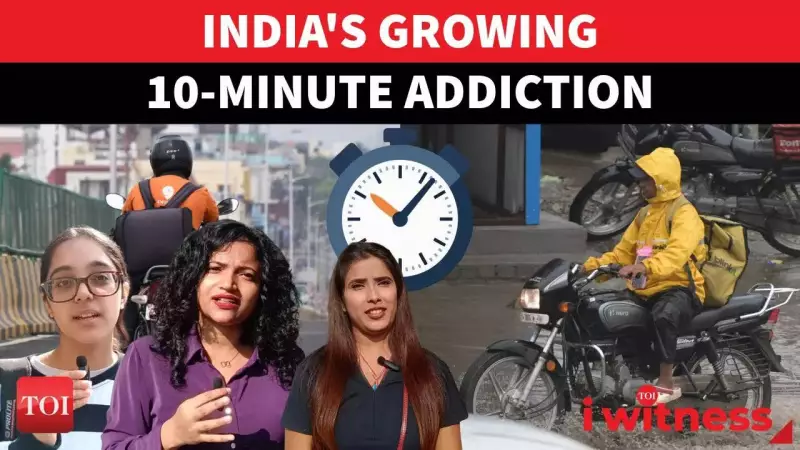
The rhythm of daily life in urban India has accelerated dramatically, powered by a retail revolution that delivers groceries, snacks, and essentials to doorsteps in the time it takes to brew a cup of tea. What began as a lockdown lifeline has exploded into a massive economic force, fundamentally altering how Indians shop and how companies strategize to capture their attention and wallets.
From Pandemic Stopgap to $57-Billion Opportunity
The seeds of this ultra-fast delivery model were sown during the COVID-19 lockdowns, when convenience and safety became paramount. However, the service tapped into a deeper, enduring consumer desire for instant gratification. This demand has propelled the sector into a staggering $57-billion market opportunity, according to industry analyses. The model's backbone is a network of "dark stores" – micro-warehouses strategically nestled within residential neighborhoods, stocked with around 2,000-3,000 of the most frequently ordered items.
These fulfillment centers are far removed from the experience of a traditional supermarket. Instead of aisles for customers, they are optimized for pickers and packers who race against the clock, guided by sophisticated algorithms that map the most efficient routes through the shelves. The entire operation, from order receipt to dispatch, is a symphony of technology and logistics designed to meet that audacious 10-minute promise.

The AI-Powered Engine Behind the Speed
The magic – and the immense challenge – lies in the logistics. Companies rely heavily on AI-powered systems that perform real-time miracles. These systems predict demand surges, manage inventory down to the last onion, and dynamically assign delivery partners based on location and traffic conditions. The goal is to minimize every second of latency in the supply chain.
This race for speed has also ignited a fierce battle for the digital shopping basket. Brands now fight for prime virtual shelf space within these apps, knowing that being among the top few search results or featured in a "flash sale" can make or break their daily volumes. The quick commerce platform has become a powerful new discovery and sales channel, especially for new and niche products targeting urban, time-poor consumers.
Consumer Habits Rewired: The "Instant Need" Economy
The impact on consumer behavior is profound. Shopping is no longer a weekly planning exercise for many. It has fragmented into multiple, impulse-driven micro-transactions throughout the day. The convenience of solving a sudden cooking shortage, craving, or last-minute need within minutes has created a powerful habit loop. This has given rise to what analysts call the "instant need" economy, where immediacy often trumps price comparison for a certain segment of shoppers.
The typical cart has evolved too. While initial orders were dominated by staples, there's a growing trend of ordering indulgent snacks, beverages, personal care items, and even small electronics – items consumers want immediately rather than later.
The Billion-Dollar Question: A Path to Profitability?
Despite the booming demand and sky-high valuations, the sector grapples with a fundamental question: Can the relentless race for 10-minute delivery ever become sustainably profitable? The costs are enormous – from maintaining dense networks of dark stores and employing fleets of delivery partners to offering deep discounts and absorbing high logistics expenses.
Companies are now exploring various routes to financial viability. These include:

- Introducing slightly longer, but more economical, delivery slots for non-urgent items.
- Expanding into higher-margin categories like cosmetics, electronics, and fashion.
- Launching private-label brands to improve margins.
- Increasing the average order value through bundling and promotions.
- Implementing platform fees or minimum order values for the fastest delivery tiers.
The transformation from a pandemic-era novelty to an entrenched pillar of Indian retail is complete. The 10-minute delivery revolution has not just changed how we receive goods; it has reshaped urban consumption patterns, supply chain infrastructure, and competitive dynamics for countless brands. The coming years will determine whether this model can fine-tune its engine to run as efficiently as it runs fast, turning phenomenal growth into lasting economic success.





