

In a society that often equates missteps with personal shortcomings, failure has earned an unfairly bad reputation. We are conditioned from a young age to avoid it, conceal it, and feel shame when it occurs. This perception has twisted a natural part of the human learning process into a mark of inadequacy.
The Heavy Weight of Failure in Careers and Business
This fear becomes particularly burdensome in the professional sphere. A pervasive, unspoken belief suggests that if a business venture does not succeed, the founder has personally failed. This mindset is paralyzing. It traps individuals in unfulfilling jobs and silences brilliant ideas, as the terror of making a mistake feels more daunting than enduring persistent unhappiness.
However, a counterintuitive truth exists: if you are not failing occasionally, you are likely not challenging your limits. Stepping outside one's comfort zone inherently carries the risk of failure. New endeavours are uncomfortable, making you feel uncertain and exposed. Yet, it is precisely within this discomfort that genuine growth and development begin.

Learning from the Titans: The Elon Musk Philosophy
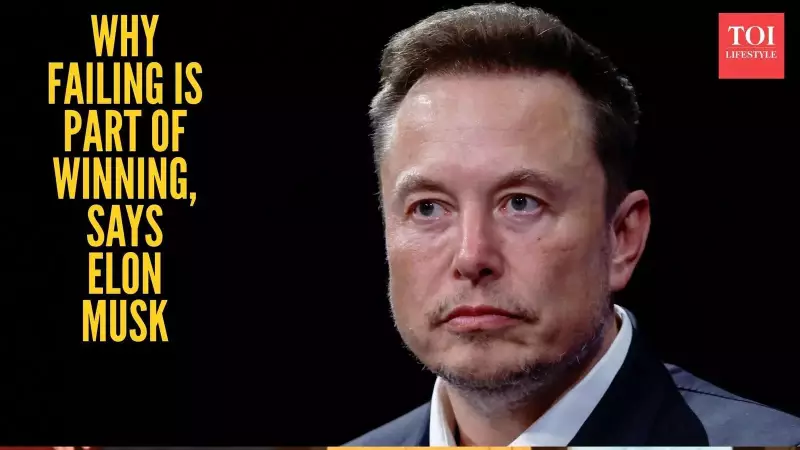
Observing individuals who have built transformative companies reveals a common thread: they did not evade failure. They confronted it directly, extracted lessons, and persevered. Elon Musk stands as a prominent advocate for redefining failure's role.
Long before SpaceX became a headline-grabbing success, it teetered on the brink of collapse. The company's early years were marked by multiple failed rocket launches, severe financial constraints, dwindling public trust, and a chorus of critics. Musk, however, refused to view these setbacks as signals to abandon the mission. Instead, he interpreted them as evidence that his team was tackling a genuinely ambitious challenge.
Musk famously stated that "if things are not failing, you are not innovating enough." This principle underpins operations at Tesla, SpaceX, and Neuralink. The objective is not to seek safety but to rapidly push boundaries, learn from mistakes, and iterate constantly.
Applying the Mindset Beyond Business
This philosophy extends far beyond entrepreneurship. Whether navigating a career shift, launching a creative project, or making a significant life decision, failure is frequently part of the essential learning curve. Each setback provides crucial data on what does not work, steering you incrementally closer to a solution that might.
The authentic peril lies not in failing but in allowing the fear of failure to prevent you from attempting anything at all. If a project does not yield the desired results, it does not signify a lack of skill or a reason to quit. It simply indicates you are actively engaged in the learning process.
When a figure like Elon Musk can lose multimillion-dollar rockets and still classify it as progress, it offers a powerful lesson. Perhaps it is time we all adopt a more compassionate and constructive view of our own stumbles. For most who achieve meaningful success, failure is not the opposite of victory; it is an integral part of the route map to get there.






