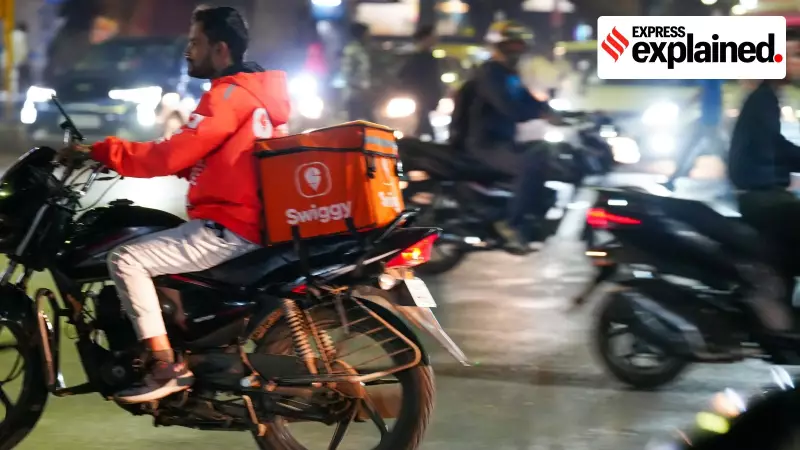
In a significant escalation of their ongoing protest, delivery workers associated with major platforms like Swiggy, Zomato, Blinkit, and Zepto have launched a second wave of strikes on New Year's Eve. This action follows a similar protest on Christmas Day and is centrally focused on demanding a ban on the controversial 10-minute delivery model, alongside calls for fair wages and social security.
Core Demands and Union Action
The strikes are spearheaded by the Indian Federation of App-based Transport Workers (IFAT). The union has formally written to Union Labour Minister Mansukh Mandaviya, outlining a series of critical demands. The key demands include an immediate ban on what they term "unsafe" 10-minute delivery models, the establishment of a fair and transparent wage structure, and the regulation of platform companies under India's recently notified labour codes. The union is also pushing for official recognition of their right to organise and engage in collective bargaining.
Shaik Salauddin, co-founder and national general secretary of IFAT, issued a strong statement, saying, "The government must intervene immediately. Regulate platform companies, stop worker victimisation, and ensure fair wages, safety, and social protection. The gig economy cannot be built on the broken bodies and silenced voices of workers."

Why Workers Are Protesting: A System Under Strain
The strikes represent a boiling point after years of simmering discontent among India's gig workforce. While companies and policymakers have often highlighted the flexibility of gig work, the ground reality for many delivery executives is marked by financial precarity and systemic pressure.
Workers cite a combination of crippling challenges: an uncertain and often low base pay, algorithmic management that pushes them to ride excessively long distances for minimal earnings, and the constant burden of rising fuel costs. This is compounded by the complete absence of traditional social security benefits like health insurance or provident fund, and a perceived "faceless" management that offers no recourse for grievances.
The 10-minute delivery model, aggressively promoted by platforms like Blinkit, Swiggy Instamart, and Zepto, has intensified these pressures, adding a dangerous element of speed as workers race against the clock to meet stringent delivery timelines.
Impact of the Strikes and Company Response
The timing of the strikes on December 25 and December 31 is strategic, targeting two of the busiest days for food and grocery deliveries. The Christmas Day strike saw significant disruption. According to Shaik Salauddin, approximately 40,000 delivery workers participated, leading to between 50-60 per cent of orders being delayed or disputed in major cities like Delhi, Karnataka, Hyderabad, and Mumbai.
Salauddin also alleged that during the strike, workers faced intimidation, including the blocking of IDs of union leaders and active participants. Companies reportedly attempted to break the strike by engaging third-party logistics firms like Shadowfax and Rapido, offering extra incentive pay, and reactivating inactive worker IDs to maintain operations.
The Regulatory Framework: A Glimmer of Hope?
Amidst this conflict, a potential regulatory solution exists. The government has notified the Code on Social Security, 2020, which for the first time formally defines 'gig workers' and 'platform workers'. The code aims to bring them under a welfare framework, enabling registration on a national database and access to schemes for health, accident insurance, and old-age support.
Crucially, the code mandates that aggregators like Swiggy and Zomato contribute 1–2 per cent of their annual turnover towards a Social Security Fund, with the total contribution capped at 5 per cent of the amount payable to workers. This fund, also supported by government and CSR funds, is envisioned as the bedrock of social protection for this vast but vulnerable workforce. The current strikes underscore the urgent need for the effective implementation of these regulations to bridge the gap between corporate growth and worker dignity.