

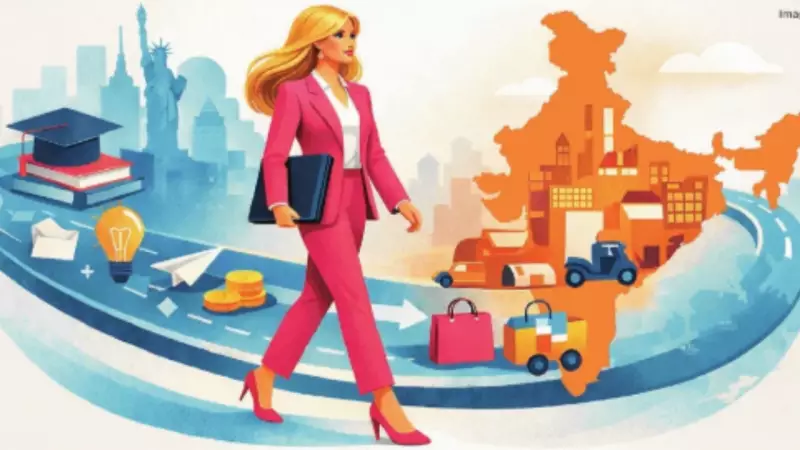
In the vibrant tapestry of India's startup ecosystem, the spotlight often shines brightly on founders emerging from prestigious institutions like the IITs and BITS. However, a remarkable and underreported cohort of entrepreneurs is quietly outperforming even the most celebrated Indian engineering colleges in the critical metric of unicorn creation. Meet the BARBIE founders—an acronym coined by Sajith Pai, Partner at Blume Ventures, standing for those who pursued their Bachelors Abroad and Returned to Build in the Indian Ecosystem.
The Unicorn Edge of BARBIE Founders
From Peyush Bansal, co-founder of Lenskart, to Aadit Palicha of Zepto, these founders have repatriated to India to launch audacious, ambitious, and enduring businesses. The statistics reveal a compelling narrative: among approximately 300 identified BARBIE founders, an impressive 3.7% have successfully built unicorns. This rate surpasses that of IIT Delhi at 2.7% and IIT Bombay at 2%. Collectively, BARBIE founders are responsible for founding 11.5% of all active unicorns in India, underscoring their significant impact on the nation's entrepreneurial landscape.
Why the BARBIE Cohort Is Expanding Rapidly
In 2024, data from Open Doors and HESA indicates that 70,000 Indian students were pursuing undergraduate degrees in the US and UK, a substantial increase from 20,000 a decade ago. While this represents a small fraction of India's 33 million undergraduate population, the growth trajectory is steep, driven by rising income levels and perceived challenges within the Indian college system. Notably, a growing number of these students are choosing to return to India to build their ventures. Although precise data on this reverse brain drain is scarce, anecdotal evidence suggests that return rates among Indian undergraduates are matching or exceeding those of previous cohorts, possibly influenced by geopolitical uncertainties abroad.

What Do BARBIE Founders Typically Build?
BARBIE entrepreneurs predominantly focus on consumer-facing businesses rather than enterprise solutions. Consumer brands constitute 37% of companies founded by this group, followed by marketplaces, fintech, gaming, and other consumer internet ventures. This preference stems from two key factors: global exposure and leverage.
First, their international education—primarily in the US (78%) and UK (16%)—immerses them in multicultural environments where new consumer trends emerge. This global perspective enables them to introduce innovative products with a local Indian twist. Second, many BARBIE founders hail from families with businesses in related sectors, providing an unfair advantage. They can leverage family resources on the supply side, such as textile manufacturing for direct-to-consumer brands, or on the demand side, through established retail networks.
Educational Backgrounds and Long-Term Vision
Tracking the undergraduate alma maters of BARBIE founders reveals top institutions like the University of Pennsylvania, Stanford, Michigan, and USC. Penn's prominence is partly due to Wharton's influence and its role in nurturing US direct-to-consumer ventures. In India, Penn alumni have founded brands such as Knya, Taali Foods, and The Pant Project.
Abhijeet Kaji, founder of Knya, reflects on his experience: "My time at Penn and Stanford reshaped my relationship with time and ambition. I observed founders focused not on short-term wins but on building meaningful enterprises over decades. This long-term orientation influences decision-making and willingness to invest before outcomes materialize."
Additionally, BARBIE-founded brands often emphasize design language, with founders from fashion or creative backgrounds crafting products that feel globally fluent yet distinctly Indian.
Privilege and Unfair Advantages
It is essential to acknowledge the role of privilege in this narrative. An undergraduate degree abroad can cost up to Rs 2.5 crore, making it accessible primarily to affluent families. This financial security, often coupled with family business safety nets, emboldens founders to take entrepreneurial risks and challenge the status quo, sometimes creating entirely new markets.

Examples include Aadit Palicha and Kaivalya Vohra of Zepto, who revolutionized e-commerce with 10-minute deliveries, and Anjali Sardana of Pronto, who is professionalizing fragmented home services. Pratham Mittal, founder of Masters' Union and Tetr, is reimagining education through experiential learning.
Fundraising Prowess and Ecosystem Challenges
BARBIE founders often excel in fundraising, thanks to interdisciplinary liberal arts training that hones their storytelling abilities. In a startup's early stages, compelling narratives can be crucial for securing investment. However, they face distinct challenges, including limited access to the pervasive IIT and BITS networks in India's startup scene. Their privileged, English-speaking backgrounds may also create blind spots regarding the consumption habits of broader Indian demographics, explaining why platforms like Kuku FM or Meesho are less likely to be founded by BARBIE entrepreneurs. Furthermore, some investors harbor biases, perceiving them as less driven due to their affluent origins.
The Future of BARBIE Founders in India
Despite global immigration hurdles, Indian students continue to aspire to study abroad. Yet, political climates in host countries are increasingly discouraging post-graduation stays. This dynamic suggests that the influx and influence of BARBIE founders will grow substantially in the coming years, further enriching India's entrepreneurial ecosystem with diverse perspectives and innovative ventures.





