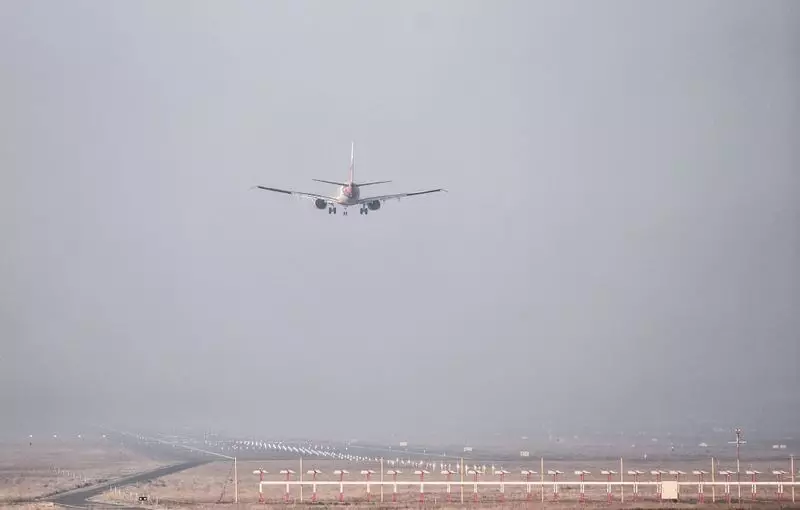
In a landmark event for Indian aviation, the long-awaited Navi Mumbai International Airport (NMIA) has officially commenced commercial flight operations. The inaugural service was flagged off by Union Civil Aviation Minister Jyotiraditya Scindia, marking a significant step towards easing the immense pressure on the existing Chhatrapati Shivaji Maharaj International Airport (CSMIA) in Mumbai.
IndiGo Inaugurates First Flight from New Runway
The honour of operating the first commercial flight from the new airport went to the country's largest carrier, IndiGo. The airline successfully launched its service, connecting Navi Mumbai to a key domestic destination. This inaugural flight signifies the beginning of a new era for air travel in the Mumbai Metropolitan Region.
The event was graced by the presence of Maharashtra Chief Minister Eknath Shinde and Deputy Chief Ministers Devendra Fadnavis and Ajit Pawar, highlighting the project's critical importance at both the state and national levels. The airport's first phase, which includes a single runway and a terminal building with a capacity to handle 20 million passengers annually, is now functional.

A Strategic Solution to Mumbai's Congestion
The primary driver behind the construction of the Navi Mumbai airport is the severe congestion at the current CSMIA, which is operating at near-saturation levels. The new airport is strategically positioned to absorb a substantial portion of the growing air traffic demand in the financial capital and its surrounding areas.
Built at an estimated cost of over Rs 16,700 crore, the NMIA is one of India's most significant greenfield airport projects. It is being developed through a public-private partnership model, with the Adani Group holding a majority stake. The airport's location in the Ulwe node of Navi Mumbai was carefully chosen for its connectivity to the city via a network of upcoming roads and the much-anticipated Mumbai Trans Harbour Link (MTHL).
Economic and Connectivity Implications
The operationalization of NMIA is expected to have far-reaching consequences. For passengers, it promises enhanced convenience, reduced travel time to the airport for those in Navi Mumbai and parts of mainland Mumbai, and potentially more competitive airfares due to increased capacity.
On a broader scale, the airport is poised to be a massive economic catalyst. Key expected impacts include:
- Job Creation: Thousands of direct and indirect employment opportunities in aviation, retail, hospitality, and logistics.
- Regional Development: Accelerated growth of Navi Mumbai and the Konkan region, attracting new businesses and real estate development.
- Logistics Hub: Strengthening Mumbai's position as a key logistics and cargo gateway for India.
- Decongestion: Freeing up slots at CSMIA for more international and long-haul flights, improving Mumbai's global air connectivity.
The commencement of IndiGo's flights is just the beginning. Other major domestic and international airlines are expected to announce their operations from NMIA in the coming months, gradually building its network. The full development of the airport, which will eventually feature two runways and capacity for 90 million passengers per year, will unfold in phases, aligning with future traffic growth.
This new aviation gateway not only addresses an urgent infrastructure need but also stands as a testament to India's accelerating progress in developing world-class transport facilities to support its booming economy.