

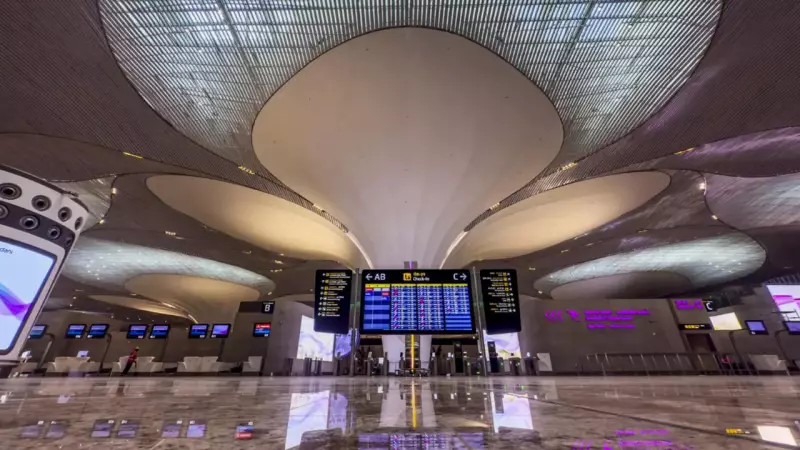
After years of anticipation, the Navi Mumbai International Airport (NMIA) has finally commenced commercial operations, marking a historic moment for air travel in the Mumbai Metropolitan Region (MMR). The airport, which officially opened its doors on Thursday, is set to become a crucial second aviation hub, aiming to decongest the existing Chhatrapati Shivaji Maharaj International Airport.
First Day Operations and Airline Partners
The inaugural day of operations saw four domestic carriers taking to the skies from the new facility. IndiGo, Air India Express, Akasa Air, and Star Air collectively operated approximately 30 flights. History was made when an IndiGo flight from Bengaluru touched down at 8 am, becoming the first scheduled arrival. Shortly after, at 8.40 am, an IndiGo service to Hyderabad became the first departure from NMIA. The terminal building began welcoming departing passengers from 6.40 am.
On its opening day, the airport functioned between 8 am and 8 pm, handling 15 scheduled departures to nine domestic destinations. Operations are set to scale up quickly to 24 daily departures across 13 destinations, with a capacity for up to 10 aircraft movements every hour. The airport authorities have outlined a plan to commence round-the-clock operations by February 2026.

Connectivity and Travel Times from Key Locations
A major focus for the new airport is accessibility from across the vast MMR. Here are the estimated peak-hour road travel times to NMIA from major areas:
- Island City (Worli): 70 minutes for 35 km via Atal Setu.
- Eastern Suburbs (Powai): 70 minutes for 34 km via Eastern Express Highway.
- Thane (Viviana Mall): 60 minutes for 34 km.
- Western Suburbs (Goregaon): 95 minutes for 45 km.
- Mira Road: 135 minutes for 50 km.
- Navi Mumbai (Vashi): A convenient 30 minutes for just 14 km.
- Kalyan, Dombivli: 120 minutes for 37 km.
While residents of Airoli, Belapur, Kharghar, and Panvel have relatively straightforward access, analysts note that travelers from the western suburbs may still prefer the existing Mumbai airport unless NMIA offers more competitive fares or faster transit options.
Infrastructure, Capacity, and Passenger Experience
The airport has launched with Terminal 1 and one operational runway active. The terminal boasts an impressive annual capacity of 20 million passengers, with the flexibility to handle an additional 2-3 million beyond that limit. For passengers, the airport blends modern convenience with traditional service.
Digi Yatra-enabled contactless processing is available for a seamless entry, alongside conventional check-in counters. Understanding the diverse passenger base, the retail and food & beverage offerings at the terminal have been carefully curated to be affordable and cater to local tastes and preferences.
The opening of NMIA, located 35-50 km from South Mumbai, is a significant step in bolstering the region's aviation infrastructure. It promises to enhance connectivity, support economic growth, and provide travelers with more choices, heralding a new era for air travel in the financial capital of India.






