

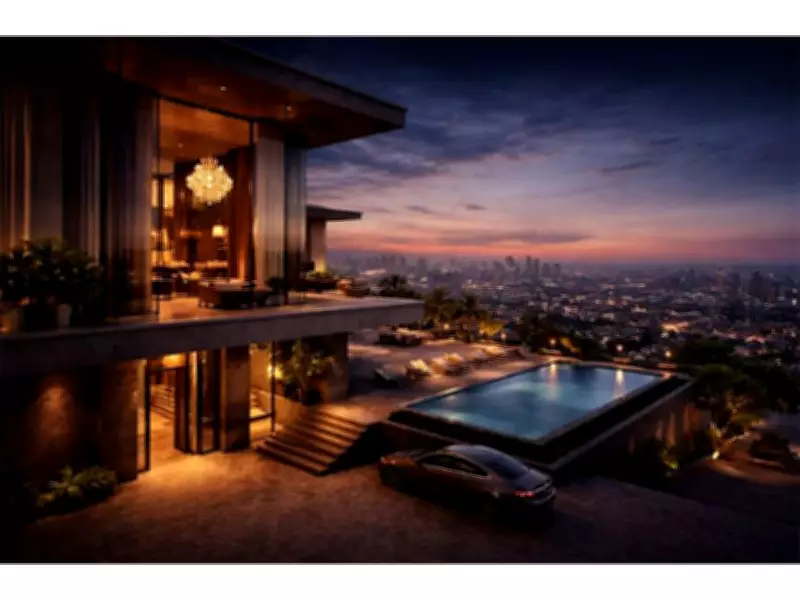
From Quiet Luxury to Statement Living: The 2026 Shift in Luxury Homebuyer Preferences
In recent years, the term "quiet luxury" has become a staple in the lexicon of discerning homebuyers, but 2026 marks a significant evolution. According to a global sentiment study by Sotheby's International Realty, nearly 60% of agents now report that lifestyle-led decision-making is overtaking investment logic in luxury transactions. This shift would have seemed improbable just three years ago, when conversations were dominated by yield and capital safety.
The Evolution from Understatement to Expression
Previously, luxury was synonymous with calibrated understatement—a minimalist approach that avoided overt displays of wealth. Today, this has transformed into what experts call "statement living." Shyamrup Roy Choudhury, Founder and Managing Director of Aura World, explains, "Today's luxury buyer is more decisive and unwilling to compromise on their vision. They are deeply involved in every aspect, from layout planning to material selection, ensuring their home reflects their personality and aspirations."
He notes that earlier preferences for discretion, neutral palettes, and understated design have given way to demands for curated interiors and amenities tailored to individual lifestyles. Buyers now seek private wellness spaces, entertainment zones, and smart home integrations, evaluating not just aesthetics but also long-term comfort and functionality.

Discernment Over Loudness: The New Luxury Paradigm
What is emerging is not conventional loudness but heightened discernment. Features like private elevators opening into personal foyers are now expectations in certain segments. Double-height living areas are valued for their stagecraft rather than mere volume, and sky decks have moved from peripheral additions to central design elements.
Sehaj Chawla, Managing Director of TREVOC Group, adds, "This change is reshaping project structures. There is stronger demand for low-density complexes that preserve privacy, yet homes within them are more expressive. Location remains a top priority, with buyers seeking well-connected developments that enhance convenience and long-term value."
He emphasizes that buyers are investing in larger layouts, dedicated wellness infrastructure, and technology-enabled living, focusing on control over space, services, and overall experience. Luxury is no longer just about scale but how intelligently that scale is utilized.
Regional Insights and Developer Adaptations
Saurab Saharan, Group Managing Director of HCBS Developments, observes this transition vividly in Gurugram. "A couple of years ago, discussions centered on ticket size, connectivity, and future appreciation. Now, these factors are assumed, and buyers evaluate how a home feels upon entry—the arrival experience, privacy gradient, natural light handling, and seamless service integration."
Kapil Chugh, VP of Sales at Rise Infraventures Limited, states, "Luxury in 2026 has moved beyond over-display and quiet restraint to become more intentional. Buyers are globally aware, discerning, and uncompromising on lifestyle alignment, pushing developers to create integrated, experience-led environments."
He highlights that homes are now benchmarked against hospitality standards but with deeper personalization, leading to the rise of branded residences. Collaborations with design houses or global brands compress the signaling process, implying taste without explanation.
Balancing Individuality and Market Appeal
Ashwani Kumar of Pyramid Infratech notes a stronger emotional component in purchases. "Buyers assess how a home aligns with their identity and lifestyle, leading to more customized spaces. However, these are still high-value assets, so developers must balance individuality with universality to avoid overly niche designs."
Sparsh Kaul, Vice President of Marketing at Orris Group, summarizes, "Luxury is evolving from mere sophistication to personal experiences and spaces that reflect identity. People value beauty, wellness, and smart technology, seeking homes that feel special today and timeless tomorrow."

How Developers Are Responding to the Shift
Developers are adapting by reintroducing larger unit sizes with complex internal zoning. Clubhouses are transforming into experiential hubs rather than simple amenity clusters, and themed environments are being reinterpreted with greater discipline. The vocabulary of amenities has expanded beyond gyms, pools, and clubhouses to include recovery zones, bio-hacking suites, private work lounges, and concierge services that blur into hospitality.
This comprehensive shift underscores a broader trend in luxury real estate, where buyer preferences in 2026 prioritize personal expression, lifestyle integration, and experiential living over traditional investment metrics.





