Kolkata Metro's Blue Line Embarks on Major Green Modernization Drive
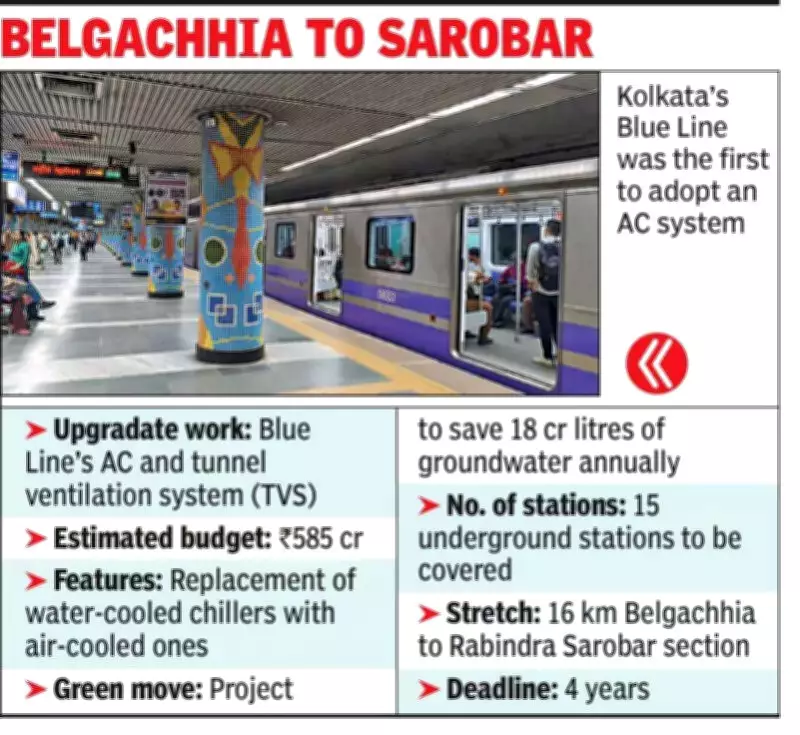
In a significant development for India's oldest metro system, the Metro Railway in Kolkata has officially launched a comprehensive modernization project for the Blue Line's underground stations. The work, which commenced on Wednesday with a traditional puja ceremony at the Noapara station-cum-carshed, focuses on upgrading the air-conditioning and tunnel ventilation systems across 15 stations along the 16-km Belgachhia–Rabindra Sarobar section.
Historic Overhaul in the 41st Year
This initiative marks the first major overhaul of the Kolkata Metro, which is currently in its 41st year of operation. Metro Railway General Manager Subhransu Sekhar Mishra flagged off the Rs 585 crore project, emphasizing that it will introduce a new dimension of comfort and safety for passengers. The upgrade involves transitioning to an energy-efficient tunnel ventilation system (TVS) and an enhanced environment control system (ECS) that includes modern air-conditioning.
Environmental and Operational Benefits
The project is designed to deliver substantial environmental benefits while maintaining uninterrupted metro services. According to Mishra, the modernization will save significant amounts of energy and groundwater over time. The work is scheduled to be completed within four years, with stations being upgraded in batches of five at a time between Begachhia and Rabindra Sarobar to avoid operational disruptions.

Asim Majumdar, Metro Railway's Principal Chief Electrical Engineer and project lead, highlighted the ecological advantages. "The shift from traditional water-cooling chillers to air-cooling ones will reduce our carbon footprint by approximately 23,000 metric tonnes annually," he stated. "This transition directly addresses concerns about drying bore wells and the depletion of Kolkata's groundwater levels."
Technological Advancements and Global Context
The modernization involves replacing 30 out of 46 water-cooled chillers with more efficient air-cooled units, a contract awarded to Shinryo Suvidha Engineers India, a subsidiary of the Japanese firm Shinryo. This upgrade is expected to preserve around 18 crore litres of groundwater each year.
Kolkata's Blue Line holds a unique place in global metro history, as it was among the first, along with Hong Kong, to implement an air-conditioning system in a tropical climate. The original design, developed by IIT-Kharagpur in the 1970s, relied on an open-loop system that required a constant external water source for cooling. This was modified to a semi-closed system in 2011, and the current project further advances this methodology.
Enhanced Safety and Comfort Features
Engineers involved in the project explained that the new system will move away from energy-intensive open loops to a more efficient semi-closed approach. Approximately 90% of the cool air in underground stations will be recirculated through air handling units (AHUs), drastically reducing energy waste.
The upgraded air-conditioning units will maintain a subsoil temperature of 28°C, which is crucial for preserving thousands of microbes essential to the ecological balance. Majumdar noted that metro operations generate heat in tunnels, and temperature increases could threaten these microorganisms.
Regarding the tunnel ventilation system revamp, Majumdar added, "With the replacement of non-AC rakes with AC ones in our underground tunnels, the ventilation system needs to be upgraded accordingly to ensure passengers continue to receive cool, fresh air."
Advanced Safety Mechanisms
The modernization also includes advanced safety features. Stations will be equipped with over-the-track exhaust systems, and fans will automatically activate at the slightest deviation from the standard 28°C subsoil temperature. In case of emergencies, these fans will serve dual purposes: acting as exhausts to release smoke during a fire and providing oxygen to passengers during evacuation procedures.
This comprehensive upgrade not only aims to enhance passenger experience but also positions the Kolkata Metro as a leader in sustainable urban transit solutions, blending historical significance with cutting-edge technology for a greener future.