

In a landmark move for urban infrastructure financing in India, the Greater Visakhapatnam Municipal Corporation (GVMC) has initiated a major project to overhaul the sewerage system in its northern corridor. The civic body has floated tenders to develop a comprehensive underground drainage (UGD) network and a modern sewage treatment plant (STP) covering the rapidly growing Madhurawada zone and surrounding areas.
A Pioneering Financial Model
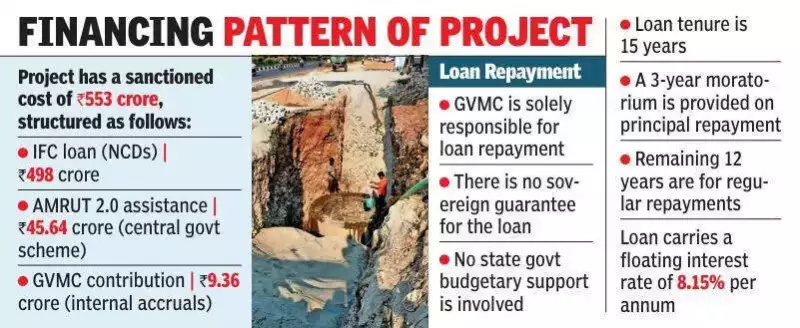
The project, with a sanctioned cost of ₹553 crore, is being funded through a pioneering financial arrangement. The International Finance Corporation (IFC), a member of the World Bank Group, will provide a loan of ₹498 crore. This marks the first-ever direct municipal financing by IFC in India and is also the first instance of a development finance institution extending an investment to an Indian city without a sovereign guarantee.
The remaining project cost is covered by ₹45.64 crore from the central government's AMRUT 2.0 scheme and ₹9.36 crore from GVMC's internal accruals. The corporation will be solely responsible for repaying the 15-year loan, which carries a floating interest rate of 8.15% per annum. The repayment structure includes a 3-year moratorium on principal, followed by regular repayments over the remaining 12 years.

Addressing a Critical Infrastructure Gap
The project aims to solve long-standing sanitation and environmental challenges in the Madhurawada area, which has a population of approximately 2.5 lakh. This zone is undergoing rapid transformation with large-scale vertical residential development, expansion of IT and digital economy clusters, and the establishment of premier educational and healthcare institutions. However, the absence of an underground drainage system has posed significant hurdles to urban management.
Currently, untreated wastewater from the area is discharged directly into the sea, posing health and environmental risks. Visakhapatnam's existing sewerage network covers only 60% of the metro area, while wastewater generation stands at 225 million litres per day (MLD)—more than double the current treatment capacity. This figure is projected to reach a staggering 620 MLD by 2030.
Project Scope and Long-Term Vision
The selected contractor will have 30 months to complete the project. It involves laying an extensive underground sewer network to ensure complete sewage collection from households, apartments, commercial establishments, and institutions. Strategically placed pumping stations will facilitate efficient conveyance across the area's uneven terrain.
A new wastewater treatment plant will be constructed using advanced biological and tertiary treatment technologies to ensure the treated effluent meets standards set by the Central Pollution Control Board. A key sustainable component is the provision for reuse and recycling of treated water for non-potable applications like landscaping, construction, and industrial use, thereby conserving precious freshwater resources.
The infrastructure is designed to not only meet current demand but also accommodate projected population growth over the next three decades. While the current scope focuses on Madhurawada, the plan for the STP and related infrastructure envisions future extension up to Bheemili, making it prudent to develop UGD systems there as well for future connectivity.
Expected Impact on Health and Environment
GVMC officials highlight that the elimination of raw sewage discharge will significantly reduce the incidence of waterborne diseases such as diarrhoea, malaria, and dengue, leading to improved public health, especially for children. Environmental protection will be enhanced through reduced pollution in drains, groundwater, and coastal waters.
Furthermore, this innovative financing structure is expected to improve the creditworthiness of the Visakhapatnam civic body, potentially enabling more direct municipal financing for future infrastructure projects across India. This project sets a crucial precedent for other fast-growing Indian cities seeking to bridge critical infrastructure gaps without relying on state guarantees.






