

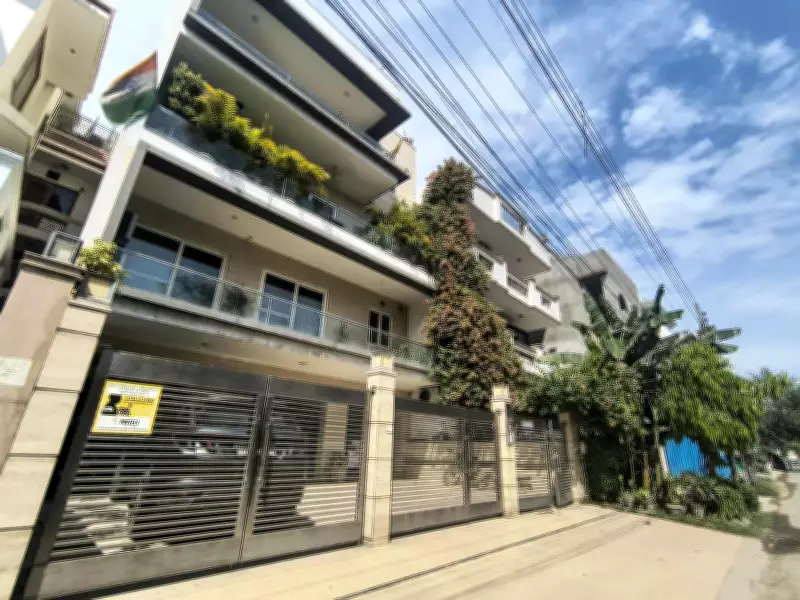
High Court Halts Haryana's S+4 Building Policy Over Infrastructure Concerns
The Punjab and Haryana High Court has issued a stay on the Haryana government's policy permitting stilt-plus-four (S+4) residential buildings, citing significant infrastructure deficiencies and a departure from the original safeguards proposed by an expert committee. This legal intervention has reignited debates surrounding urban planning and sustainable development in the state.
Court's Ruling and Immediate Impact
In response to a series of petitions, the high court restrained the state government from implementing its July 2, 2024 notification that authorized the construction of S+4 floors on residential plots. The court emphasized that infrastructure capacity must not be overlooked when approving high-density construction projects. This interim order underscores the judiciary's concern over the potential strain on already overburdened civic amenities.
Expert Committee's Original Framework
The expert committee, which submitted its report in June 2023, outlined a comprehensive framework for allowing S+4 buildings, but with strict conditions. Its primary recommendation was a mandatory infrastructure capacity audit before granting permission for additional floors, particularly in developed sectors. The committee stipulated that S+4 constructions in existing colonies should only be permitted in blocks adjacent to roads at least 12 metres wide, supported by adequate or augmentable infrastructure including water supply, sewerage, drainage, and parking facilities.

Revised Rules and Deviations
However, the revised regulations extended permissions in HSVP sectors to roads as narrow as 10 metres, raising alarms that the policy had strayed from the committee's foundational principles. The panel had also prescribed a clear implementation sequence: preparation of a standard operating procedure (SOP), submission of a detailed audit report within three months, and final approval by the deputy commissioner following technical verification. The high court noted that this audit mechanism is essential to prevent further deterioration of civic infrastructure, which is already under immense pressure in many parts of Gurgaon.
Distinction Between New and Existing Sectors
A critical finding of the committee's report was the differentiation between new and existing sectors. The panel supported S+4 buildings in upcoming areas where infrastructure could be planned proactively but cautioned against blanket approvals in older colonies where civic systems are already stretched to their limits. This nuanced approach aimed to balance development with sustainability.
Stakeholder Concerns and Ground Realities
Consultations conducted across Gurgaon, Faridabad, and Panchkula revealed recurring concerns from various stakeholders. Issues highlighted included internal roads effectively reduced to 4-5 metres due to encroachments and utilities, severe parking shortages, traffic congestion, structural risks to adjoining buildings, misuse of stilt areas for commercial purposes, and increasing pressure on sewer, drainage, and water networks. The report also flagged that numerous permissions were being granted on narrow roads and small plots, questioning the long-term viability of such developments.
Implementation at Scale and Accelerated Approvals
Official data referenced in the report indicated that by March 2023, approximately 24,600 building plans had been approved, and more than 11,400 occupation certificates issued, demonstrating that the policy had already been implemented extensively even before the revised notification. Following the 2024 changes, approvals accelerated further. In Gurgaon alone, 7,000 to 8,000 building plans were sanctioned in colonies and sectors, with over 1,500 occupation certificates issued. While this reflected strong demand, it also coincided with escalating complaints from residents about infrastructure stress and declining quality of life.

Broader Recommendations and Judicial Observations
The committee's recommendations extended beyond the mere allowance of S+4 construction. It called for revisions to the Haryana Building Code, 2017, strict action against misuse of stilt parking, establishment of grievance redress mechanisms, mandatory structural safety norms, linkage of permissions to infrastructure augmentation plans, and regular public disclosure of approvals. Most importantly, the panel stressed that permissions in many cases should follow prior infrastructure upgrades, rather than running parallel to construction or occurring afterward.
The high court's interim order echoed many of these concerns, noting that roads, sewer systems, and drainage networks in the city are already under severe pressure and may not withstand increased density without advance upgrades. A court-appointed inspection reinforced this apprehension, finding that roads officially recorded as 10-12 metres wide often had motorable carriageways of only 4-5 metres, exposing the gap between planning standards and on-ground realities.
Expert Insights and Future Implications
The bench warned that permitting S+4 construction without infrastructure audits could impose an "additional burden over existing infrastructure of Gurgaon, which is on the verge of crumbling with increased use by a larger population." Urban planning experts have welcomed the court's intervention, stating that it has refocused attention on the committee's original roadmap. "The report never rejected S+4 outright. It laid down conditions. The issue is implementation without safeguards," remarked a senior town planner.
The ongoing dispute now hinges on the committee's core finding: vertical expansion in plotted colonies cannot be separated from infrastructure readiness. This legal and planning debate highlights the critical need for balanced urban development that prioritizes civic amenities alongside construction growth.





