Dholera Emerges as a Global Benchmark in India's Urban Development
Prime Minister Narendra Modi has hailed Dholera as a "global benchmark" for future cities, positioning it as a cornerstone of India's ambitious Viksit Bharat 2047 mission. This vision is rapidly materializing with the groundbreaking introduction of 3D-printed homes, marking a significant leap in construction innovation.
Nestora Group Pioneers Advanced 3D Printing Technology
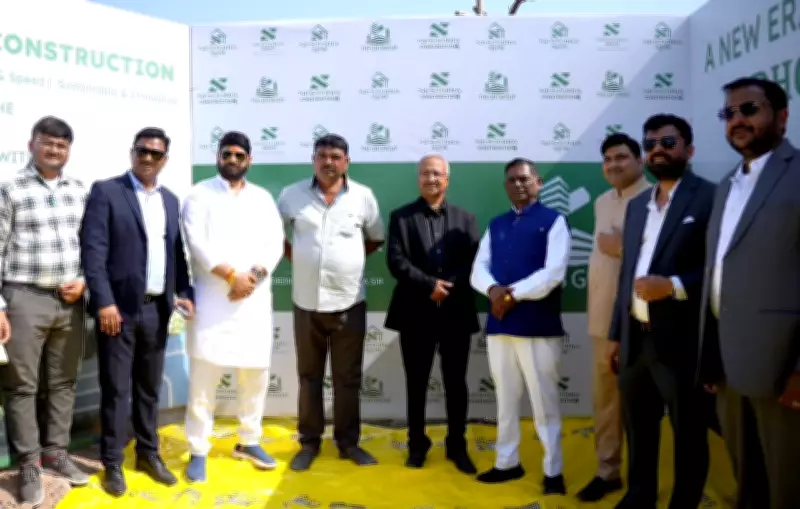
The Nestora Group, active in Dholera Special Investment Region (SIR) since 2018, is spearheading this transformation through its Nestora Atulyam Project. The initiative aims to revolutionize residential construction by deploying advanced 3D printing technology, promising faster and more technology-driven building methods.
Make in India Initiative Fuels Indigenous Innovation
Central to this project is a 3D printing machine developed entirely in India, aligning with the broader Make in India campaign. This technology enables the construction of a complete house structure in approximately three days, a feat that places India at the forefront of smart city development alongside several developed nations.

The process functions as a large automated system that meticulously follows detailed digital designs. By layering concrete with precision, the machine creates walls with consistent strength and alignment, reducing reliance on heavy manual labor and enabling continuous operation for enhanced efficiency.
Unparalleled Speed and Efficiency in Construction
Speed stands out as a primary advantage of 3D printing. Traditional home construction often spans several months, but this method drastically reduces structural build time. This acceleration is crucial for meeting rising housing demands and ensuring timely urban expansion in fast-growing regions like Dholera.
Cost Benefits and Affordability for Buyers
Precision in material usage significantly lowers construction costs. The system places concrete exactly where needed, minimizing waste and generating savings in labor, time, and resources. This approach aims to deliver high-quality homes while maintaining competitive pricing for buyers and investors.
Environmentally Friendly Construction Practices
Compared to conventional methods, 3D printing generates minimal on-site waste. Traditional construction often leaves behind debris and unused materials, whereas automated layering optimizes material usage. This reduction in environmental impact supports cleaner practices in emerging smart cities.
Ensuring Structural Strength and Safety
Safety remains a paramount focus. The 3D printing system employs a specialized concrete mix designed for durability, with each layer bonding closely to the previous one. This results in a strong, stable structure capable of withstanding environmental stresses while maintaining long-term integrity.
Why Dholera is the Ideal Testing Ground
Dholera Smart City offers advanced infrastructure, planned connectivity, and technology-driven governance systems. Features like smart grids, water recycling, and integrated planning create an ideal environment for testing new construction technologies. The addition of 3D-printed housing aligns perfectly with the city's focus on innovation and future-ready development.
Aligning with Viksit Bharat 2047 Vision
India's vision for 2047 emphasizes infrastructure growth powered by modern technology. The use of locally developed 3D printing systems reflects this direction, combining digital design, automation, and construction expertise to signal a shift toward faster, smarter urban development.
The introduction of 3D-printed homes in Dholera represents a transformative phase in real estate construction. With its blend of speed, structural strength, cost efficiency, and environmental benefits, this technology is poised to reshape how residential spaces are built across India's emerging smart cities.