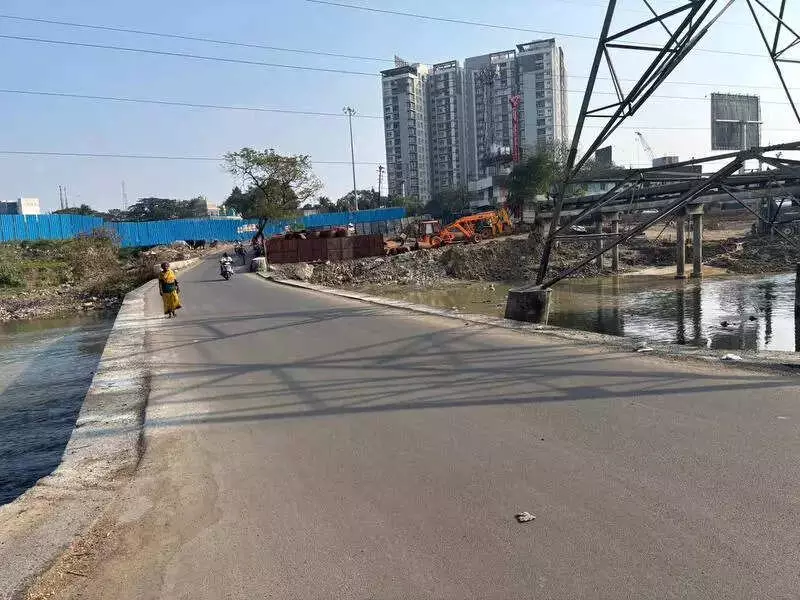
Chennai's Ambitious Port-Maduravoyal Expressway Takes Shape with Dual Corridor Design
The National Highways Authority of India (NHAI) is making significant progress on the 20.9-kilometer Port–Maduravoyal Expressway in Chennai, which will ultimately function as a double-decker corridor spanning from Koyambedu through the city over the Cooum river. This infrastructure project represents a major development in Chennai's transportation network, designed to improve connectivity between the port and key urban areas.
Phased Construction with Retrofitted Pillars
Interestingly, the initial 5.7-kilometer stretch from Vanagaram to Koyambedu along Poonamallee High Road will feature only a single-deck elevated road. This design decision stems from NHAI's approach of retrofitting pillars originally constructed in 2008, utilizing their existing foundations. According to project officials, these original pillars possess sufficiently strong foundations to support a single-deck structure.
An official closely involved with the project explained the specific engineering approach: "It will house an 8-meter high flyover which will enter Cooum river at Padi Kuppam, and expand into a second corridor at 16-meter height next to VR Mall after crossing the 100-Feet Road." This dual-height design allows for efficient use of urban space while accommodating different traffic patterns.

Infrastructure Details and Construction Progress
Beyond the Maduravoyal clover-grade separator, NHAI has constructed new pillars at 8-meter height, while older pillars are being strengthened with fresh concrete applications. In core city areas including Egmore and Chetpet, the authority has placed 25 double-decker pillars directly on the Cooum River. Simultaneously, piling work has commenced at the crucial Padi Kuppam connection point before Koyambedu.
NHAI officials noted that construction activities along the Cooum river are progressing relatively quickly due to minimal disturbances in that specific area. The project involves extensive precast work, with approximately 2,000 segments being cast at a dedicated 60-acre yard. Officials confirmed that about five segments have already been placed on the Shanthi Colony side, with work being expedited particularly near Koyambedu.
Traffic Management and Functional Design
The expressway's design incorporates distinct functions for its two corridors. The first corridor will primarily serve commuter vehicles, featuring exit ramps at key city points for convenient access. In contrast, the second corridor will provide uninterrupted travel directly to the Port. Both corridors will operate as toll-charged routes, similar to Bengaluru's electronic city flyover model, despite running within Chennai's urban boundaries.
To facilitate construction, the state highways department has demolished an existing causeway connecting Mogappair and Golden George Nagar with Poonamallee High Road. This demolition allows necessary piling work to proceed, with plans for a new high-level bridge to eventually replace the removed structure.
Community Concerns and Traffic Disruptions
Despite the project's progress, activists and local stakeholders have raised significant concerns about implementation challenges. Critics note that NHAI placed barricades along a 5-kilometer stretch of Poonamallee High Road nearly two years ago, yet construction progress has been minimal during much of that period. Furthermore, adequate alternative traffic arrangements have not been provided, exacerbating congestion issues.
S Yuvaraj, leader of the Tamil Nadu Sand and Lorry Owners Federation, highlighted specific operational challenges: "The carriageway has shrunk significantly. During nighttime retrofitting work using cranes, authorities frequently close Poonamallee High Road entirely. This severely affects movement of trucks and private buses during night hours." He suggested creating a temporary road from Vanagaram to Koyambedu along the Cooum river itself until the flyover completion to mitigate these disruptions.

The Port-Maduravoyal Expressway project represents a complex balancing act between infrastructure development and urban mobility management, with its double-decker design promising enhanced connectivity while current construction phases continue to pose challenges for Chennai's daily commuters and commercial transport operators.