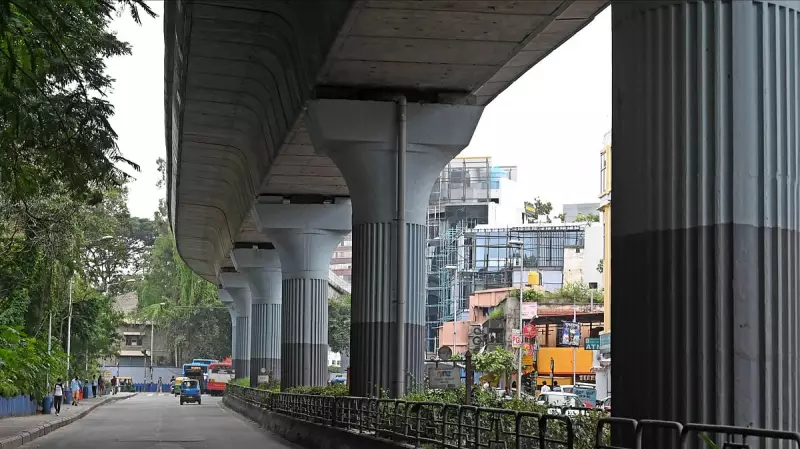
In a significant announcement for India's tech capital, a senior official from the Bangalore Metro Rail Corporation Limited (BMRCL) has revealed that feasibility studies are currently in progress to add over 200 kilometres of new metro corridors to the city's burgeoning network. This ambitious plan comes alongside the ongoing phased expansion that is set to dramatically increase connectivity for Bengaluru's residents.
Phased Expansion Targets and Network Growth
The details were shared by Abhai Kumar Rai, Advisor (Civil) at BMRCL, during an event focused on 'Sustainability in Action: Bengaluru’s Urban Challenge'. Rai provided a clear timeline for the immediate expansion phases. According to the plan, an expansion of 41 kilometres will be completed by the year 2026. This will be swiftly followed by the addition of another 38 kilometres in 2027.
This sequential rollout means that by the close of 2027, the operational Bengaluru metro network is projected to reach a total length of 175 kilometres. This represents a substantial leap from its current reach and is expected to alleviate some of the city's notorious traffic congestion.

Future Vision: Over 200 km in New Corridors
Looking beyond the immediate two-year horizon, the BMRCL is already laying the groundwork for the next wave of growth. The official confirmed that feasibility studies are actively underway for more than 200 kilometres of new metro corridors. These studies are crucial for determining the alignment, cost, ridership potential, and environmental impact of the proposed routes.
While specific routes for these new corridors were not detailed in the announcement, this move signals a long-term commitment to transforming Bengaluru's public transportation landscape. The focus on feasibility studies indicates a strategic, data-driven approach to planning the metro's future phases.
Implications for Bengaluru's Urban Sustainability
The announcement, made at a sustainability-themed forum, underscores the role of mass rapid transit in addressing urban challenges. A robust metro network is central to:
- Reducing traffic congestion and commute times.
- Lowering the city's carbon footprint by encouraging a shift from private vehicles.
- Enhancing overall urban mobility and economic productivity.
- Supporting sustainable urban development along the new corridors.
The planned expansion to 175 km by 2027, followed by the potential addition of over 200 km thereafter, positions the Bengaluru Metro as a critical infrastructure project for the city's future. It reflects a proactive response to the growing demands of one of India's fastest-growing metropolitan areas. Residents and urban planners alike will be watching closely as the feasibility studies progress and more details about the new proposed corridors come to light.