Bhopal Metro's Ghost Trains: Ambitious Transport Project Faces Severe Underutilization
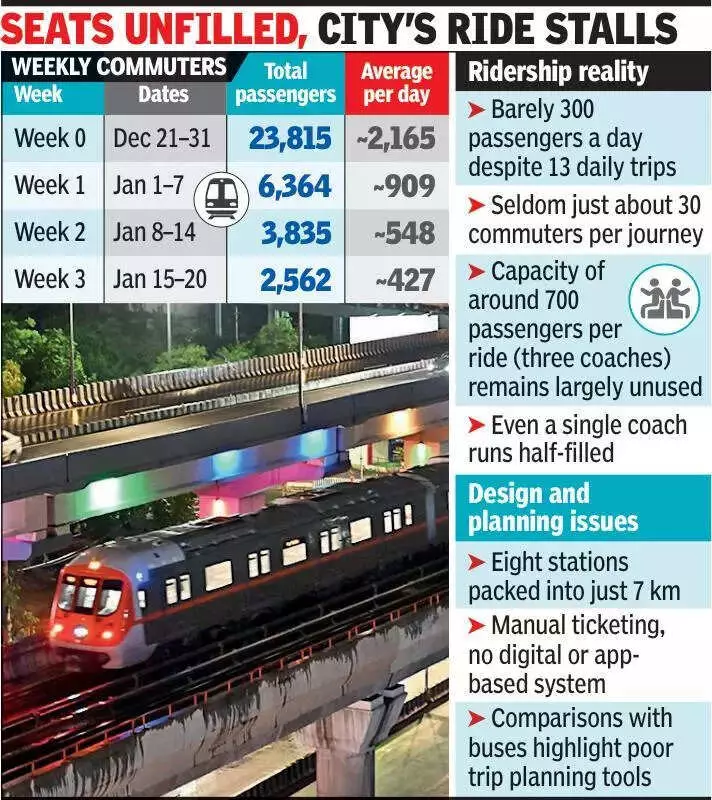
Just one month after its grand inauguration, Bhopal's most ambitious urban transport initiative—the Bhopal Metro—is confronting a stark reality of nearly empty coaches and critically low ridership. Despite operating 13 daily trips along its initial corridor, the metro system is attracting only around 300 passengers each day, painting a concerning picture for what was envisioned as a solution to the city's persistent traffic congestion.
A Drastic Shortfall in Commuter Numbers
The statistics reveal a profound gap between capacity and actual usage. With an average of merely 30 commuters per journey, the metro is operating at a fraction of its potential. Each train, consisting of three coaches, can comfortably accommodate approximately 700 passengers per ride. However, current figures indicate that even a single coach remains half-filled, transforming the sleek new system into a scene of deserted compartments and underutilized infrastructure.
From Grand Launch to Operational Challenges
Bhopal officially entered India's elite club of 26 metro cities on December 20, when Chief Minister Mohan Yadav and Union Minister Manohar Lal Khattar jointly inaugurated the service. The public rollout commenced the following day with initial enthusiasm, but within a mere two weeks, authorities were compelled to revise schedules and reduce operational trips in response to the disappointing passenger turnout.

Critical Design and Technological Shortcomings
Transport analysts and daily commuters have identified several fundamental flaws contributing to the metro's struggles:
- Station Density Issues: Eight stations are compressed into a relatively short 7-kilometer stretch between AIIMS Bhopal and Subhash Nagar, potentially limiting its reach and convenience.
- Outdated Ticketing Systems: The continued reliance on manual ticketing instead of modern digital payment solutions creates unnecessary friction for tech-savvy users.
- Lack of Digital Integration: Absence of app-based connectivity and real-time tracking makes trip planning cumbersome compared to other urban transport options.
"At least with city buses, you can plan your journey using a mobile application. The metro currently feels anchored in the past with its dependence on printed timetables and physical tickets," observed Vinod Singh, a retired teacher and occasional metro user.
Financial Strain and Future Prospects
The current operational model is financially unsustainable, with high running costs and minimal fare recovery leading to significant losses. Officials from the Madhya Pradesh Metro Rail Corporation Limited (MPMRCL) have hinted at forthcoming improvements, including:
- Introduction of monthly and seasonal passes
- Concessional fares for students and senior citizens
- Implementation of online ticketing platforms
However, they acknowledge that these enhancements will require considerable time to materialize. The metro's ultimate viability likely hinges on the completion of the comprehensive Orange and Blue line networks, projected to take two or more years.
Stark Contrast With Indore's Metro Success
The divergence between Bhopal's experience and Indore's metro launch in May 2025 is particularly striking. Indore's system attracted an impressive 26,000 passengers on its inaugural day, bolstered by a week-long free travel promotion. Bhopal, in contrast, implemented fare collection from the very beginning.
While Bhopal recorded 6,568 passengers on December 21, generating over ₹2 lakh in revenue, this momentum proved fleeting. By December 30, daily ridership had plummeted below 1,000, prompting operational adjustments including later start times (noon instead of 9 AM) and earlier conclusion (7:30 PM instead of extended evening hours).

Weekend Tourism Versus Daily Commute
Ridership patterns underscore the metro's current identity crisis—functioning more as an occasional tourist attraction than a reliable daily commute option. New Year's Day saw 2,023 passengers, but by January 15, numbers had dwindled to a record low of 275. Sundays provide temporary respite, with nearly 1,000 riders recorded on January 18, but weekdays consistently languish below 300 passengers.
The eight-day period from January 13 to 20 witnessed only 3,350 total passengers, highlighting the system's heavy dependence on weekend and leisure traffic rather than serving as an essential urban mobility backbone.
As Bhopal observes this unfolding transport narrative, the fundamental question remains: Can future expansions and digital modernization transform these empty seats into a bustling urban lifeline, or will the metro endure as a symbol of ambitious planning meeting harsh operational realities?