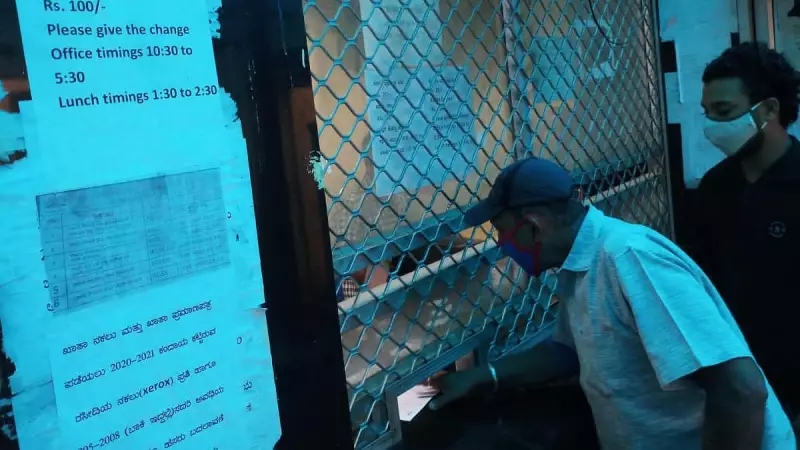
The Bruhat Bengaluru Mahanagara Palike (BBMP) has initiated a significant step to streamline property documentation by establishing dedicated, passport-style seva kendras across the city for processing e-khata applications. This move aims to bring efficiency and transparency to the often cumbersome process of managing property records in India's tech capital.
New Seva Kendras Modeled on Passport Services
Inspired by the efficient model of passport seva kendras, these new centres are designed to offer a standardized and user-friendly experience for citizens dealing with e-khata services. The initiative seeks to reduce delays and improve accessibility for property owners needing to update or register their khata, which is a crucial document establishing property ownership and liability for tax payment.
The focus on a familiar, service-oriented model is expected to mitigate some of the traditional challenges associated with municipal documentation processes. The BBMP's adoption of this framework highlights an effort to modernize civic service delivery in Bengaluru's real estate sector.

Low Conversion Rate for 'B' Khata to 'A' Khata
Despite these infrastructural improvements, a parallel scheme has seen surprisingly low public uptake. Officials have revealed that only 3,252 applications have been submitted for the conversion of 'B' khata to 'A' khata. This low number is notable given the large number of properties in the city that are believed to be on the 'B' register.
A 'B' khata is essentially an unofficial register maintained by the BBMP for properties that have violated building bylaws, are on revenue land, or lack full occupancy certificates. In contrast, an 'A' khata is the legal document for properties that comply with all regulations and is mandatory for obtaining building licenses and bank loans.
Awareness Gap and Public Confusion
Authorities directly attribute the low application numbers to a significant lack of awareness and prevailing confusion among property owners. Many citizens are either unaware of the benefits of converting to an 'A' khata, unclear about the process, or hesitant due to potential complications regarding past violations and associated fees.
This awareness gap presents a major hurdle in the city's efforts to formalize property records and bring a larger number of holdings into the transparent taxation system. The BBMP now faces the dual challenge of not only providing the service infrastructure but also actively educating the public about the importance and procedure of khata conversion.
The data, current as of 06 December 2025, underscores the need for a robust information campaign alongside the rollout of new service centres. The success of the e-khata initiative and the regularization of properties ultimately depends on bridging this gap between government schemes and citizen participation.