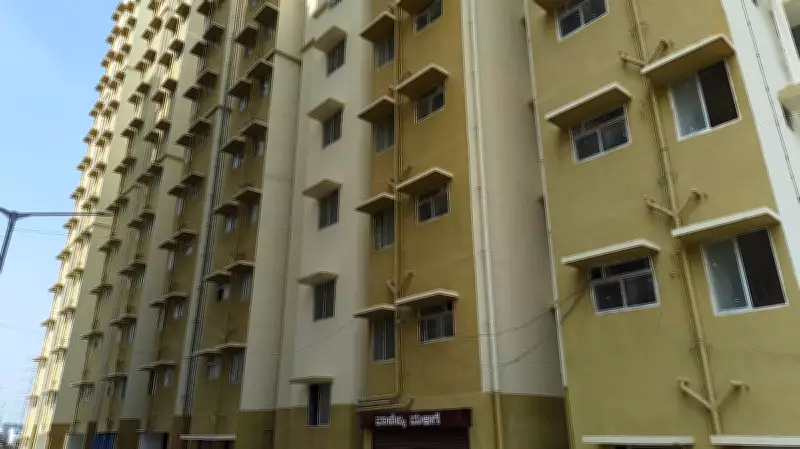
Bengaluru Housing Schemes Persistently Fail to Serve Urban Poor Population
The ongoing crisis in Bengaluru's housing landscape continues to disproportionately impact the city's urban poor, with state-sponsored schemes falling woefully short of addressing the critical need for affordable shelter. This systemic failure becomes starkly visible during aggressive encroachment clearance drives, such as the high-profile operation conducted in the Kogilu area in December 2025.
Inadequate State Housing and Delayed Implementation Fuel Encroachments
According to housing activists and urban development experts, the root cause of rampant encroachments across Bengaluru lies in the severe inadequacy and chronic delays of government housing initiatives. The state's housing projects, designed to provide low-cost homes for economically disadvantaged residents, have consistently failed to meet demand, both in terms of quantity and timely delivery.
This gap between promise and reality forces countless families into precarious living situations, often on public or disputed land. Without viable alternatives, these communities have little choice but to establish informal settlements, which subsequently become targets for demolition during municipal clearance operations.

The Kogilu Clearance: A Case Study in Systemic Failure
The encroachment drive in Kogilu during December 2025 serves as a poignant example of this cycle. Residents, many of whom had been waiting for years for promised housing allocations, found their makeshift homes demolished with no immediate relocation solutions provided by authorities.
"The state's housing schemes are not just delayed; they are fundamentally insufficient in scale," explained one housing activist familiar with the Kogilu situation. "When you have thousands of families in need and only hundreds of housing units planned—with those often stuck in bureaucratic limbo—encroachments are not an anomaly; they are a mathematical certainty."
This pattern repeats across Bengaluru's expanding urban periphery, where rapid urbanization has outpaced the development of formal housing infrastructure for low-income groups.
Broader Implications for Urban Planning and Social Equity
The persistent failure of Bengaluru's housing schemes raises serious questions about urban planning priorities and social equity in one of India's fastest-growing metropolitan regions. Critics argue that without a significant overhaul—including faster implementation, increased budgetary allocations, and more transparent allocation processes—the cycle of encroachment and clearance will continue indefinitely.
Key issues identified include:
- Chronic delays in project approvals and construction timelines
- Insufficient number of housing units relative to documented need
- Lack of integrated support services in existing housing complexes
- Inadequate grievance redressal mechanisms for affected families
As Bengaluru continues to attract migrant workers and expand its economic base, the pressure on housing will only intensify. The current approach, activists warn, not only violates the right to shelter but also undermines long-term urban sustainability by fostering social instability and legal conflicts over land use.
The situation calls for urgent policy intervention and collaborative efforts between government agencies, urban planners, and community organizations to develop humane, scalable solutions that truly serve Bengaluru's most vulnerable residents.