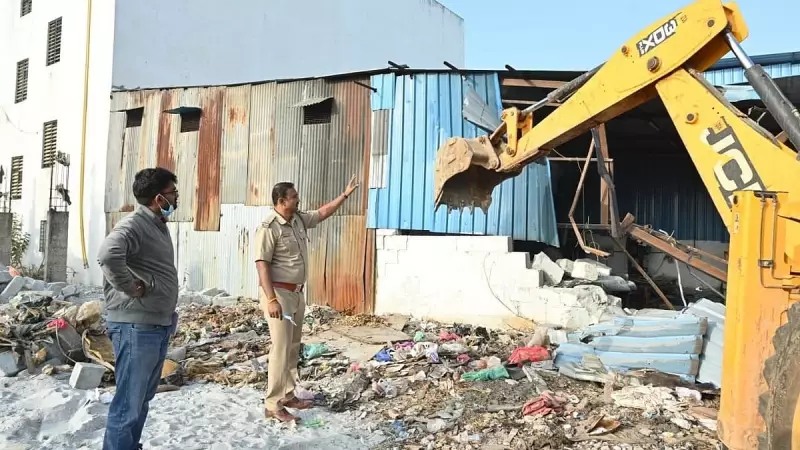
In a significant enforcement action, civic authorities in Bengaluru carried out a large-scale demolition drive, resulting in the displacement of multiple families. The operation, which took place on 08 January 2026, targeted structures deemed illegal, leaving a trail of homelessness and highlighting the ongoing struggle over urban land.
Scale of the Demolition Operation
Officials confirmed that the drive was extensive. Houses, garages, and godowns (warehouses) were completely razed to the ground. The demolished structures were spread across a vast area of nearly two acres of land. The estimated market value of this reclaimed prime land is a staggering Rs 80 crore, underscoring the high stakes involved in the city's real estate.
Immediate Aftermath and Human Cost
The immediate consequence of the drive has been a humanitarian crisis for the affected residents. Many families have been rendered homeless with little to no prior notice, according to reports. The visual aftermath shows piles of rubble where homes once stood, with displaced individuals scrambling to salvage their belongings. This incident raises serious questions about rehabilitation and due process in such enforcement actions.

Official Stance and Broader Context
While officials maintain the drive was necessary to reclaim government or encroached land, such events have become a recurring flashpoint in Bengaluru's rapid urban development narrative. The city, grappling with a severe shortage of affordable housing and complex land ownership histories, often sees clashes between development authorities and settlers. The lack of a clear rehabilitation plan for those evicted continues to be a major point of contention and public debate.
The demolition on 08 January 2026 serves as a stark reminder of the human displacement that can accompany urban governance and land reclamation efforts. It underscores the urgent need for balanced policies that address both legal enforcement and the welfare of vulnerable populations caught in the crossfire of city planning.