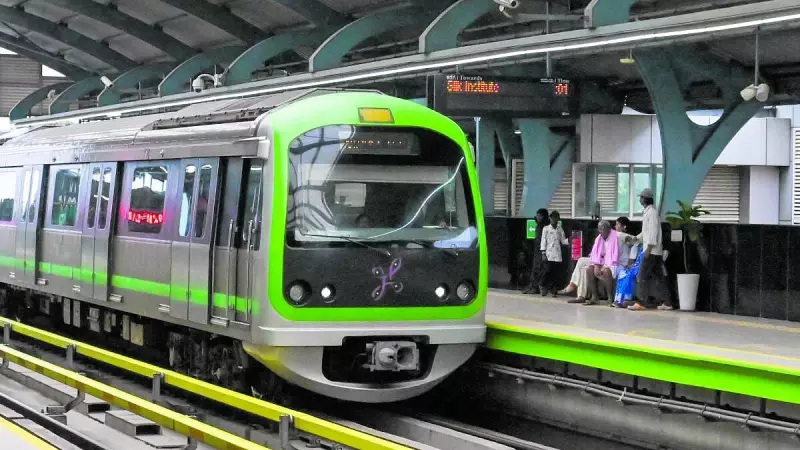
A significant environmental transition is on the horizon for India's tech capital as the Bangalore Metro Rail Corporation Ltd (BMRCL) moves forward with its ambitious Phase 3 expansion. The project's path, however, is lined with a difficult reality: the fate of 6,868 trees standing in its way.
The Scale of the Impact: Felling, Transplantation, and Pruning
Official plans reveal a detailed breakdown for the affected greenery. Out of the total 6,868 trees identified along the proposed metro corridors, a substantial majority—65%—are slated to be felled. This translates to thousands of trees being cut down to make space for the new infrastructure.
For the remaining trees, BMRCL has outlined mitigation measures. Approximately 15% of the trees are marked for transplantation, where they will be carefully moved to new locations. Another 20% will undergo pruning, a process of trimming branches to accommodate the construction while allowing the tree itself to survive.

Compensation and a Notable Loss
In response to the large-scale felling, BMRCL has announced a compensatory afforestation plan. For every tree that is cut down, the corporation has promised to transplant 10 saplings of native species. The financial allocation for this green compensation is set at Rs 2,000 per sapling.
Adding a layer of cultural and ecological significance to the story is the inclusion of a heritage banyan tree among the 6,868 affected trees. The specific fate of this venerable tree—whether it faces the axe, transplantation, or pruning—highlights the complex balance urban development must strike between progress and preservation.
Looking Ahead: Development vs. Greenery
The announcement, dated 06 January 2026, sets the stage for the next chapter in Bengaluru's rapid transit evolution. While the Namma Metro Phase 3 expansion promises enhanced connectivity for millions of residents, it also brings to the forefront the perennial urban dilemma.
Citizens and environmental groups are likely to scrutinize the transplantation process and the survival rate of both transplanted mature trees and the new saplings. The project underscores the ongoing challenge for growing cities like Bengaluru: navigating the essential path of infrastructure development while safeguarding its fast-diminishing green cover.