

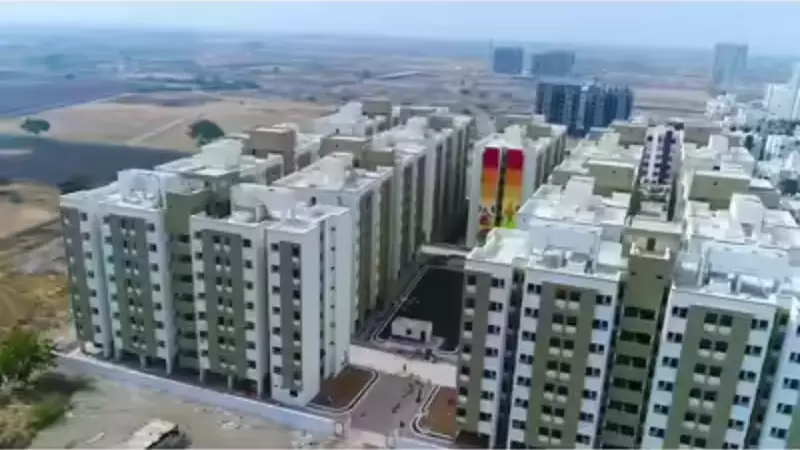
A significant majority of real estate developers in India are bracing for a continued upswing in housing prices next year, according to a recent industry sentiment survey. The study, conducted jointly by the Confederation of Real Estate Developers' Associations of India (CREDAI) and property analytics firm CRE Matrix, indicates that the residential market's momentum is likely to be sustained by genuine demand rather than speculation.
Survey Highlights: A Bullish Outlook on Pricing
The survey, which gathered responses from 647 developers across the country during November and December, presents a clear picture of industry expectations for the 2026 calendar year. A striking 68 per cent of the participants anticipate residential property prices to increase by more than 5 per cent.
Delving deeper into the projections, the data shows a range of expectations. Nearly half of the respondents, 46 per cent, foresee price appreciation in the moderate range of 5 to 10 per cent. A more optimistic 18 per cent believe prices will climb between 10 and 15 per cent. A smaller yet significant segment is predicting even sharper rises, with 3 per cent forecasting a 15-25 per cent jump and 1 per cent expecting an increase exceeding 25 per cent.

On the other end of the spectrum, only a quarter of the developers (25 per cent) believe price growth will remain below the 5 per cent mark. A mere 8 per cent expect to see negative growth in housing prices in 2026.
Demand Drivers and Industry Sentiment
Beyond pricing, the survey reflects a broadly positive sentiment for the residential real estate segment. Close to two-thirds of the developers indicated that they expect the demand for homes to grow by more than 5 per cent in the coming year. This optimism is rooted in the perception of continued end-user interest, signaling a market driven by actual homebuyers rather than speculative investment.
The findings were officially released during the CREDAI conclave held in New Delhi on December 19–20. Commenting on the results, CREDAI president Shekhar G Patel emphasized that the growth is anchored in real demand. He noted that the sector is adopting a more calibrated approach to new supply, with a stronger focus on cost efficiency through technology and better alignment of products with homebuyer preferences.
The Path to Sustained Growth
Patel also highlighted critical enablers required to maintain the current market momentum. He stressed that faster project approvals and greater regulatory clarity would be indispensable. "Streamlined clearances can unlock the next phase of housing supply across markets, support timely project delivery, and enable more balanced and sustainable urban growth," Patel stated.
Echoing this sentiment, Abhishek Kiran Gupta, CEO and co-founder of CRE Matrix and IndexTap, interpreted the survey results as pointing towards steady demand expectations, disciplined addition of new supply, and a sharper industry focus on creating long-term value for customers.
The survey underscores a confident outlook from the developer community, represented by CREDAI's over 13,000 members. It suggests that the Indian residential real estate market is poised for a period of price growth closely tied to fundamental demand dynamics, provided systemic bottlenecks are addressed.






