

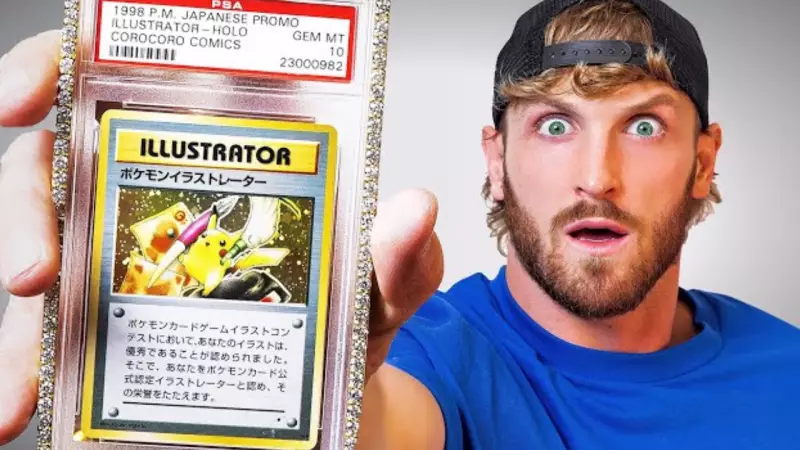
When popular American YouTuber and influencer Logan Paul disclosed that he had shelled out a jaw-dropping more than $5 million for a single Pokémon trading card, it left many bewildered. How could a piece of cardboard from a children's game command such an astronomical price? For Paul, however, this purchase represents a powerful blend of personal nostalgia, a symbol of status, and what he believes is a shrewd long-term financial investment.
The Crown Jewel: The Pikachu Illustrator Card
The object of this multi-million dollar transaction is the legendary Pikachu Illustrator card, widely considered the rarest Pokémon card in existence. Its origins are humble and unique. Back in 1998, the Japanese children's magazine CoroCoro Comic organized an illustration contest for its young readers. The winners did not receive typical prizes; instead, they were awarded this special card, which features Pikachu holding a pen and is the only card to officially label its holder as an "Illustrator."
Critically, the card was never meant for commercial sale or trade. It was given directly to contest winners via mail or at ceremonies. The exact number produced was never officially revealed, and over the decades, many of these cards held by children were lost, damaged, or discarded. This extremely limited and non-commercial origin story is what transformed it into the ultimate holy grail for Pokémon collectors worldwide.

Why Is This Particular Card So Valuable?
Logan Paul didn't just buy any Pikachu Illustrator card; he acquired a version certified as PSA 10, which denotes a perfect, gem-mint condition. This is the highest possible grade from the Professional Sports Authenticator (PSA). His card is the only Pikachu Illustrator to ever receive a PSA 10 rating, effectively making it a one-of-a-kind item even among the already ultra-rare set. This unparalleled level of certified rarity is the primary engine behind its multi-million dollar valuation.
Paul doesn't keep this treasure locked in a vault. He has famously worn it around his neck in a custom-made pendant, turning it into a wearable trophy and a constant conversation piece that amplifies his personal brand.
Pokémon Cards: A Serious Asset Class?
In recent interviews, including one on Fox News, Logan Paul has passionately argued that high-end Pokémon cards constitute a legitimate and high-performing asset class. He claims that the market for rare Pokémon collectibles has outperformed traditional stocks over the past twenty years, fueled by a potent mix of 90s nostalgia, a strictly limited supply, and soaring demand from affluent adult collectors and fans.
Paul is putting his theory to the ultimate test. He has announced plans to send his $5 million Pikachu Illustrator card to auction in February 2026. His goal is to see precisely how much its value has appreciated since his purchase. This move has reignited a fierce debate within collecting and investment circles: Is the booming market for vintage Pokémon cards a sustainable new frontier for investment, or is it a speculative bubble poised to burst in the coming years?
The story of Logan Paul's record-breaking card is more than a tale of extravagant spending. It highlights a significant cultural shift where childhood memorabilia, backed by scarcity and emotional connection, is being re-evaluated as a serious store of wealth, challenging conventional notions of what constitutes a smart investment.






