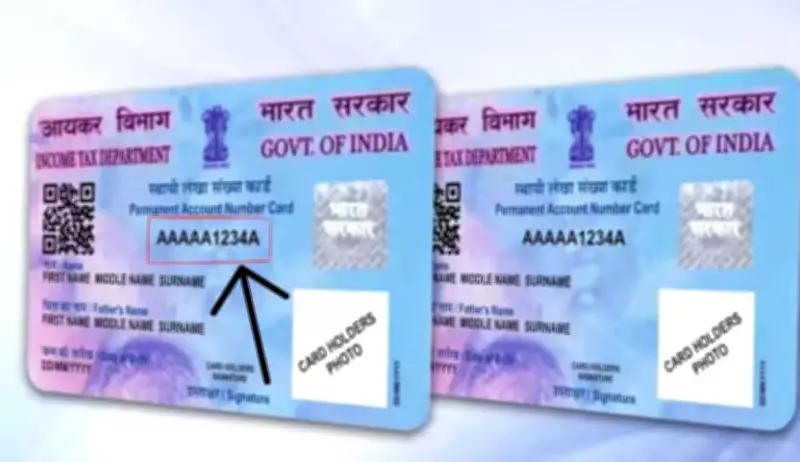
Unlocking the Secrets of Your PAN Card Number
Every Indian taxpayer possesses a Permanent Account Number (PAN) card, a crucial document issued by the Income Tax Department. While most people view the 10-digit PAN as merely an identification code, it actually contains a wealth of hidden information about the cardholder. This unique alphanumeric sequence is meticulously structured to encode specific details, making it an essential tool for financial transactions and tax compliance.
The Structure of the PAN Number
The PAN number follows a precise format: AAAAA9999A, where the first five characters are letters, the next four are digits, and the final character is another letter. Each segment of this sequence serves a distinct purpose, revealing key aspects of the holder's identity and status.
Decoding the First Five Characters
The initial five letters of the PAN are particularly informative. The first three characters represent a sequence of alphabets running from AAA to ZZZ, assigned by the Income Tax Department. The fourth character indicates the type of PAN holder, which is critical for categorizing taxpayers. For instance:

- P stands for Individual
- C denotes Company
- H represents Hindu Undivided Family (HUF)
- F signifies Firm
- A indicates Association of Persons (AOP)
- T stands for Trust
- B denotes Body of Individuals (BOI)
- L represents Local Authority
- J signifies Artificial Juridical Person
- G indicates Government
The fifth character is typically the first letter of the PAN holder's surname for individuals, or the first letter of the name for other entities. This helps in quick identification and verification processes.
Understanding the Middle Four Digits
The four-digit numerical segment, ranging from 0001 to 9999, is a sequential number assigned by the Income Tax Department. This part of the PAN is unique to each cardholder within their category, ensuring no two PANs are identical. It plays a vital role in distinguishing between taxpayers who might share similar names or other characteristics.
The Significance of the Final Character
The last character of the PAN is an alphabetic check digit, calculated using a specific formula applied to the preceding nine characters. This check digit serves as a validation tool to detect errors or fraud in the PAN number. It enhances the security and integrity of the PAN system, making it harder to forge or misuse these critical identifiers.
Why This Hidden Information Matters
Understanding the structure of your PAN number is not just an academic exercise—it has practical implications for financial security and compliance. For example, knowing the fourth character can help verify the type of entity you are dealing with in business transactions, reducing the risk of fraud. Additionally, the check digit can be used to validate PAN numbers during online filings or verifications, ensuring accuracy in tax-related processes.
Moreover, this decoding knowledge empowers taxpayers to spot discrepancies or potential issues with their PAN cards. If any part of the number does not align with the holder's actual details, it could indicate errors in issuance or even fraudulent activity, prompting timely corrective actions.
Common Misconceptions and Clarifications
Many people mistakenly believe that the PAN number is randomly generated or that it contains personal data like birth dates. In reality, as explained, it is a carefully structured code designed for identification and validation purposes only. It does not store sensitive personal information, adhering to privacy norms while serving its functional role in the tax ecosystem.
Another common myth is that the PAN number changes if you update your address or other details. However, the PAN itself remains constant for life, with only the associated information on the card being updated. This permanence underscores its importance as a lifelong financial identifier.

Conclusion: Empowering Taxpayers Through Knowledge
Your PAN card is more than just a piece of plastic—it is a gateway to your financial identity in India. By decoding the hidden meanings in its 10-digit number, you gain insights into how the Income Tax Department categorizes and verifies taxpayers. This knowledge not only enhances your understanding of tax compliance but also bolsters your ability to safeguard against identity theft and errors.
As financial transactions become increasingly digital, the role of the PAN card continues to grow in importance. Whether you are filing taxes, opening a bank account, or investing in securities, your PAN is a key component. By demystifying its structure, we hope to empower every taxpayer to use this tool more effectively and securely in their financial journey.