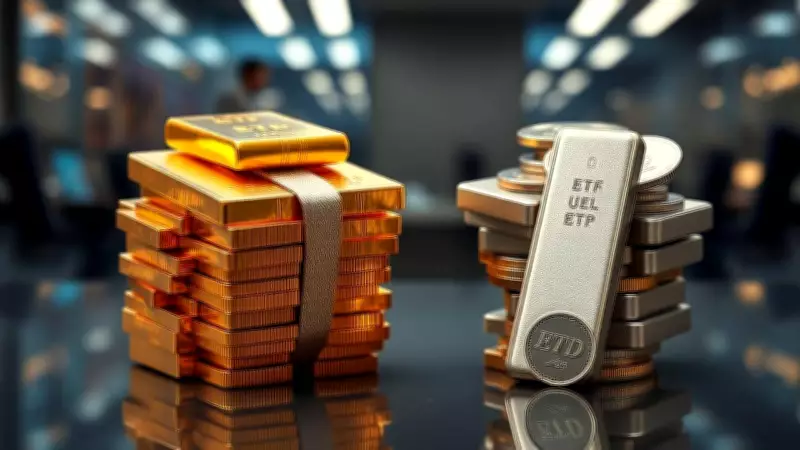
Geopolitical Tensions Fuel Investor Rush to Precious Metals ETFs
Escalating geopolitical conflicts following US-Israel strikes on Iran have intensified investor anxiety, prompting a significant shift towards traditional safe-haven assets. Market participants are actively debating whether to prioritize gold ETFs, silver ETFs, or a balanced combination of both in their investment strategies.
Expert Insights on Gold vs. Silver Allocation
According to financial experts, the current volatile environment strongly favors gold ETFs as the primary safe-haven choice, though silver ETFs can serve a complementary role. Siddharth Srivastava, Head of ETF Product & Fund Manager at Mirae Asset Investment Managers, emphasized that during periods of heightened geopolitical stress, gold ETFs typically act as the go-to refuge due to their stability. He noted that silver ETFs also participate in risk-off movements but are more heavily influenced by industrial demand factors.
Shivam Pathak, CFP and Founder of Asset Elixir, echoed this perspective, stating that in conflicts like the US-Israel-Iran situation, gold ETFs are safer because they react swiftly to uncertainty as pure safe-haven assets. He added that silver ETFs may rise but exhibit greater volatility due to their industrial exposure, making a higher allocation to gold advisable for most portfolios.

Market Performance and Price Movements
Recent data highlights a sharp rally in precious metals. Gold prices surged up to 4%, or approximately Rs 6,700, trading at Rs 1.68 lakh per 10 grams on the MCX on Monday. This rebound leaves the yellow metal just 12% below its record high of Rs 1,93,096, following a steep correction last month. Specifically, MCX gold futures for April 2026 increased by over Rs 5,811, or 3.5%, reaching Rs 1,67,915 per 10 grams.
Meanwhile, silver futures for March 2026 delivery soared Rs 9,492, or 3.5%, to Rs 2,84,490 per kg. However, performance metrics reveal contrasts: over the past month, gold ETFs delivered a negative average return of 0.50%, while silver ETFs posted a more significant negative average return of 23.43%. In the longer term, gold ETFs returned an average of 83.39% over one year, compared to 175.38% for silver ETFs.
Recommended Portfolio Allocation Strategy
Both experts suggest that investors consider allocating 10–15% of their overall portfolio to precious metals ETFs, with a higher emphasis on gold for enhanced stability. This approach aims to balance the defensive qualities of gold with the potential tactical upside from silver, particularly in turbulent times.
Global Factors Influencing Metal Prices
Pathak explained that a stronger US dollar typically pressures both gold and silver, with gold being more sensitive to interest rates and currency movements. He added that rising crude oil prices, often triggered by geopolitical events like missile strikes in key regions such as the Strait of Hormuz, increase inflation concerns, which generally support gold. Silver is similarly affected but faces additional volatility from global economic growth expectations due to its industrial applications.
Srivastava highlighted gold's strong inverse relationship with the US dollar and real yields, noting its role as a long-term inflation hedge influenced by crude oil dynamics. Silver, while impacted by these factors, is more swayed by global growth prospects because of its industrial usage.
Near-Term Outlook and Volatility Considerations
On volatility, Srivastava pointed out that silver ETFs tend to be more volatile due to their smaller market size and higher participation from derivatives and speculative flows. In the near term, gold ETFs appear attractive from a risk-reward perspective amid ongoing geopolitical uncertainty, whereas silver ETFs could experience sharper swings based on risk sentiments and industrial demand signals.
Pathak maintained that silver ETFs are likely to remain more volatile in the short term due to their dual nature, while the outlook for gold ETFs stays supportive given geopolitical and macroeconomic uncertainties. Both experts advise holding these metals with a five-year horizon as portfolio hedges rather than short-term trades.

Disclaimer: Recommendations and views on the stock market, other asset classes, or personal finance management tips given by experts are their own. These opinions do not represent the views of The Times of India.