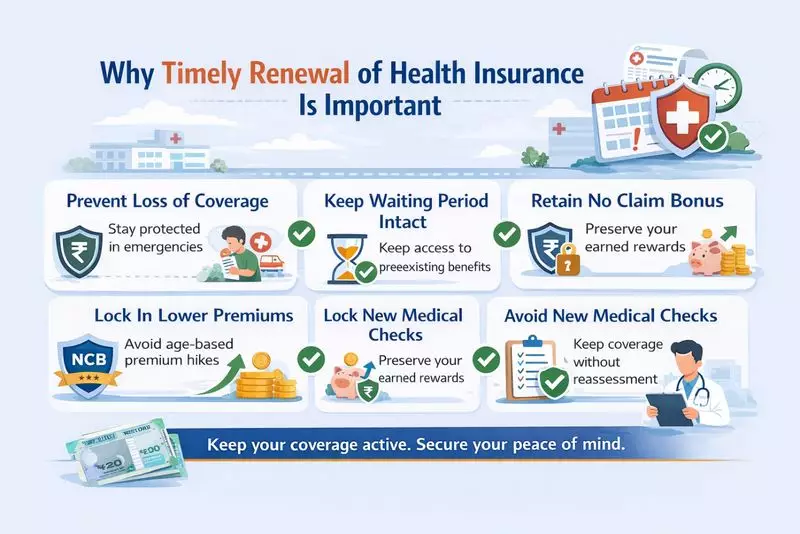
In the whirlwind of daily life, it's alarmingly easy to forget a critical financial deadline: the renewal of your health insurance policy. Many policyholders, however, learn the hard way that a lapse in coverage is not a mere administrative hiccup but a significant financial and health risk. Let's delve into why marking your calendar for your policy renewal date is one of the most important financial habits you can cultivate.
The High Cost of a Lapsed Policy
When your health insurance policy lapses due to non-payment of the renewal premium by the due date, the immediate consequence is the termination of all coverage. From the moment it lapses, you are no longer protected against medical emergencies. This means any hospitalization, surgery, or treatment you require will have to be paid for entirely out of your own pocket, potentially derailing your savings and investments.
More critically, a lapsed policy severs your relationship with the insurer based on the original terms. All the benefits you had accrued, such as the waiting period for pre-existing diseases or specific treatments, are reset to zero. This is perhaps the most severe penalty for a policyholder. If you had completed a four-year waiting period for a pre-existing condition under your old policy, you would have to start that waiting period all over again with a new one.

The Grace Period: A Limited Safety Net
Insurance regulators provide a crucial buffer known as the grace period. For health insurance policies that are renewed annually, insurers are mandated to offer a grace period of 15 to 30 days from the premium due date. During this window, your policy remains active, and you can renew it without any break in coverage.
It is vital to understand that this is a protective measure, not an extension. If a claim occurs during the grace period before the premium is paid, the insurer may deduct the unpaid premium from the claim amount. However, if you fail to pay even within this grace period, the policy will lapse irrevocably. Relying on the grace period as a habitual practice is risky, as a single oversight can lead to a complete loss of protection.
Reinstatement vs. Fresh Purchase: A Stark Difference
If you miss the grace period, all is not immediately lost. Many insurers offer a reinstatement period, typically lasting up to two years from the date of lapse. During this time, you can revive your old policy. However, this process is far from simple.
Reinstatement often requires you to submit fresh declarations about your health, and the insurer may request medical tests. Based on this new assessment, they could impose new terms and conditions, such as additional premiums, waiting periods, or even exclusions for ailments that have developed since the lapse. In some cases, the insurer may outright reject the reinstatement request.
Contrast this with the seamless process of timely renewal, where your coverage continues uninterrupted under the original, agreed-upon terms. The difference in hassle, cost, and security is monumental.
Proactive Steps for Uninterrupted Coverage
Avoiding a lapse is entirely within your control with some proactive planning. Here are the most effective strategies:
1. Opt for Auto-Debit (ECS): The most foolproof method is to set up an auto-debit instruction from your bank account for the renewal premium. This ensures the payment is made automatically on the due date, eliminating the risk of forgetfulness.
2. Leverage Long-Term Policies: Consider purchasing a two or three-year health policy. This reduces the frequency of renewal reminders and often comes with the added benefit of a modest discount on the cumulative premium.
3. Enable Reminders: Use technology to your advantage. Set multiple reminders in your phone calendar—one for a month before, one for a week before, and one on the due date. Also, ensure your contact details (email and mobile number) are updated with the insurer so you receive their renewal notices.
4. Review During Renewal: Treat the renewal time as an annual financial health check-up. Assess if your sum insured is still adequate given medical inflation and your family's needs. This is the perfect time to top-up or enhance your coverage if required.

In conclusion, timely health insurance renewal is not just a transactional task; it is a cornerstone of sound financial planning and responsible healthcare management. It safeguards the valuable benefits you have earned over the years and ensures that when a medical crisis strikes, your focus can remain on recovery, not on financial ruin. Do not let procrastination or oversight compromise the safety net you have carefully built for yourself and your loved ones. Mark the date, set the reminder, and renew on time.