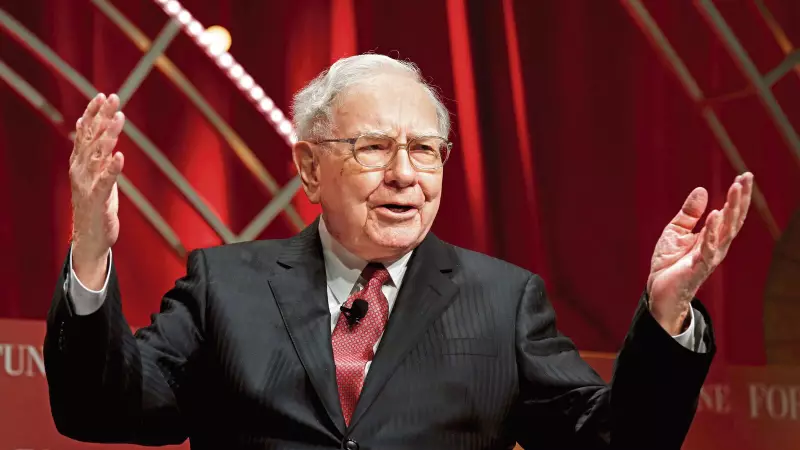
Investment legend Warren Buffett has shared a piece of timeless wisdom that goes beyond the stock market, offering a powerful framework for making major life decisions. In a viral clip from a 2001 address to students at the University of Georgia's Business School, the Berkshire Hathaway CEO, who is set to step down by the end of this year, emphasised the rarity of truly significant opportunities and the disciplined approach needed to capitalise on them.
The Philosophy of Rare, Big Opportunities
Buffett, often called the 'Oracle of Omaha' for his long-term, fundamentals-driven investment style, stressed that monumental chances are few and far between. "Big opportunities in life have to be seized," he told the students. He explained that while we don't get many such chances, when the right and substantial one appears, we must act decisively. He warned against a half-hearted approach, stating that taking up such opportunities in small measures is almost as big a mistake as not taking them at all. The core of his message was clear: "you really got to grab them when they come, because you're not going to get 500 great opportunities."
The '20 Slot Punch Card' Method Explained
To make this abstract concept tangible, Buffett introduced a simple yet profound mental model: the '20 slot punch card' approach. He advised the students to imagine that every major financial decision they make in their lifetime must be marked on a card with only twenty punches. "Every financial decision you made you used up a punch," he said.

This constraint, according to Buffett, forces extraordinary deliberation. With only twenty lifetime slots, you would think "very hard" about each choice, carefully weighing the pros and cons instead of acting on impulse. This method naturally filters out noise and minor temptations, directing focus only toward the most promising prospects. The result, Buffett believes, is wealth creation, as this discipline leads to well-considered, substantial investments.
Why Impulsive Decisions Don't Work
Buffett specifically cautioned against the modern ease of impulsive trading, especially during bull markets. With online platforms making it simple to click and buy, there's a temptation to dabble frequently. "You know you just click it in and maybe it goes up a point and you get excited about that and you buy another one the next day and so on. You can't make any money over time doing that," he remarked.
Applying the punch card mentality counteracts this. It ensures you "think a long time before every investment decision – and you would make good ones, and you'd make big ones." He concluded that you likely wouldn't even use all twenty punches in a lifetime, but you wouldn't need to if each one was a truly excellent choice.
Key Takeaways from Buffett's Investment Wisdom
This advice aligns with the broader principles that have defined Warren Buffett's career. Here are the core lessons reinforced by the punch card analogy:
- Deep Research is Non-Negotiable: Buffett is a strong proponent of doing your own homework by thoroughly reading financial statements.
- Invest for the Long Haul: He advocates a long-hold strategy, buying stocks with the intention of keeping them for decades.
- Seek Companies with an 'Economic Moat': Invest in businesses with a durable competitive advantage that ensures long-term growth and profitability.
- Simplicity Over Complexity: Successful investing isn't about complicated strategies; it's about sticking to fundamental rules.
- Ignore the Market Noise: Making objective decisions without being swayed by market euphoria or pessimism is imperative for rational investing.
Ultimately, Warren Buffett's message from over two decades ago remains profoundly relevant. Whether applied to finance, career moves, or personal life, the '20 slot punch card' method teaches the value of patience, rigorous analysis, and the courage to act decisively when a rare, golden opportunity finally presents itself.