In a surprising twist, securing a spot on a public tour of Xiaomi's electric vehicle plant on the outskirts of Beijing has become one of China's most competitive endeavours, with odds steeper than getting into a top university. This phenomenon highlights a booming trend of industrial tourism, fueled by national pride in high-tech manufacturing and parents seeking unique educational experiences for their children.
The Lottery for a Glimpse of the Future
When the tech giant Xiaomi launched an online lottery in January last year for free tours of its highly automated EV facility, the response was overwhelming. More than 100,000 people entered the draw for approximately 200 tour slots available in December and January, creating a frenzy on social media platforms like Xiaohongshu.
The diverse pool of applicants includes influencers searching for the perfect photo opportunity and so-called "tiger moms" hoping that witnessing robot-powered assembly lines will ignite a passion for technology and science in their kids. For many, it's a unique chance to see China's manufacturing prowess firsthand.

Yang Xingyue, a 35-year-old content creator and car enthusiast from Beijing, was one of the lucky few selected in March. She immediately applied, hoping to give her two-year-old son an early introduction to advanced technology. "I was very lucky," she remarked. However, she had to bring a friend instead, as Xiaomi requires children to be at least six years old to attend. She plans to return when her son is older.
Inside the Robotic Heart of Xiaomi's Ambition
The one-hour tour offers a stark view of modern manufacturing. Visitors, transported in golf cart-like vehicles, witness a symphony of automation. Hundreds of robotic arms and machines are engaged in die casting, stamping, and assembling car bodies, with the plant producing a new vehicle every 76 seconds, according to the company.
To protect trade secrets, visitors must lock their phones in provided pouches during the 15-minute drive through the factory floor—no photos or videos are allowed. For Yang, it was a revelation. "It was a very advanced industrial factory," she said. "I thought, 'Oh, so this is how cars are made.'"
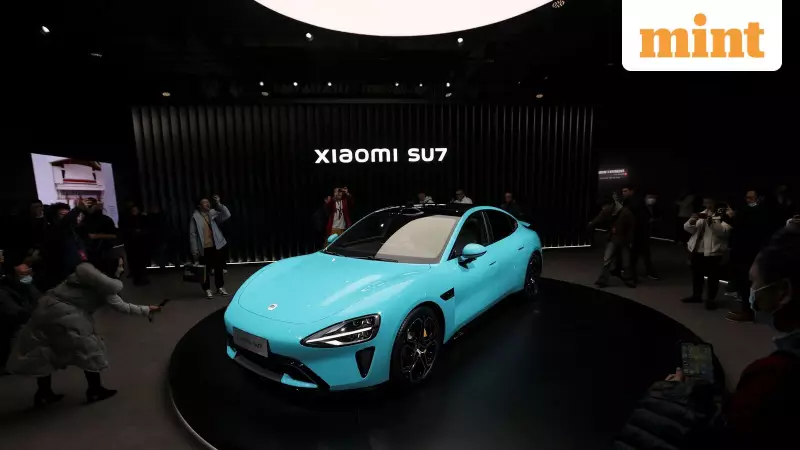
The experience doesn't end at the assembly line. The post-tour activities have become a major draw. Attendees can test ride the flagship Xiaomi SU7, an electric sedan with a Porsche-like design that starts around $30,000 and has a waiting list. They can also dine at the company cafeteria, where a set meal costs the equivalent of about $2, though reviews on taste are mixed.
Industrial Tourism: A National Mission and Marketing Masterstroke
This craze is part of a larger movement encouraged by the Chinese government. As the nation solidifies its position as a global leader in advanced technologies, Beijing is actively promoting national pride in its high-tech manufacturing. The municipal government has set an ambitious goal to attract 20 million industrial tourism visits annually by 2027.
For companies like Xiaomi, which launched its first EV in 2024, these tours are a novel marketing and customer-engagement strategy in an ultra-competitive market. They started the tours after receiving customer requests and have even increased availability, offering 126 tours in January compared to 118 in December, to meet demand from students on winter break.
Other Chinese giants, including EV maker NIO, dairy company Mengniu, and brewer Tsingtao, are also seeing crowds flock to their factory tours. The trend underscores a shift where consumers want to connect with the brand's origin story and technological backbone.
For parents, the motivation is deeply educational. One mother who travelled from neighbouring Hebei province last month wrote on Xiaohongshu that seeing her daughter's eyes light up made the journey worthwhile. "The best education is letting children see the power of technology with their own eyes," she posted. "It's more effective than saying 'study hard' a hundred times."
The competition for slots has spawned a subculture of tips and tricks. A common piece of advice is to ensure someone answers the phone if Xiaomi calls to confirm a booking. One Beijing woman posted that her first booking likely failed because her husband missed the call.

The tour has also created a prime spot for "da ka" or "card punching"—the Chinese social media phenomenon of visiting trendy locations specifically to take photos for online clout. The showroom lobby, featuring an electric blue SU7 suspended from a mirrored ceiling on a Mobius strip, has become a particularly hot backdrop.
Rui Ma, founder of Tech Buzz China and a Silicon Valley resident, has taken private tours for global investors. Observing the interest from families, she was inspired to start organizing STEM education trips to China for high-achieving international students. "I never thought of taking my kids to visit a factory," said Ma, who has children aged 3 and 1. "But now I'm like, 'Hey, that's actually not a bad idea!'".
From a marketing gamble to a national sensation, Xiaomi's factory tour encapsulates how industrial prowess, educational aspiration, and social media culture are converging to create China's most unexpected—and exclusive—tourist attraction.