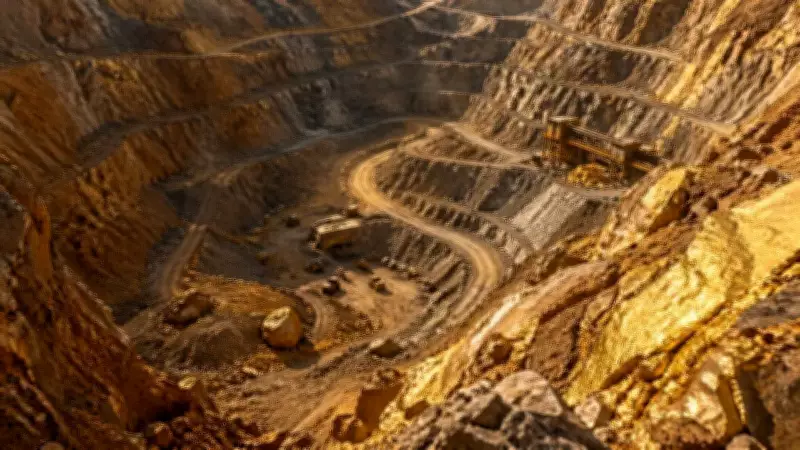
The global gold mining industry continues to exert a significant influence on the commodities market, with some of the largest gold mines in the world maintaining substantial production levels. Based on industry reports and data from S&P Global and mining companies, many Tier-1 mines have delivered consistent output, though some faced interruptions due to technical issues and scheduled maintenance. The ranking of the world's largest gold mines is determined not only by their size but also by their industrial capability.
Largest Gold Mines in the World in 2025
Here is the list of the top 10 gold mines by production in 2025, measured in thousands of ounces (koz):
- Nevada Gold Mines, USA – 2,595 koz
- Muruntau, Uzbekistan – 1,708 koz
- Olimpiada, Russia – 1,357 koz
- Kazzinc Consolidated, Kazakhstan – 947 koz
- Grasberg, Indonesia – 937 koz
- Almalyk Complex, Uzbekistan – 750 koz
- Blagodatnoye, Russia – 736 koz
- Detour Lake, Canada – 693 koz
- Kibali, DR Congo – 673 koz
- Ahafo, Ghana – 664 koz
Nevada Gold Mines, United States
Despite a slight decline in production from 2024, Nevada Gold Mines remains the largest gold mining operation worldwide, with an annual output of 2,595 thousand ounces. This joint venture between Barrick Mining and Newmont consists of multiple open pits and underground projects in Nevada. The reduction in output was due to changes in certain pits and underground areas, but it continues to be the most productive gold mining project globally.

Muruntau, Uzbekistan
Muruntau produced 1,708 thousand ounces in 2025, securing the second position. Operated by Navoi Mining and Metallurgy Company, it is one of the largest open-pit gold mines globally. Production capacity increased slightly in 2025 due to improved efficiency, reinforcing its crucial role in Uzbekistan's mining industry.
Olimpiada, Russia
Olimpiada, under Polyus, produced 1,357 thousand ounces in 2025. Located in Siberia's Krasnoyarsk region, the mine faces extreme weather conditions affecting operations. Output was lower than the previous year due to variations in ore quality. The mine employs advanced technology for processing sulphide ores.
Kazzinc Consolidated, Kazakhstan
Kazzinc Consolidated extracted 947 thousand ounces in 2025, ranking fourth. This integrated complex extracts gold, zinc, and copper. The rise in production capacity and process improvements boosted its global standing. The company, linked to Glencore, continues to refine its business model.
Grasberg, Indonesia
Grasberg yielded 937 thousand ounces in 2025, a sharp decline from the previous year. Operated by Freeport-McMoRan with Indonesian government partners, production was interrupted by a mudslide in late 2025, causing temporary facility closures that affected mining and processing.
Almalyk Complex, Uzbekistan
Almalyk Mining and Metallurgical Complex produced 750 thousand ounces in 2025, showing stable performance. One of Uzbekistan's largest industrial enterprises, it also leads in copper mining, with large-scale processing and mining facilities.
Blagodatnoye, Russia
Blagodatnoye recorded 736 thousand ounces in 2025, a strong increase from 2024. Operated by Polyus, the mine benefited from expanded processing capacity and improved ore grades. Additional milling infrastructure boosted throughput levels, and it is part of a wider mining cluster supporting consistent growth.
Detour Lake, Canada
Detour Lake Mine produced 693 thousand ounces in 2025, a marginal improvement. Owned by Agnico Eagle Mines, it is one of Canada's largest open-pit gold mines, with high reserve life and massive processing capacity. Enhanced operational performance and rising gold prices improved financial results.
Kibali, Democratic Republic of Congo
Kibali yielded 673 thousand ounces, a small drop from the previous year. Owned equally by Barrick Mining, AngloGold Ashanti, and a Congolese state-owned partner, it is among Africa's largest gold mines, featuring both underground and open-pit operations. Exploration for new ore bodies continues, and it remains a Tier-1 asset.

Ahafo, Ghana
The Ahafo Mine produced 664 thousand ounces in 2025, ranking tenth. Mainly operated by Newmont, with the Ghanaian government holding a smaller stake. Output was lower than 2024 due to deliberate changes in operations and mine sequencing.