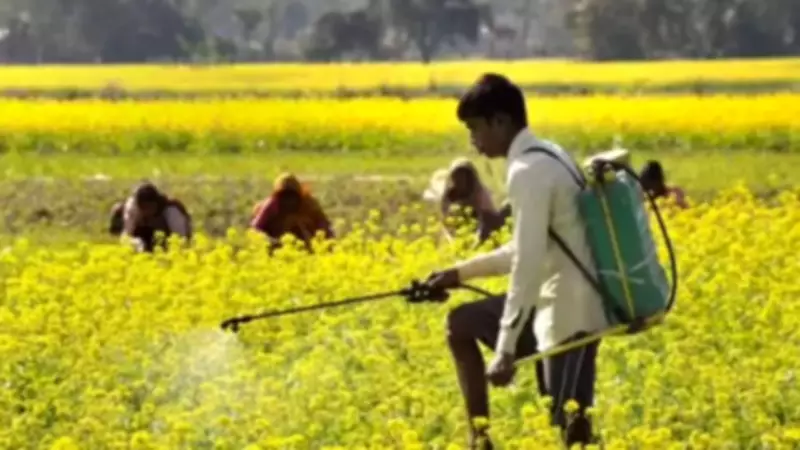
Uttar Pradesh's Agricultural Revolution: From Breadbasket to Tech-Driven Powerhouse
For a state long celebrated as India's "breadbasket," Uttar Pradesh is experiencing a quiet yet monumental transformation in its agricultural sector. While traditionally a major producer, recent data reveals a profound shift from conventional farming methods to a high-productivity, technology-driven agricultural powerhouse. This metamorphosis extends beyond mere yield increases; it represents a fundamental restructuring of the entire rural economy.
The Productivity Leap: From Stagnation to Remarkable Surge
The most defining characteristic of this new era is the exponential growth in agricultural productivity. Between 2001-02 and 2016-17, the average productivity of major crops in Uttar Pradesh grew by a modest 8.7%. In stark contrast, the period from 2016-17 to 2024-25 witnessed an extraordinary 42.8% increase in productivity.
This dramatic surge is most evident in the state's dominance of staple grain production:
- Wheat: Uttar Pradesh has emerged as India's leading wheat producer, contributing 35.3% of the nation's total wheat output. The state achieved a record production of 414.39 lakh metric tonnes in 2024-25.
- Rice: The state contributes 14.7% to India's national rice pool, producing 219.2 lakh metric tonnes annually.
These impressive figures result directly from what officials describe as "meaningful and effective efforts" by the government, including the widespread introduction of high-quality hybrid seeds, improved irrigation management systems, and significant organic farming initiatives.
Diversification Strategy: The Rise of Cash Crops and Horticulture
A truly resilient agricultural economy requires more than just grain production. Uttar Pradesh's strategic focus on crop diversification is yielding historic results across multiple sectors:
- Pulses and Oilseeds: Productivity in these critical sectors grew by 46.0% and 46.6% respectively over the last eight years. This represents a massive leap forward compared to the near-stagnation observed during the previous sixteen-year period.
- Horticulture: Uttar Pradesh has emerged as a national leader in fruits and vegetables production. The state now produces 40.7% of India's potatoes and 18.8% of the country's bananas. The integration of modern cultivation techniques has driven a 28.4% increase in overall horticultural productivity.
Sugarcane: The Sweetener of Rural Prosperity
Sugarcane continues to serve as the backbone of Uttar Pradesh's commercial agriculture. Contributing 54.5% to India's national sugarcane production, the state produced an impressive 2453.5 lakh metric tonnes in 2024-25.
Beyond production volumes, the government has shifted focus to ensuring timely payments to farmers. Since 2017, a staggering Rs 2.86+ lakh crore has been disbursed to sugarcane farmers—exceeding the total payments made between 2000 and 2017 by approximately Rs 72,000 crore. This enhanced financial liquidity proves critical for sustaining the rural demand cycle and supporting broader economic growth.
Institutional Support and Risk Mitigation Framework
The emerging "UP model" of agriculture rests on several pillars of institutional support:
- Market Integration: The empowerment of Farmer Producer Organizations (FPOs) and widespread adoption of the electronic National Agriculture Market (e-NAM) have significantly reduced middlemen's influence in agricultural transactions.
- Risk Management: Expanded crop insurance schemes, particularly the Pradhan Mantri Fasal Bima Yojana, provide essential safety nets against climate volatility and unpredictable weather patterns.
- Infrastructure Development: Substantial improvements in online mandi systems and timely Minimum Support Price (MSP) payments have ensured farmers receive a fair share of the national agricultural output.
The Verdict: Navigating Toward Commercial Agriculture
Uttar Pradesh is successfully navigating the complex transition from subsistence farming to commercial agriculture. By strategically leveraging modern technology, superior seed varieties, and robust market linkages, the state has dramatically increased its share in national agricultural production.
However, the journey toward achieving a $1 trillion economy will require these remarkable productivity gains to be matched by even stronger food processing industries and enhanced global export linkages. For now, the "historic results" emerging from Uttar Pradesh's fields stand as a powerful testament to what becomes possible when forward-thinking policy meets agricultural precision and technological innovation.