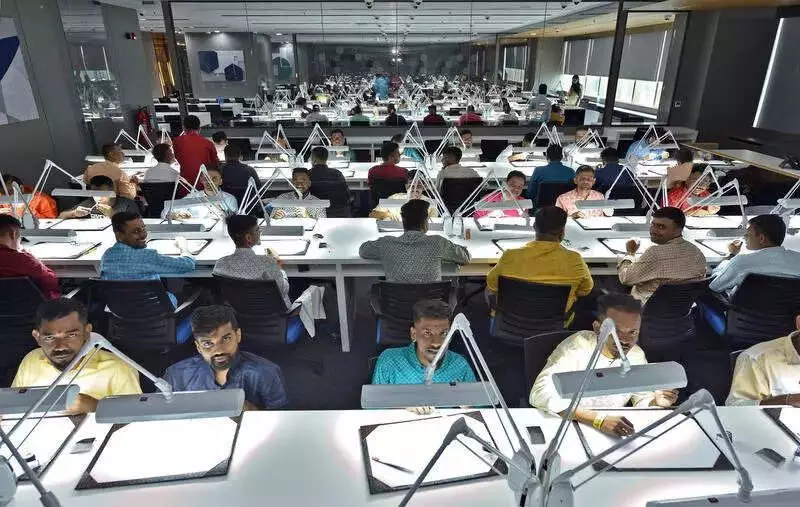
While the global diamond market hints at a rebound, a severe crisis is gripping the very heart of the world's largest diamond cutting and polishing hub in Surat. The city's skilled artisans, the backbone of this glittering trade, are facing a dramatic collapse in their earnings as the industry undergoes a seismic shift from natural to lab-grown diamonds (LGDs).
The Stark Reality of Plummeting Pay
Wages for the master craftsmen who polish diamonds have witnessed a staggering decline of 50% to 75%. This drastic cut is directly linked to their forced transition from working on natural diamonds to handling lab-grown stones, driven by a scarcity of work in natural gems. An estimated 800,000 workers are employed in diamond manufacturing in Surat, making this wage crisis a massive socio-economic concern.
The personal stories behind these numbers paint a grim picture. Take Kishore Solanki, 50, a veteran with 35 years of experience specializing in the "VG Good" cut. He once earned a respectable Rs 150 per carat for natural diamonds. Today, for polishing LGDs, he makes a mere Rs 50 per carat. "My monthly earnings dropped to less than half in just one year since I started working in LGDs," Solanki, who hails from Junagadh district, revealed. Trapped by circumstance, he added, "I have no options or property in my native place, so I can't return, and at this age, I cannot start a new job."

Business Strain and the Export Picture
The strain is not limited to workers; diamond units are also grappling for survival. Vijay Jasani, who has operated a natural diamond polishing unit for two decades, reluctantly ventured into LGD polishing to stay afloat. He now sources rough stones from large manufacturers for job work. His 12 employees, who once earned Rs 1,200 per carat, now get only Rs 350 per carat. "Job work units have very thin margins now, and wages have fallen significantly. We have no option but to keep working at these rates," Jasani stated.
This upheaval is unfolding against the backdrop of India's significant gem and jewellery exports, which stood at $28.5 billion in 2024-25. Of this, cut and polished natural diamonds contributed $13.2 billion, while polished LGD exports accounted for $1.2 billion. Surat is the origin for almost all of this production, underlining its critical role.
A Call for Policy and an Uncertain Future
The human cost of this industrial shift is altering lives. Mukesh Palsana, 48, with over 31 years in the trade, saw his income from polishing drop from over Rs 1,200 per carat for natural diamonds to under Rs 500 per carat for similar work on LGDs. "Furthermore, there is not enough work and there are 12 days off a month," said the artisan from Amreli district, who is desperately seeking a return to natural diamond work.
Union leaders are sounding the alarm for systemic intervention. Bhavesh Tank, Vice-President of the Diamond Worker Union Gujarat, highlighted the asymmetric impact on wages: "In good business years, the increase in wages does not match growth, but in slowdowns, the wage cut is massive every time." He warned that the industry is failing to attract new workers and stressed, "There should be a policy related to wages for diamond artisans for the survival of the industry."
As Surat's diamond workshops adapt to the rising tide of lab-grown gems, the future of its legendary workforce hangs in the balance, calling for urgent attention to safeguard the artisans who built the city's global reputation.