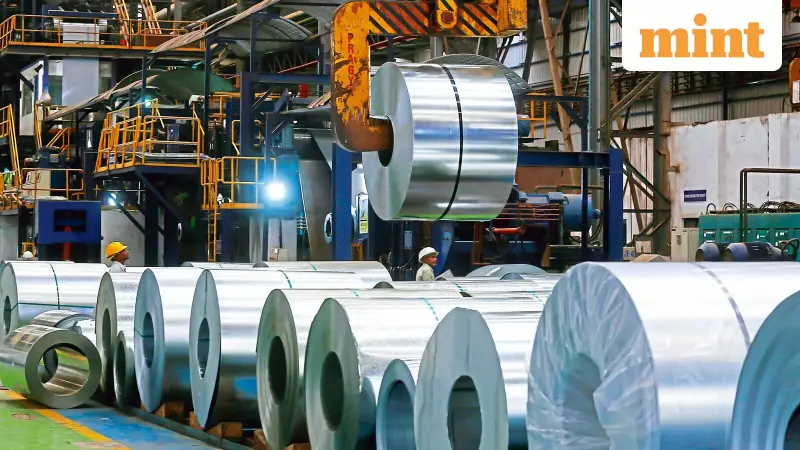
Shares of major Indian steel producers have witnessed a significant boost following the government's decision to formally extend safeguard duties on steel imports for a period of three years. This move provides a crucial buffer for domestic manufacturers who have been grappling with rising input costs and a surge in new domestic capacity.
Duty Extension Provides Price Support
The finance ministry notified the extension based on a recommendation from the Director General of Trade Remedies. The safeguard duty will be applied to most grades of flat steel products at 12% for the first year, 11.5% for the second, and 11% for the third year. This follows an interim duty imposed in April 2025, which had lapsed on 7 November 2025.
The announcement led to an immediate rally in the stock market. Since 30 December 2025, share prices of domestic steel companies have climbed 4-6%, with JSW Steel Ltd and Jindal Steel Ltd (JSL) emerging as the biggest gainers, each rising about 6%. Analysts at ICICI Securities believe this duty wall could allow domestic steel prices to trade at a premium of at least 10% to international prices, potentially boosting mill margins above their average levels for the next two-and-a-half years.

Challenges Persist Despite Duty Relief
While the duty extension is a positive development, the industry faces headwinds that are likely to pressure third-quarter results. A report from JM Financial Institutional Securities anticipates a sequential decline of approximately ₹2,000 per tonne in EBITDA for steel companies in Q3 FY26.
This pressure stems from three key factors:
- Rising coking coal costs: Prices for this key raw material have increased by about 9% sequentially.
- Increased domestic supply: New production facilities are coming online. Jindal Steel commissioned a 3 million tonnes per annum (mtpa) plant in September, with more capacity expected. JSW Steel and Tata Steel Ltd also have 5 mtpa facilities ramping up to full capacity by FY26-end.
- Seasonal demand dip: The December quarter typically sees softer demand.
These factors led to a 3-5% sequential decline in steel prices during Q3 FY26, even though consumption grew 5.2% year-on-year in the first two months of the quarter.
Market Outlook and Stock Trajectory
The fourth quarter (Q4 FY26) outlook appears brighter, supported by the newly enacted duty, improved steel prices, and seasonal strength. Over the past year, steel stocks have already delivered robust returns of 13-30%, partly fueled by the interim duty.
However, valuations vary. According to Bloomberg data, while JSW Steel appears fully priced, Tata Steel, SAIL, and JSL are trading at more moderate valuations. The future trajectory of these stocks will ultimately depend on how market supply dynamics balance out and the resulting trend in steel prices, despite a generally robust demand outlook for the sector.