Rare-Earth Supply Improvement to Accelerate Electric Two-Wheeler Growth in India
According to a recent analysis by Crisil Ratings, the easing of rare-earth magnet supply is poised to drive electric two-wheeler (E2W) volume growth in India to 16-18 per cent in the next fiscal year. This comes after growth is expected to moderate to 12-13 per cent in the ongoing fiscal due to supply chain constraints and other market factors.
Current Fiscal Challenges and Recovery
In the current fiscal year, E2W growth has faced headwinds from temporary disruptions in the supply of rare-earth magnets, which are crucial components in electric vehicle motors. Additionally, the rationalization of Goods and Services Tax (GST) on internal combustion engine (ICE) models has impacted market dynamics. This marks a slowdown from the previous fiscal year, where E2W volume growth stood at a robust 22 per cent.
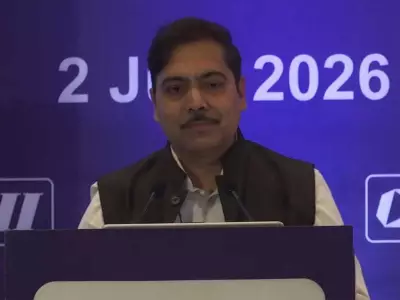
Anuj Sethi, Senior Director at Crisil Ratings, explained that the supply disruption caused by the shortage of rare-earth magnets weighed heavily on E2W volumes around mid-year. As availability began to ease, coinciding with GST-led price revisions in ICE models, original equipment manufacturers (OEMs) responded by relying on discounting and introducing lower-priced electric models to narrow the price gap between ICE and electric vehicles.

While these measures have supported a recovery in volumes in recent months, the earlier supply disruption is expected to limit full-year growth to 12-13 per cent. Sethi noted that with supply conditions improving, growth is anticipated to re-accelerate in the coming fiscal.
Factors Driving Future Growth
The expected growth of 16-18 per cent next fiscal is underpinned by several key factors:
- Improved Supply Conditions: A gradual resumption of magnet inflows from China, coupled with initial steps by OEMs to diversify sourcing, is enhancing availability.
- Structural Ownership-Cost Advantage: E2Ws continue to benefit from lower running costs, estimated at about 3 paisa per kilometer, compared to Rs 2-2.5 per kilometer for ICE vehicles, even as subsidies taper off.
- Market Adaptations: OEMs are adjusting strategies to maintain competitiveness in a shifting landscape.
Crisil Ratings emphasized that assuming stable availability of rare-earth magnets, the sector is set for a rebound. However, competitive pressures are creating divergent risk profiles among players.
Competitive Landscape and Market Shifts
An analysis of 10 OEMs, accounting for about 85 per cent of E2W volumes, reveals a clear divide between legacy and new-age players. Legacy OEMs, with both ICE and E2W portfolios, are better insulated against market volatility, while new-age, EV-only players face challenges with weak unit-vehicle economics.
Poonam Upadhyay, Director at Crisil Ratings, highlighted that the market share of legacy players has increased significantly, from 47 per cent a year earlier to 62 per cent by January 2026. This gain reflects their stronger dealer reach, robust supplier ecosystems, and an expanded range of entry-level and mid-priced electric models, enabling faster rollout and wider availability.
As incentives phase out and the pace of decline in battery costs slows—after a sharp correction in previous fiscals—price-led competition has narrowed. Increasingly, reliability and service are becoming critical differentiators, areas where legacy OEMs currently excel.
Outlook and Implications
The E2W sector in India is at a pivotal juncture, with supply chain improvements set to fuel growth. Key takeaways include:

- Supply chain resilience, particularly in rare-earth magnets, is crucial for sustained E2W expansion.
- Legacy players are leveraging their infrastructure to capture market share, while new-age players must navigate economic challenges.
- Total cost of ownership remains a strong driver for E2W adoption, despite evolving subsidy structures.
With these dynamics in play, the electric two-wheeler market is poised for a resurgence, driven by both external supply factors and internal competitive strategies.