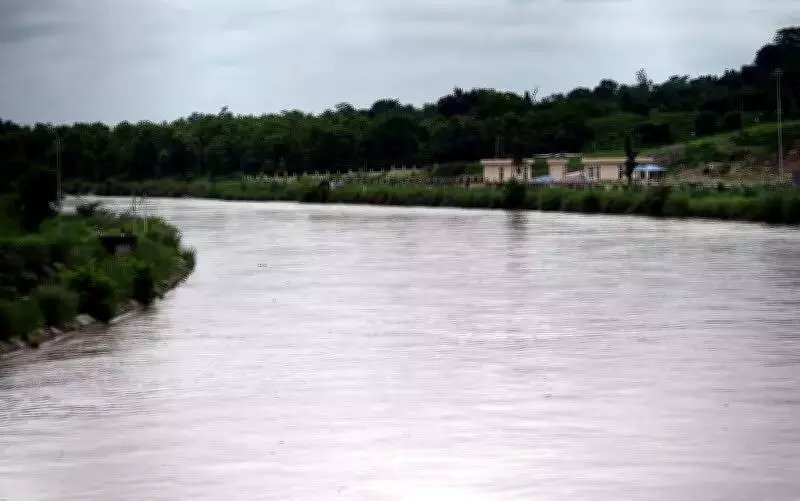
The Punjab Water Resources Department has announced a remarkable achievement in the state's irrigation infrastructure, with canal water now reaching over 1,356 outlet locations that had remained dry for several decades. This significant expansion marks a transformative phase in Punjab's agricultural landscape, driven by extensive restoration efforts and substantial financial investment.
Substantial Growth in Water Volume and Distribution
Comparative data for 2024 and 2025 reveals a consistent upward trajectory in water volume across multiple distributaries. The Sohelewala distributary, for instance, has demonstrated extraordinary progress, escalating from a mere 1 Cusec during Kharif 2024 to an impressive average of 23 Cusecs in Kharif 2025. Similarly, the Karamgarh distributary experienced a dramatic surge, with its average flow jumping from 9 Cusecs in Kharif 2024 to 38 Cusecs in Kharif 2025, representing a staggering 320 percent increase.
The Nizamwah Distributary more than doubled its operational capacity, rising from 125 Cusecs in 2024 to 284 Cusecs in 2025. These figures underscore the department's successful efforts in revitalizing the state's canal network, which had suffered from neglect and deterioration over many years.

Groundwater Stabilization and Agricultural Benefits
Beyond immediate agricultural advantages, this canal water expansion initiative aims to address Punjab's critical groundwater depletion crisis. With approximately 73 percent of the state's irrigation currently dependent on tubewells, the shift toward surface water utilization is strategically designed to alleviate pressure on over-exploited aquifers. This transition is expected to contribute significantly to long-term water security and sustainable farming practices.
Massive Investment and Infrastructure Development
An official from the department disclosed that between the financial years 2022 and 2025, a colossal sum of Rs 4,557 crore was allocated for canal lining, comprehensive repairs, and watercourse restoration. This investment facilitated the cleaning of over 15,539 kilometers of canals and the restoration of 18,349 watercourses. Consequently, the area under canal irrigation expanded substantially from 2.23 million acres in 2022 to 4.78 million acres in 2025.
Notably, 57 locations serving 47 villages received canal water for the first time in their entire history during 2023 as part of this ambitious restoration drive. This milestone highlights the project's reach in bringing irrigation benefits to previously underserved communities.
Challenges and Maintenance Requirements
Despite these achievements, farmers have raised concerns regarding the ongoing maintenance needs of the restored infrastructure. The reliance on Khal Restoration and desilting necessitates continuous investment and upkeep. Without regular maintenance, these newly functional watercourses—some of which had been dormant for up to 35 years in districts like Fazilka and Amritsar—are vulnerable to rapid siltation, potentially reversing the gains made.
Uneven Growth and Structural Bottlenecks
The 2025 data also reveals uneven progress across different regions. While some distributaries more than doubled their capacity, others, such as the 2-R Distributary in the BML division, remained nearly static with a mere 2 percent increase from 2024 to 2025. This disparity indicates persistent structural bottlenecks in certain areas, requiring targeted interventions to ensure equitable water distribution.
In 2023, although over 17,000 watercourses were targeted for restoration, the actual delivery of water at the tail-end often depends on factors like head-regulator discharge and rainfall patterns. Farmers in some regions reported that while water reaches their villages, the pressure is frequently insufficient to irrigate elevated fields, forcing them to rely on diesel pumps as a supplementary measure.
This comprehensive canal network revival represents a crucial step toward enhancing Punjab's agricultural productivity and water sustainability, though it underscores the need for sustained efforts to address maintenance challenges and regional disparities.