

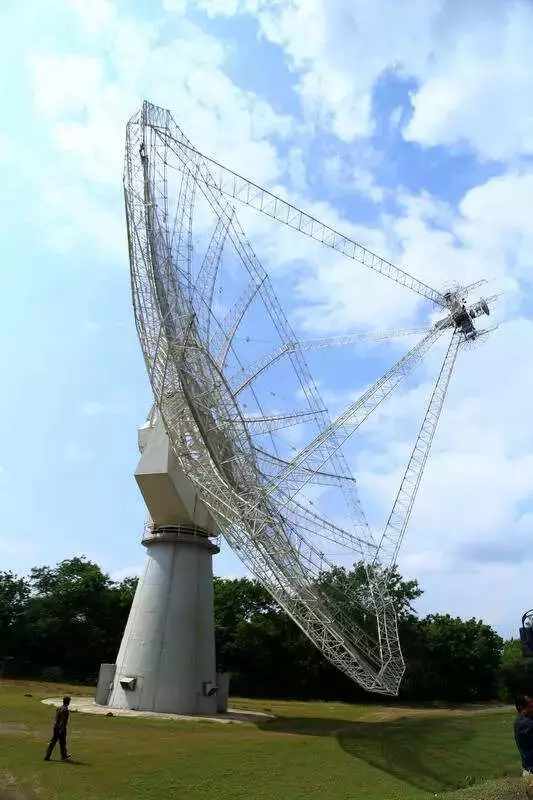
In a significant development, the proposed Pune-Nashik semi-high-speed railway corridor has undergone a major route change to safeguard a critical national scientific facility. Union Railway Minister Ashwini Vaishnaw officially confirmed the realignment in the Lok Sabha on Wednesday, stating the project will now bypass the Giant Metrewave Radio Telescope (GMRT) observatory in Narayangaon.
Why the Realignment Was Necessary
Responding to a query from Shirur MP Amol Kolhe, Minister Vaishnaw detailed the rationale behind the crucial decision. The original alignment in the Detailed Project Report (DPR) passed through Narayangaon, the site of the GMRT Observatory operated by the National Centre for Radio Astrophysics (NCRA) in Pune. This telescope is a premier global facility, with scientists from 31 countries relying on it for advanced astronomical observations.
Vaishnaw revealed that expert bodies, including the Department of Atomic Energy and the Department of Science and Technology, advised the Railways Ministry. Their assessment warned that the proposed rail line would cause potential electromagnetic interference and harmful impacts on the GMRT's sensitive operations. Consequently, the original plan was deemed unacceptable.

The New Route and Its Benefits
Following consultations with the Maharashtra state government and public representatives, a new alignment was finalized. The revised route will now run from Pune to Ahilyanagar and Shirdi before culminating in Nashik. Minister Vaishnaw emphasized that the travel time difference between the old and new alignments is minimal.
He highlighted several advantages of the new path. It provides direct connectivity to the Chakan industrial area, boosting economic prospects. Furthermore, it links Nashik to the prominent pilgrimage town of Shirdi, adding a significant cultural and tourism dimension to the project's utility.
Political Reactions and Opposition
The realignment has not been without controversy. The original plan aimed to connect the cities via Sinnar, Sangamner, Narayangaon, Manchar, and Chakan. The proposed change had previously faced opposition from leaders across party lines.
Minister of Food Supplies Chhagan Bhujbal had written to Chief Minister Devendra Fadnavis, arguing that the realignment would increase the distance by approximately 80 kilometers and journey time by an hour. He contended this defeats the core purpose of a fast rail link between two major industrial hubs.
Adding to the criticism, Nashik MLC Satyajeet Tambe took to social media platform Instagram on Wednesday. He alleged that Sangamner's rightful rail link is being diverted to Shirdi under the guise of the GMRT issue. Tambe accused the central government of misleading citizens and urged public representatives to break their silence, warning that a public movement may become necessary.
The project's progression now hinges on balancing vital scientific interests with regional connectivity and addressing the concerns of local stakeholders.






