Pune Industries Face Imminent Shutdown Amid Severe LPG Shortage Crisis
The industrial landscape in Pune district is teetering on the edge of a major operational crisis, with numerous manufacturing units potentially forced to suspend activities in the coming days. This dire situation stems from a critical shortage of liquified petroleum gas (LPG), a vital fuel source, which has been severely disrupted by the ongoing conflict in West Asia. The ripple effects of this geopolitical turmoil are now hitting home, leaving micro, small, and medium enterprises (MSMEs) with alarmingly low reserves.
Distress Calls and Government Appeals Highlight Urgency
Hari Srivastava, chairman of the Deccan Chamber of Commerce, Industries and Agriculture, described the scenario as alarming. He reported receiving multiple distress calls from manufacturing units warning of imminent closures if commercial gas supplies do not resume promptly. "We anticipated limited supply, but it has ceased entirely. Today, many stakeholders contacted our offices, indicating they have merely one or two days of stock remaining," Srivastava emphasized.
Adding to the urgency, Bhosari MLA and BJP member Mahesh Landge raised the issue in the state assembly, highlighting that nearly 20,000 small-scale industrialists in the Chakan region are grappling with this challenge. "They are unable to secure gas and other essential raw materials like aluminum and copper, crippling their operations. The central and state governments must enact policy decisions to ensure these supplies are restored," Landge asserted.

Government Directives and Implementation Gaps
On March 9, the central government issued an order mandating that industrial consumers maintain LPG supply at 80% of their average consumption over the previous six months. However, Prashant Girbane, director general of the Mahratta Chamber of Commerce, Industries and Agriculture, pointed out a significant implementation gap. "After extensive discussions with manufacturers, it is clear that this government directive is not being adhered to at the distributor level. We urge frequent meetings at the district collector level to enforce compliance and take corrective measures where necessary," Girbane stated.
Critical Impact on Key Industries
The LPG shortage is hitting specific sectors particularly hard, including:
- Surface coating
- Forging
- Die casting
- Hot boiler operations
- Metal casting
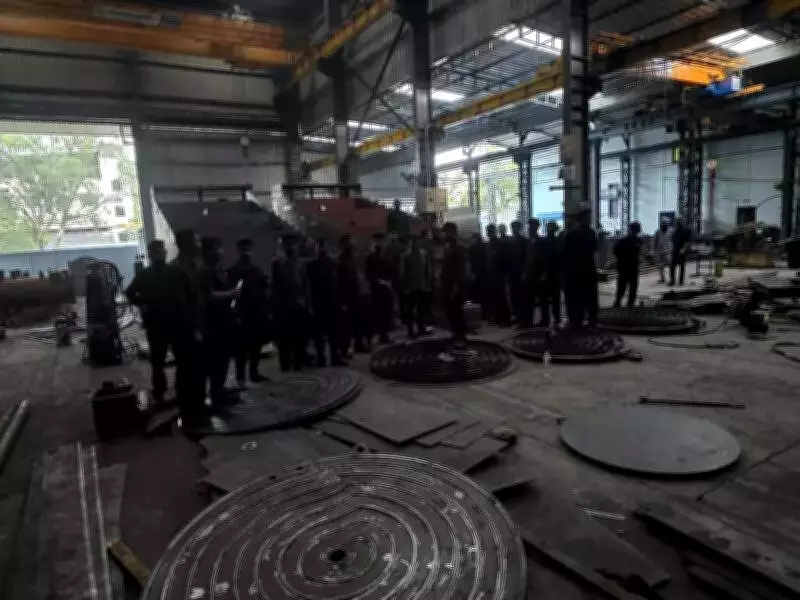
These industries have transitioned from diesel-based equipment to gas-powered machinery, making a swift switch to alternative energy sources unfeasible in the short term. Sakshi Katti, an executive at a steel-producing unit in Chakan, voiced concerns: "Operating furnaces without fuel is a major problem. We are seeking intervention urgently." Her foundry, with a capacity of 200 tonnes and fully reliant on LPG, requires about 20 cylinders every two weeks but is down to just one week's stock, with suppliers unable to fulfill orders.
Broader Regional Exposure and Calls for Action
The crisis extends beyond Pune, affecting casting clusters in Nashik, Chhatrapati Sambhajinagar, and Kolhapur, where MSMEs are highly vulnerable. Vidhi Daryanani, secretary general of the Aluminium Casters' Association of India, noted that smaller foundries and die casters without piped natural gas (PNG) connections depend entirely on commercial LPG cylinders, exacerbating their plight.
Sandip Belsare, president of the Pimpri Chinchwad Small Scale Industries Association, stressed that limited supply resumption is the only viable solution to prevent widespread factory shutdowns. The association is seeking a meeting with Maharashtra Industries Minister Uday Samant to mitigate the impact on Pune's industrial belt.
As the situation intensifies, stakeholders are calling for immediate governmental action to avert a full-scale industrial collapse, underscoring the interconnectedness of global conflicts and local economic stability.