In a landmark event for Indian aviation, the Navi Mumbai International Airport (NMIA) commenced its commercial operations on Thursday, finally providing a crucial second airport for the congested Mumbai Metropolitan Region. The long-awaited entry marks a significant expansion of air connectivity for a city constrained for decades by a single-runway airport handling nearly a thousand flights daily.
A Historic First Day of Operations
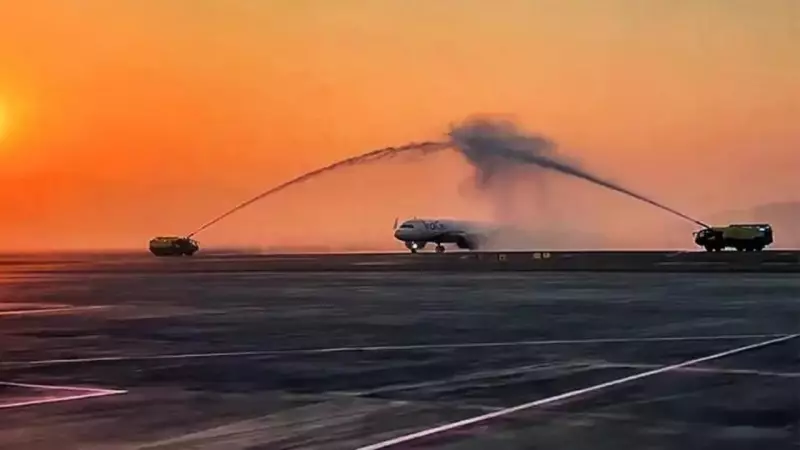
The dawn of commercial aviation at NMIA began with a ceremonial welcome for IndiGo flight 6E460 from Bengaluru, which touched down at 8 am. The aircraft received a traditional water cannon salute on the tarmac. Shortly after, at 8:40 am, the airport witnessed its first departure—another IndiGo service bound for Hyderabad. The inaugural day concluded with a robust 48 flights operating to and from nine domestic destinations, serving over 4,000 passengers. Airport officials noted the peak traffic hours were between 5 pm and 7 pm.
Developed and operated by Adani Airports Holdings Limited, NMIA stands as one of India's largest greenfield airport projects. Adani Group Chairman Gautam Adani was present to welcome passengers from the first flight and interacted with staff. "It's a proud day for Mumbai and for India," he stated, underscoring the project's national importance.

Teething Troubles and Traveler Experiences
Despite the historic launch, several passengers reported initial hiccups, primarily related to ground connectivity and signage. Many flyers mentioned that road signages were unclear or missing at key junctions, leading some motorists to mistakenly reach the cargo terminal before finding the passenger terminal. Approach roads were also under repair, with ongoing road-widening work causing some delays.
"Signages are not clearly visible on Atal Setu when you enter Navi Mumbai," said Dinesh Gandhi, a resident of Matunga who travelled to the new airport. The distance from central Mumbai areas like Dadar and Matunga—around 35 kilometres—was also noted by passengers. While the Navi Mumbai Municipal Transport launched bus services on five new routes, most passengers opted for app-based cabs as auto-rickshaw and taxi stands were not yet fully operational.
The airport also saw curious visitors arriving to see the new facility, but entry was restricted to ticketed passengers by private security personnel.
"Welcome to Navi": A New Identity for Aviation
The 'Navi' or 'newness' factor was strongly emphasized, even in official aviation communication. The airport's official call sign, to be used by pilots and air traffic controllers in all radio communication, is simply "Navi". An aviation official shared, "When the first flight was handed over to the Navi Mumbai tower, we radioed to the pilots, 'Welcome to Navi'." An airline pilot confirmed this new identifier, stating, "For us, the new airport is called Navi."
The launch day was celebrated with cultural performances featuring Maharashtrian lezim, dhol, and tutari, adding a distinct local flavour. In a commemorative gesture, India Post released a special 'First Flight Carried' cover that was flown on an IndiGo service to Goa.
Amidst the celebrations, the demand to name the airport after local leader D B Patil resurfaced, with former MP Sanjeev Naik stating it reflected the sentiment of Navi Mumbaikars. The airport's operational launch began with four carriers: IndiGo, Akasa Air, Air India Express, and Star Air, promising enhanced competition and connectivity for millions of travelers in the region.