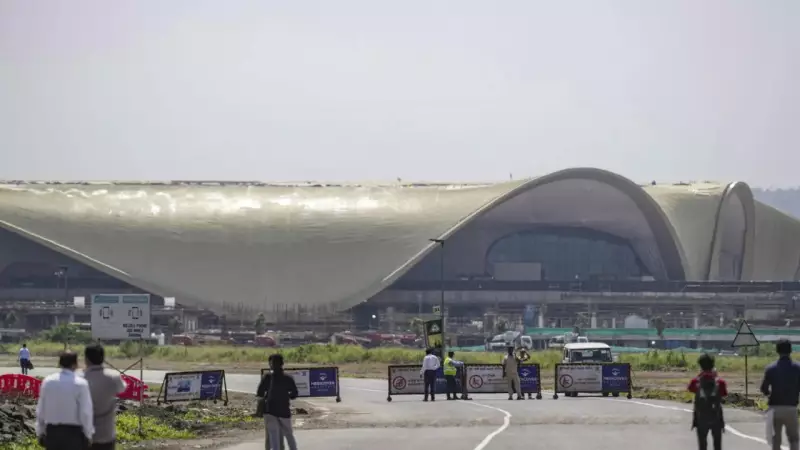
India's busiest and most congested aviation hub, Mumbai's Chhatrapati Shivaji Maharaj International Airport (CSMIA), is finally poised to get some much-needed breathing room. This relief comes with the strategic operational integration of the newly built Navi Mumbai International Airport (NMIA), which is set to commence passenger operations on December 25, 2025. With both airports under the management of the same company, a carefully crafted plan is being rolled out to share flight traffic between the two facilities, aiming to systematically reduce pressure on the existing single-runway system in Mumbai while preparing the metropolitan region for future growth.
The Phased Approach to Decongestion
Contrary to expectations of a major immediate shift, the redistribution of air traffic will be a gradual and measured process. Authorities have confirmed that there will be no sudden, large-scale movement of flights from the existing Mumbai airport to the new one in Navi Mumbai. Initially, only a select few flights, particularly those scheduled during the busiest peak hours, will be relocated. This could involve just one or two flights initially, serving as a pilot to ease congestion without disrupting the extensive network and passenger routines at CSMIA.
The more significant operational adjustments are expected to be implemented with the commencement of the next summer flight schedule, which runs from the last week of March until October. The current winter schedule will remain in effect until then. A key strategy under consideration involves spreading out flight timings instead of packing more services into peak hours. Airlines may be instructed to shift some departures and arrivals to non-peak periods and could be encouraged to launch new routes directly from Navi Mumbai to better manage the overall air traffic flow across the region.

Addressing Mumbai's Runway Overload
The pressing need for this decongestion plan is starkly highlighted by the operational data from Mumbai's primary runway. Designed with a capacity of 44 aircraft movements (take-offs and landings) per hour, this critical piece of infrastructure is frequently pushed beyond its limits. Official records from December 12 reveal a striking instance where the runway handled as many as 52 landings within a single hour.
This chronic overloading is exacerbated significantly by the high volume of charter aircraft movements. On numerous days, the runway has been forced to manage between 45 to 50 flights per hour repeatedly. Such sustained over-capacity operations place immense strain on air traffic controllers and raise legitimate concerns regarding operational safety during the most congested periods. The introduction of Navi Mumbai's runway capacity is a direct response to this critical bottleneck.
Future Expansion and Regional Growth
Looking beyond the initial phase, plans are already in motion to fast-track the expansion of the Navi Mumbai airport. There is a proposal to combine the development of Phases three and four of the project. This accelerated timeline aims to boost the terminal's capacity to accommodate 50 million passengers annually by the year 2030. Design work for these subsequent phases has reportedly begun, with construction slated to start in the coming months.
This dual-airport system is expected to unlock new aviation potential for the Mumbai Metropolitan Region. For years, route expansion has been severely constrained by the single-runway operation at CSMIA. With two functional airports, the region can look forward to the introduction of more domestic and international routes, fostering better connectivity. Furthermore, to ensure no loss of terminal capacity during this transition, the redevelopment of Terminal 1 at the Mumbai airport in Vile Parle will only commence after the next terminal at Navi Mumbai is fully operational. This sequential planning underscores a commitment to a seamless and efficient expansion of the region's aviation infrastructure.