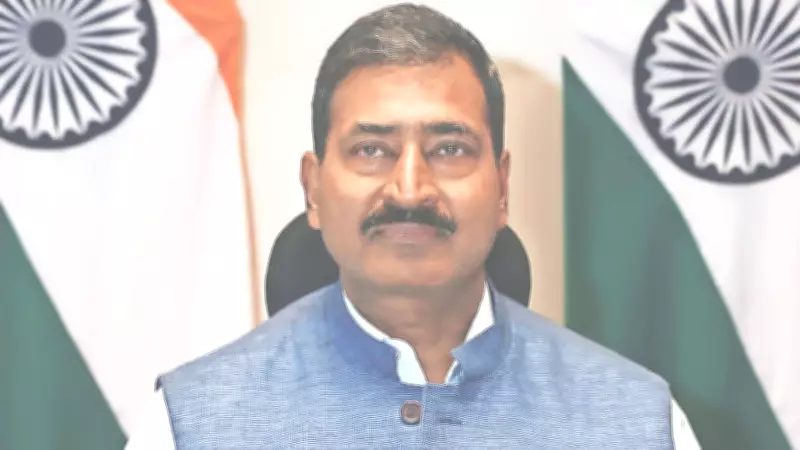
In a recent interview, Vivek Kumar Gupta, who recently assumed charge as Member (Infrastructure) of the Railway Board after serving as General Manager of the Western and Central Railways, clarified a common misconception in urban transport planning. He emphasized that suburban railways and Metro networks are not competitors but complementary systems that together enhance public mobility.
Synergy Between Metro and Suburban Rail
Gupta stated, "Rail based systems do not compete, they complement each other. In the larger public transport ecosystem, while working together, they serve the mobility needs of passengers in a holistic manner." He highlighted that while Mumbai's suburban railway system, often called the city's lifeline, efficiently covers North-South routes, the expanding Metro network is crucial for providing East-West connectivity, which was previously lacking.
Discussions are underway with the Mumbai Metropolitan Region Development Authority (MMRDA) to integrate suburban and Metro stations, aiming to make transfers hassle-free for commuters. This collaboration is expected to streamline travel across the metropolitan region.

Addressing Overcrowding and Safety Concerns
Gupta addressed major issues plaguing the Mumbai Suburban Railway, particularly overcrowding and track-related accidents. He noted that the network currently carries around 70-80 lakh passengers daily, with passenger loads reducing on certain routes like Dadar to Churchgate and Dadar to Chhatrapati Shivaji Maharaj Terminus (CSMT) due to urban development in areas such as Bandra Kurla Complex and Parel.
To combat accidents, the Railways has implemented anti-trespassing measures, including raising boundary walls at identified locations and constructing foot over bridges (FOBs). Regular meetings with the Government Railway Police (GRP) and Railway Protection Force (RPF) are conducted to enhance safety protocols.
Capacity Augmentation Initiatives
Significant efforts are being made to increase train capacity. Currently, many trains operate as 12-car rakes, but the Railways is rapidly expanding them to 15-car rakes. In Western Railway, 211 services run with 15-car rakes, with plans to increase this to 250 by the end of the year. Similarly, Central Railway has 22 such services, with substantial expansions planned.
Gupta revealed that two non-AC closed-door rakes will be introduced on a pilot basis by April, likely on the CSMT-Kalyan and Churchgate-Virar sections during non-peak hours. Additionally, tenders are being invited for 238 AC rakes to gradually increase air-conditioned train services.
Freight Movement and Future Prospects
Regarding freight, Gupta dismissed roads as competitors, stating that railways and roads have clearly defined roles. The Railways focuses on commodities like coal and cement, aiming to reduce logistics costs for India's growth. Western Railway currently carries around 100 million tonnes of container traffic from ports like Mundra and Kandla, targeting 200 million tonnes in five years. Central Railway is set to carry 80 million tonnes this financial year.
Railway-based logistics parks are being developed nationwide to connect ports with hinterlands, enhancing efficiency in goods movement, including e-commerce items.
Passengers can look forward to the new Chhatrapati Shivaji Maharaj Terminus (CSMT) in 2027, marking another milestone in the Railways' ongoing efforts to modernize and improve urban transport infrastructure.