

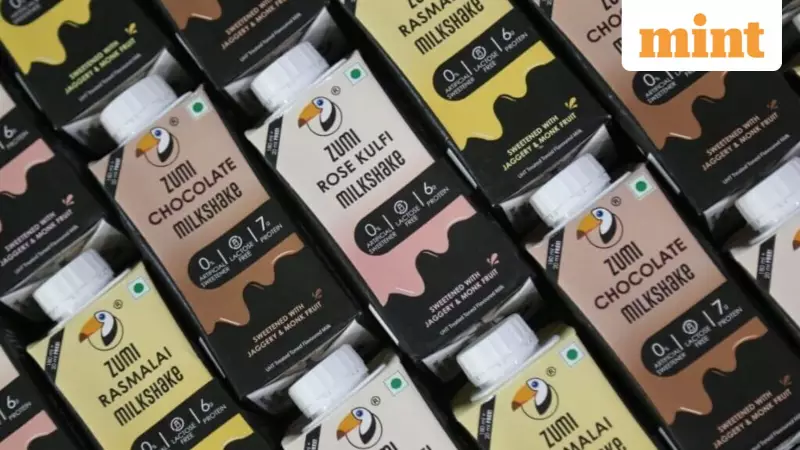
India, already the world's largest producer and consumer of milk, is witnessing a transformative shift within its vast dairy landscape. While the nation's fluid milk production is forecast to reach a staggering 221.4 million metric tons (MMT) by 2026, up from 216.5 MMT in 2025, a new segment is rising rapidly to meet evolving consumer needs. Fueled by growing health consciousness and a high prevalence of lactose intolerance, the market for lactose-free dairy products is experiencing double-digit growth, moving swiftly from a niche offering to a mainstream choice.
The Health Wave Driving Demand
The primary engine behind this surge is increased awareness and diagnosis of lactose intolerance. Symptoms like bloating and discomfort, once ignored, are now being correctly linked to lactose malabsorption by a more informed consumer base. This has led to an active search for digestive-friendly dairy solutions that do not compromise on the nutritional goodness of traditional milk.
Lactose-free milk is created by adding the lactase enzyme to milk before packaging. This natural enzyme, also found in the human gut, pre-digests the complex milk sugar (lactose) into simpler sugars like glucose and galactose. This process not only makes the milk easier to digest for those with intolerance but also renders it naturally sweeter.

Jayen Mehta, Managing Director of Amul (GCMMF), a pioneer in this space, highlights their commitment: "We pioneered lactose-free milk, and today we have a big range of lactose-free products... that would help at least gain consumer traction for those who are not able to digest the milk with regular lactose." Amul's portfolio now extends to lactose-free ice cream, high-protein dahi, peda, and even whey protein concentrate.
Packaging Innovation Enables Nationwide Reach
A critical factor in the expansion of lactose-free dairy in India is advanced packaging technology, particularly aseptic cartons from companies like Tetra Pak. Producing lactose-free milk requires an Ultra-High Temperature (UHT) treatment process for sterilization, followed by aseptic packaging.
This packaging is revolutionary for the Indian market for several reasons. Firstly, it allows UHT-treated milk to remain safe and nutritious for months without refrigeration until opened, overcoming major logistical hurdles in India's vast and climatically diverse supply chain. This enables brands to effectively penetrate Tier 2 and Tier 3 cities.
Secondly, the multi-layered carton protects the product from light, air, and microbes without preservatives. Thapasya Vijayaraghavan, Founder of startup Zumi, which recently launched lactose-free milkshakes, emphasizes the precision required: "In lactose-free dairy, there’s zero room for error - every step from enzyme dosing to UHT treatment to aseptic packaging has to sync perfectly." This synergy ensures product safety and builds crucial consumer trust.
This technological leap has allowed major players like Amul to achieve pan-India distribution. "You can get lactose-free milk in Srinagar. You can get it in Madurai," confirms Mehta, showcasing its nationwide availability.
A Robust Future for Specialised Dairy
The growth trajectory for specialised dairy is exceptionally strong. The overall dairy alternatives market in India is projected to reach up to USD 3.1 billion by 2033, driven significantly by both plant-based and traditional lactose-free milk options. While plant-based alternatives are gaining popularity, lactose-free milk holds a distinct advantage by retaining the familiar taste, texture, and high protein-calcium profile of real dairy.
Vijayaraghavan explains the dual benefit: "Lactose-free dairy offers the best of both worlds – the nutrition and taste of real milk, without the digestive discomfort... it is naturally a little sweeter, which means you need less added sugar in everyday favourites." This makes it an ideal, seamless substitute for preparing traditional Indian foods like chai, kheer, or pedas without altering recipes.

As awareness continues to deepen, the lactose-free milk market is poised for sustained growth. It is steadily transitioning from a specialty product to a common household essential, offering a digestive-friendly option for millions of Indians who wish to enjoy their daily glass of milk without discomfort, firmly establishing itself as a significant chapter in India's dairy story.





